Copyright © 2026 Yorke Antique Textiles
.avif)

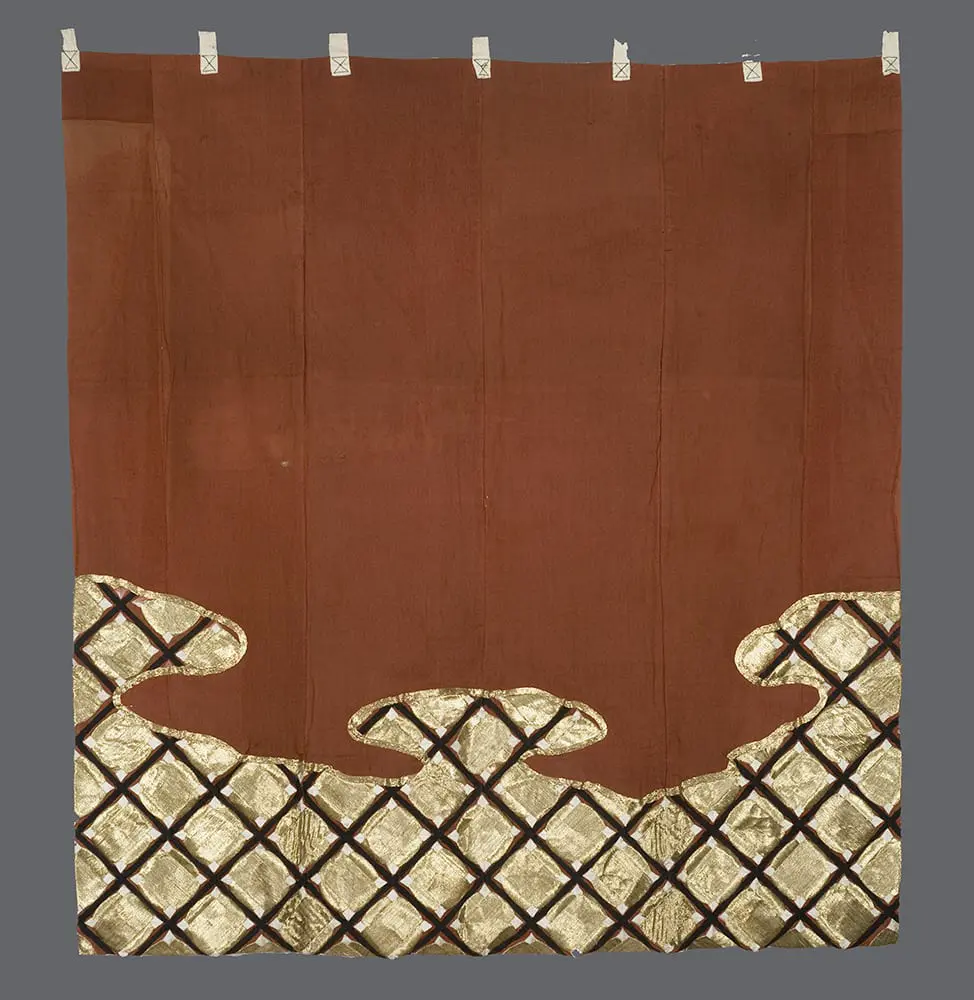
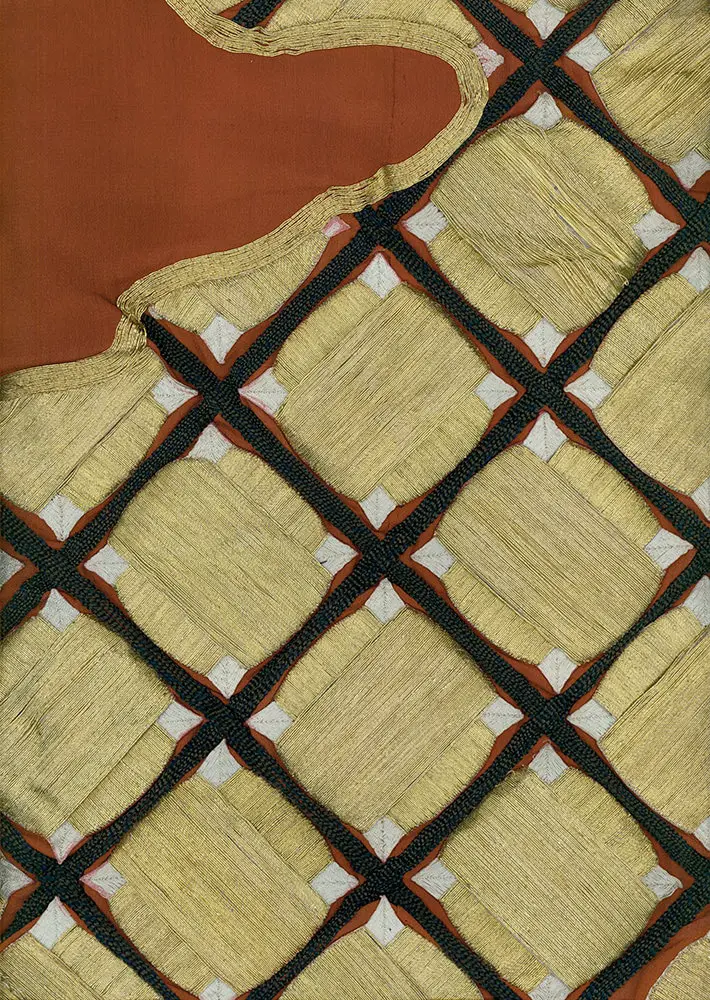
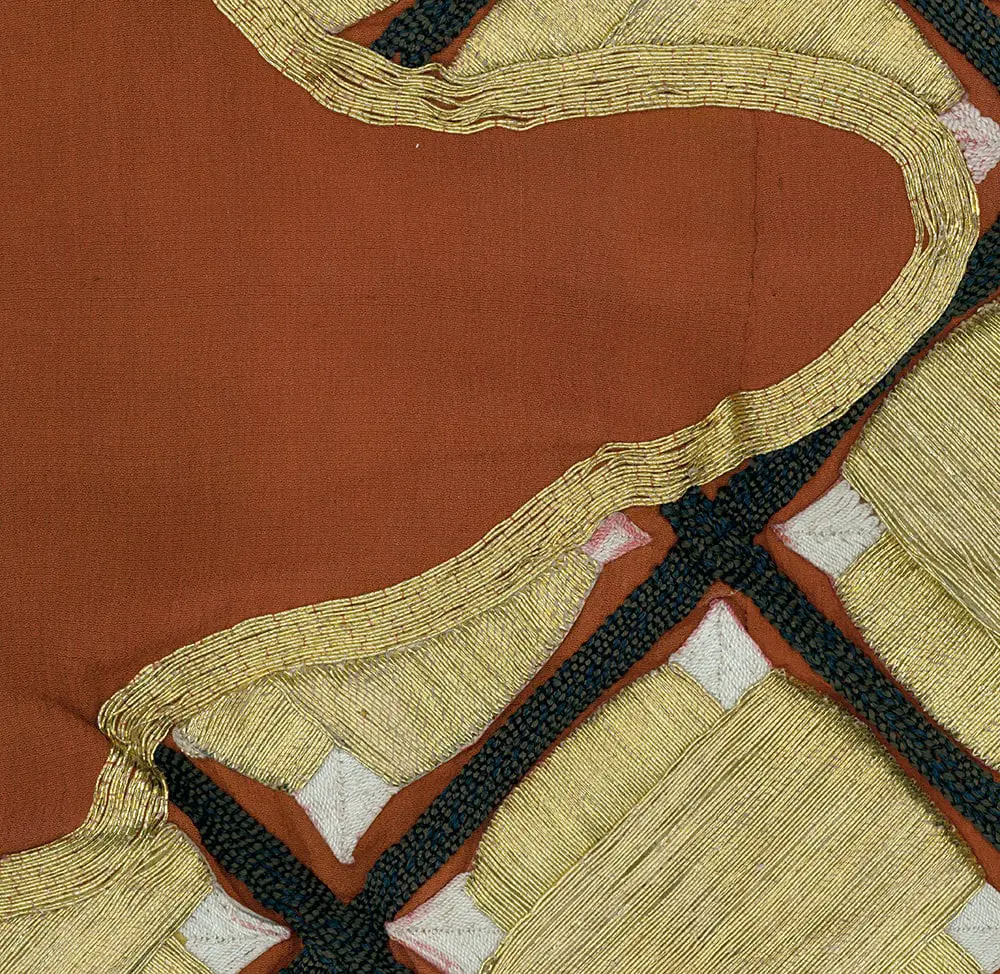
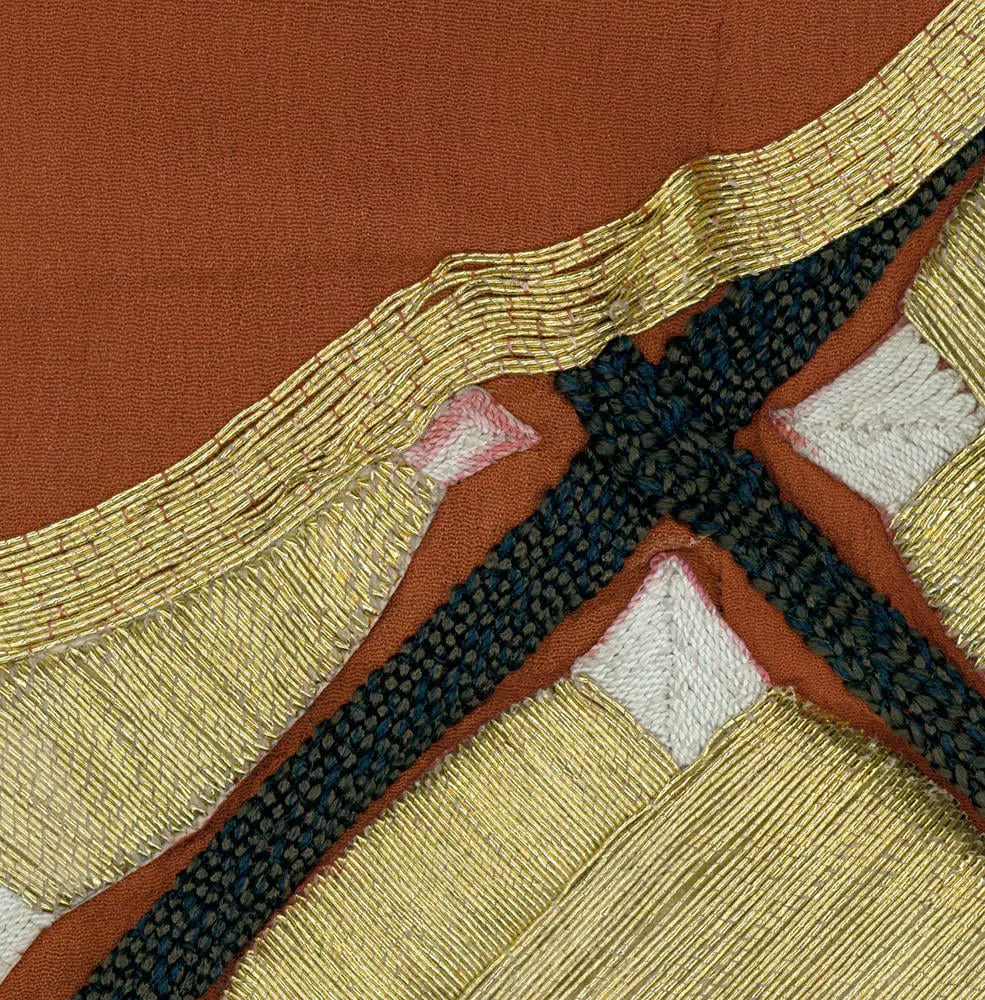
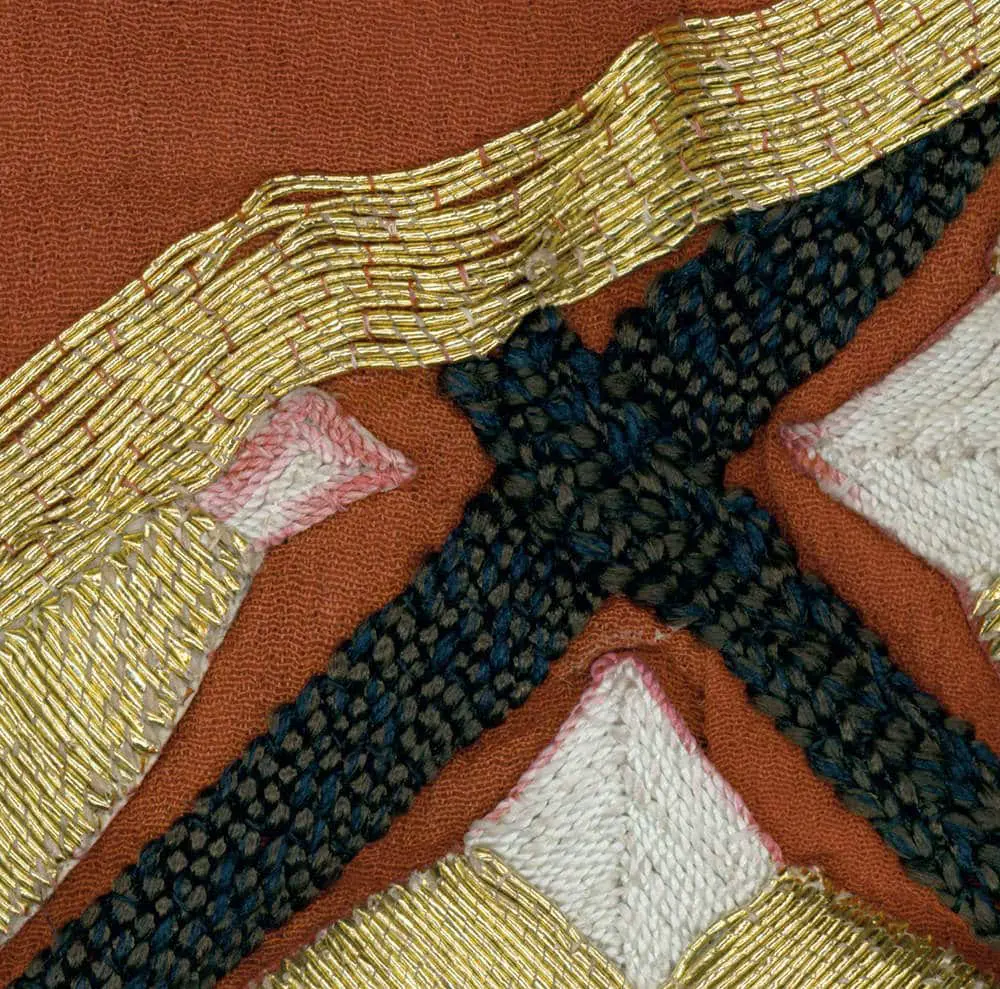
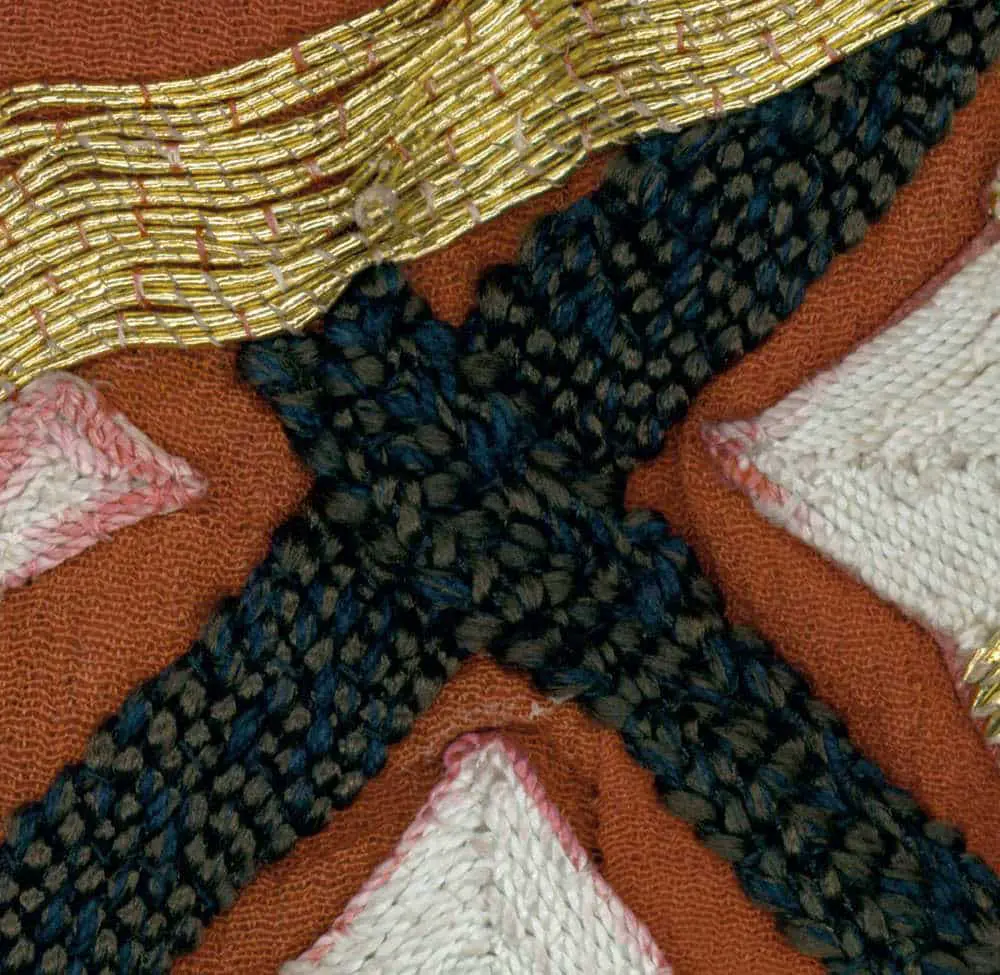
This rare and distinctive silk taremaku (ceremonial curtain), dating to the late Edo period (1825–1868), is a powerful example of Japanese sacred textile art. Measuring 56 inches by 51 inches (142 cm x 130 cm), the curtain is composed of a vibrant red chirimen (silk crepe) ground with an off-white cotton back lining. Its original purpose likely involved adorning a Buddhist or Shinto sanctuary during high ceremonies.
The base fabric is dyed with benibana (safflower), a highly prized pigment traditionally associated with the samurai class and divine protection against illness and demons. Across the lower border, the curtain features massive, three-dimensional gold-metallic-thread embroidery. The motif consists of bold, geometric lattice or "diamond" patterns within stylized cloud-like formations, symbolizing heavenly elements and divine presence. Gold, or kin, is a hallmark of religious textiles, used to signify reverence and the light of the gods. The piece retains its original hanging tabs along the top edge and remains in excellent historical condition.

Payment Options: We primarily accept PayPal for all transactions. Credit and debit cards are not accepted. If you prefer to pay by personal check instead of PayPal, please note this preference in the "Additional comments" field when placing your order.Ordering Process
To receive your PayPal invoice, simply fill out the form.
Shipping Details: We ship all orders to the address associated with your PayPal payment. Please ensure your PayPal shipping address is current and accurate.A phone number is required during checkout, as our shipping carrier may need to contact you regarding delivery questions.Shipping RatesUnited States and Canada: $20International destinations (air mail): $40
