Copyright © 2026 Yorke Antique Textiles
.avif)


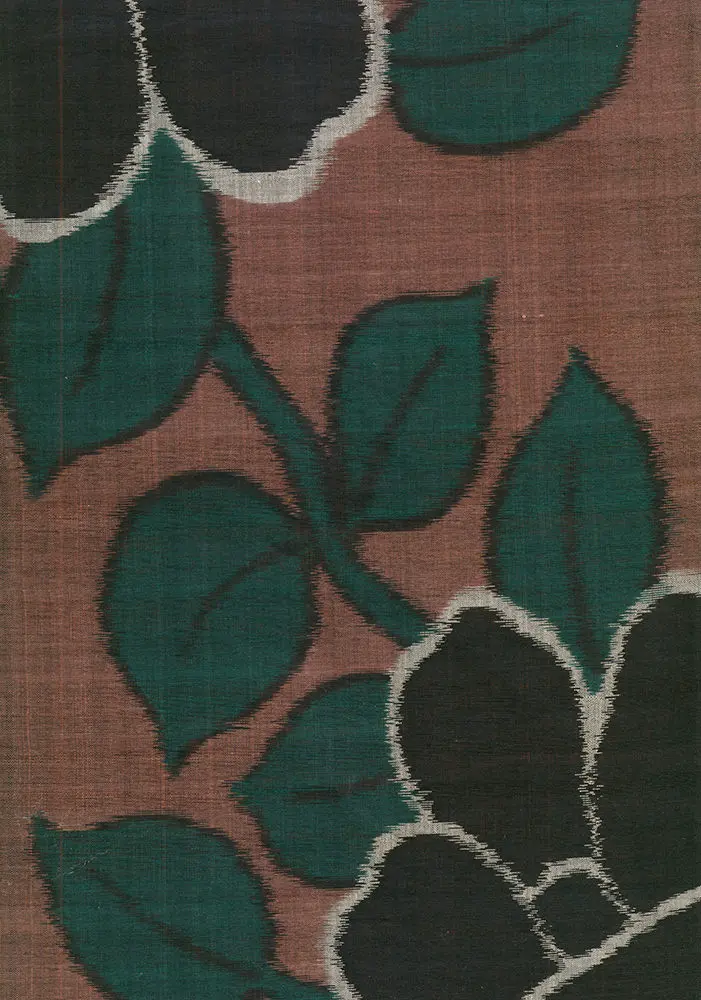
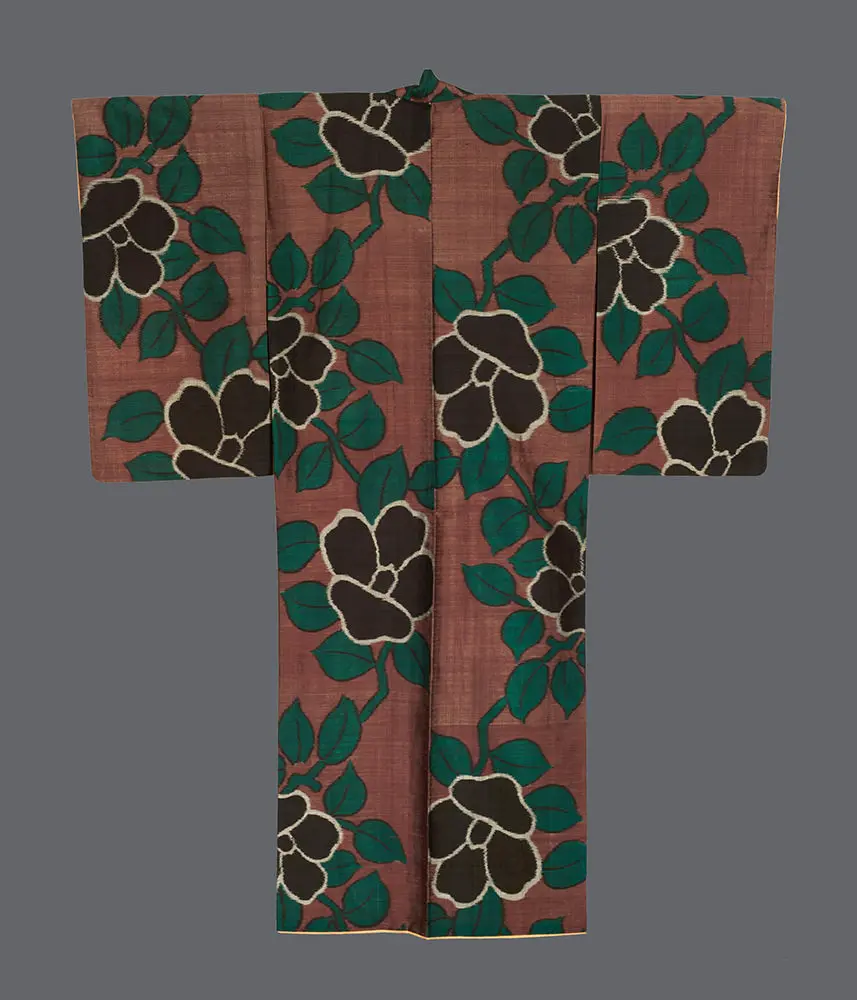


This kimono is a classic example of Meisen silk, characterized by its bold, graphic impact and slightly "pixelated" or fuzzy edges. The design features an all-over botanical pattern set against a muted, dusty rose background. Large, stylized blossoms—rendered in deep charcoal or black—are connected by winding vines and accented with heavy forest green leaves. The unique visual texture comes from the hogushigiori technique (stencil-dyed warp weaving). In this process, the vertical threads are dyed with stencils before the fabric is woven. The slight, intentional misalignment during the weaving process creates the signature "soft-focus" or vibrating edges (resembling kasuri or ikat), giving the large, flat floral shapes a sense of movement and depth without the use of shading.
The textile embodies the Taisho Roman aesthetic (referring to the Taisho period, 1912–1926, and early Showa), a time of romantic westernization in Japan. The artwork shows a strong influence of Art Nouveau, visible in the sinuous, curvilinear lines of the vines and the organic, flowing arrangement of the leaves. However, the sheer scale of the flowers—oversized and flattened into graphic shapes—hints at the boldness of Art Deco and early Pop sensibilities. Unlike the delicate, naturalistic flowers of the Edo period, these blooms are modernized and abstract, designed for the "New Woman" of the 1920s and 30s who favored high-contrast, cosmopolitan fashion over conservative tradition.
The floral motif appears to be the camellia (tsubaki). The camellia is a symbol of resilience and enduring love, celebrated for its ability to bloom in the late winter and early spring when few other plants survive the cold. While traditional samurai culture occasionally avoided the camellia (as the heavy flower falls entire from the stem, reminding them of beheading), the Meisen era largely discarded these superstitions in favor of the flower's bold, decorative beauty. In this context, the camellia represents the modern spirit: distinct, hardy, and unafraid to stand out.
It measures 49 inches (124.5 cm) in width and 59 inches (149.9 cm) in height.
Previously published in the publication Art Kimono: Aesthetic Revelations of Japan, 1905-1960, p 189

Payment Options: We primarily accept PayPal for all transactions. Credit and debit cards are not accepted. If you prefer to pay by personal check instead of PayPal, please note this preference in the "Additional comments" field when placing your order.Ordering Process
To receive your PayPal invoice, simply fill out the form.
Shipping Details: We ship all orders to the address associated with your PayPal payment. Please ensure your PayPal shipping address is current and accurate.A phone number is required during checkout, as our shipping carrier may need to contact you regarding delivery questions.Shipping RatesUnited States and Canada: $20International destinations (air mail): $40
