Copyright © 2026 Yorke Antique Textiles
.avif)

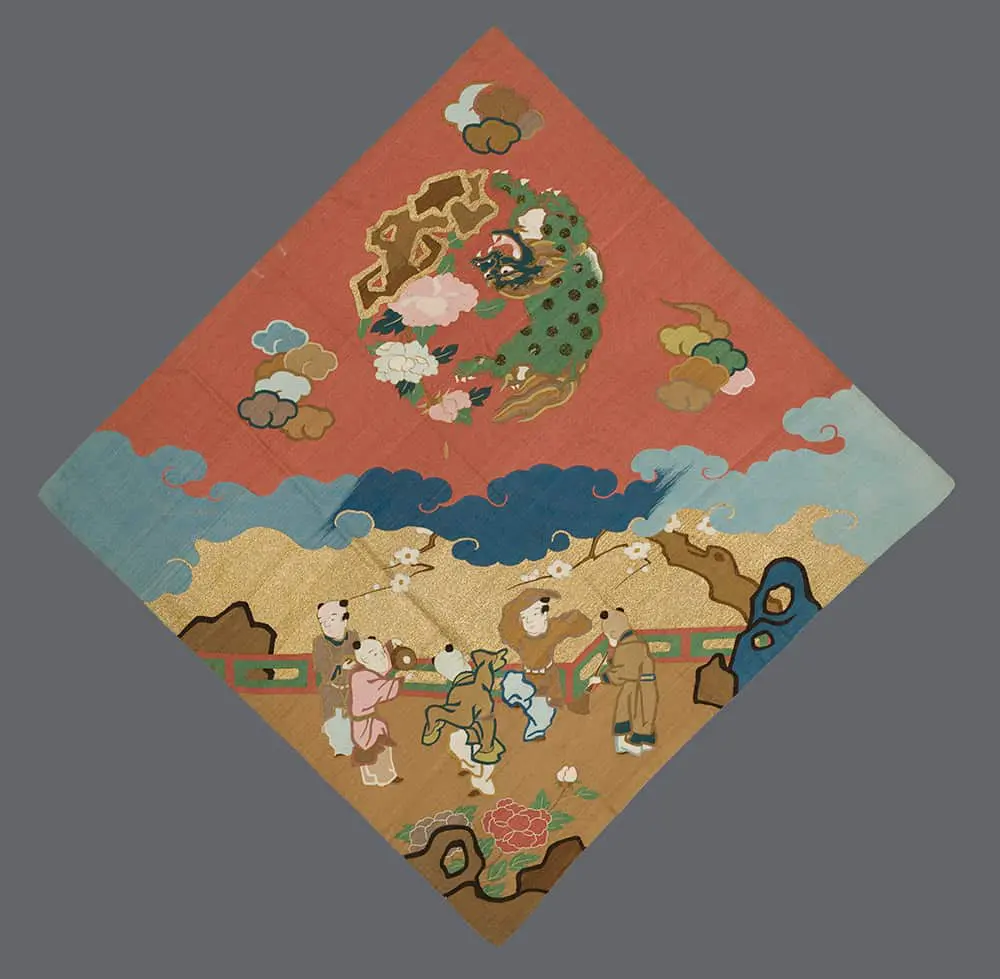
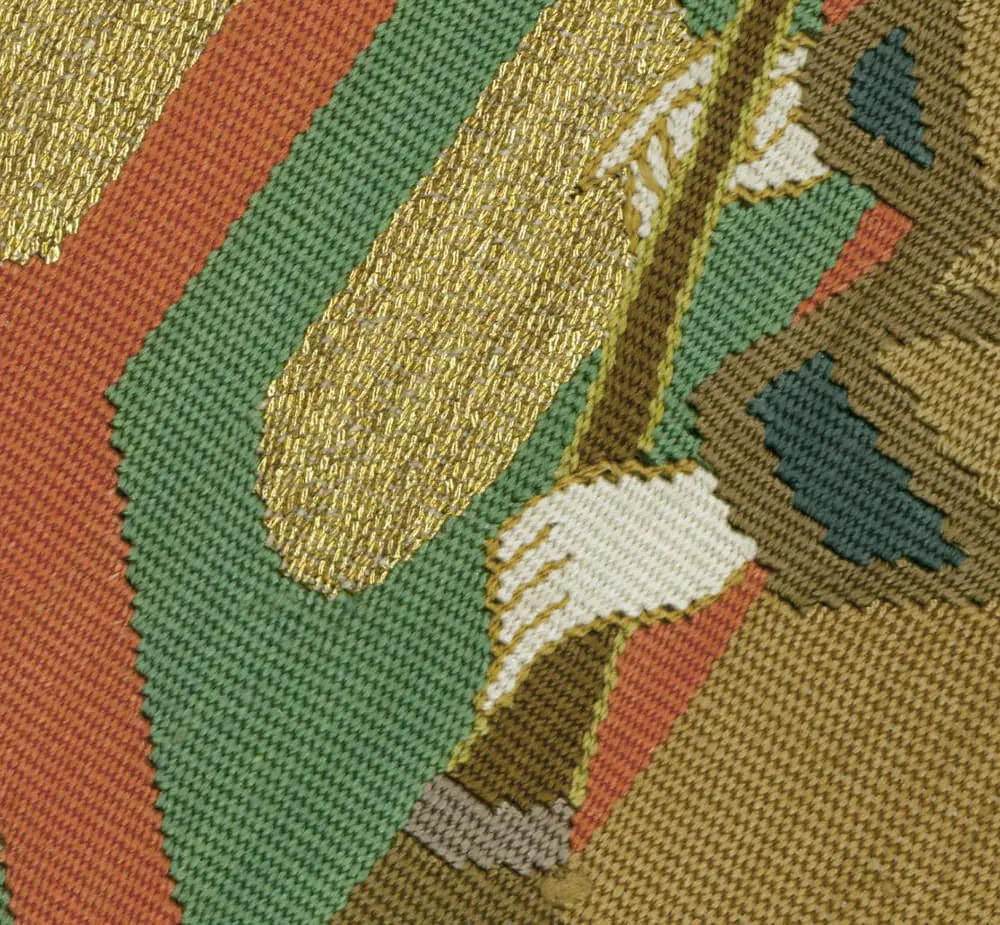
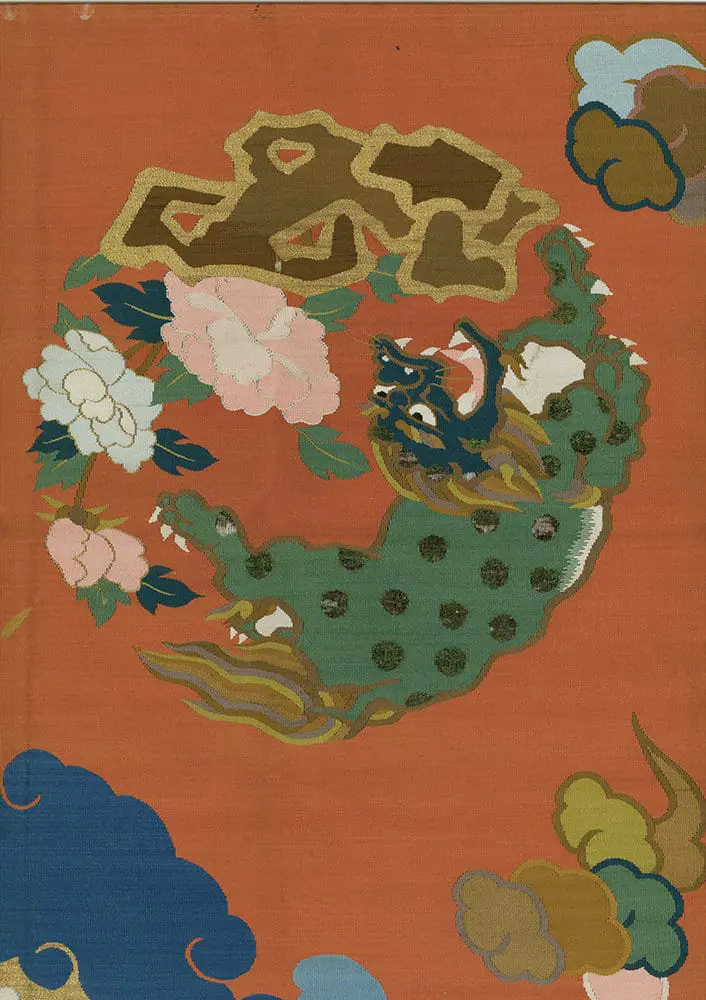
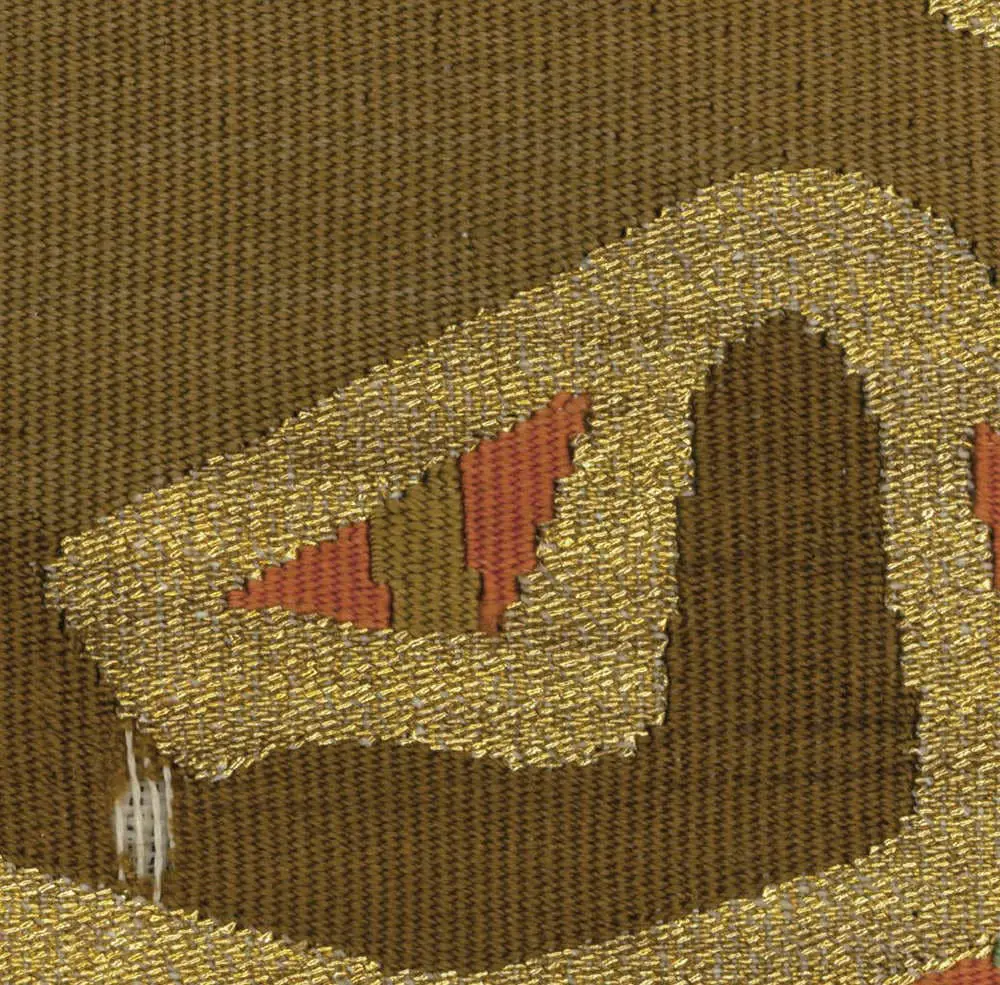

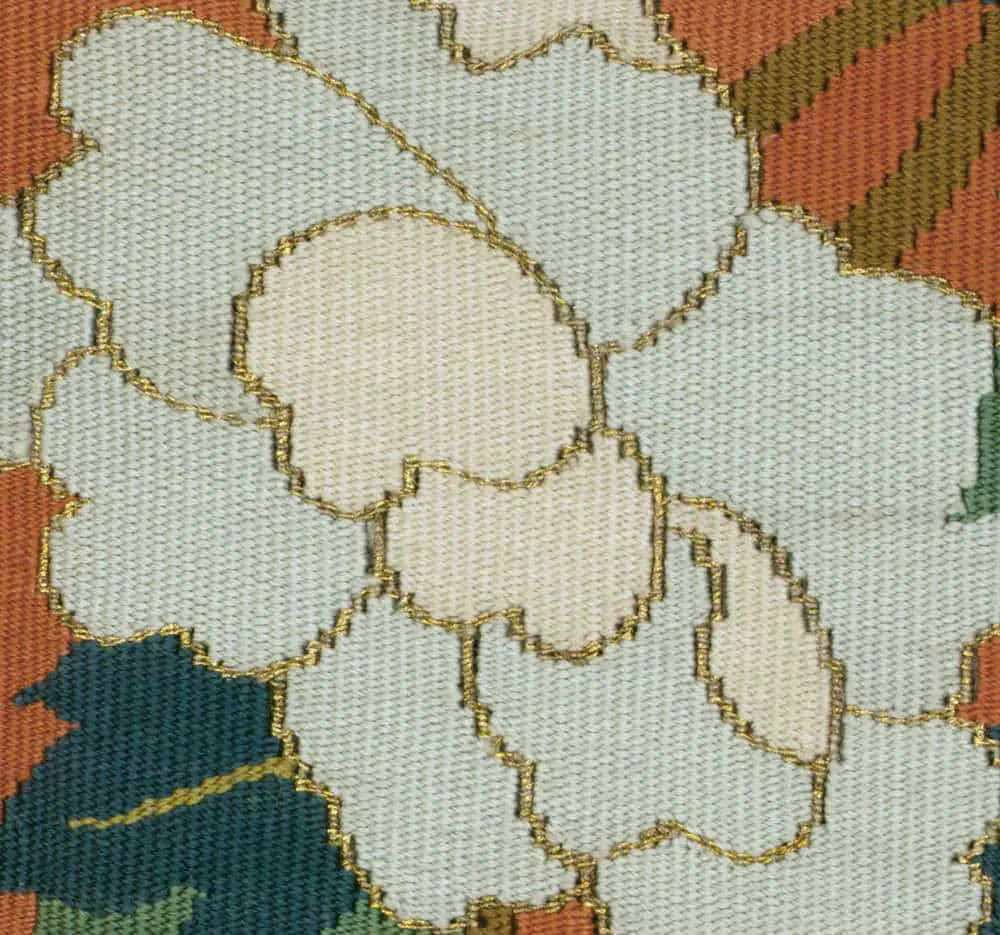
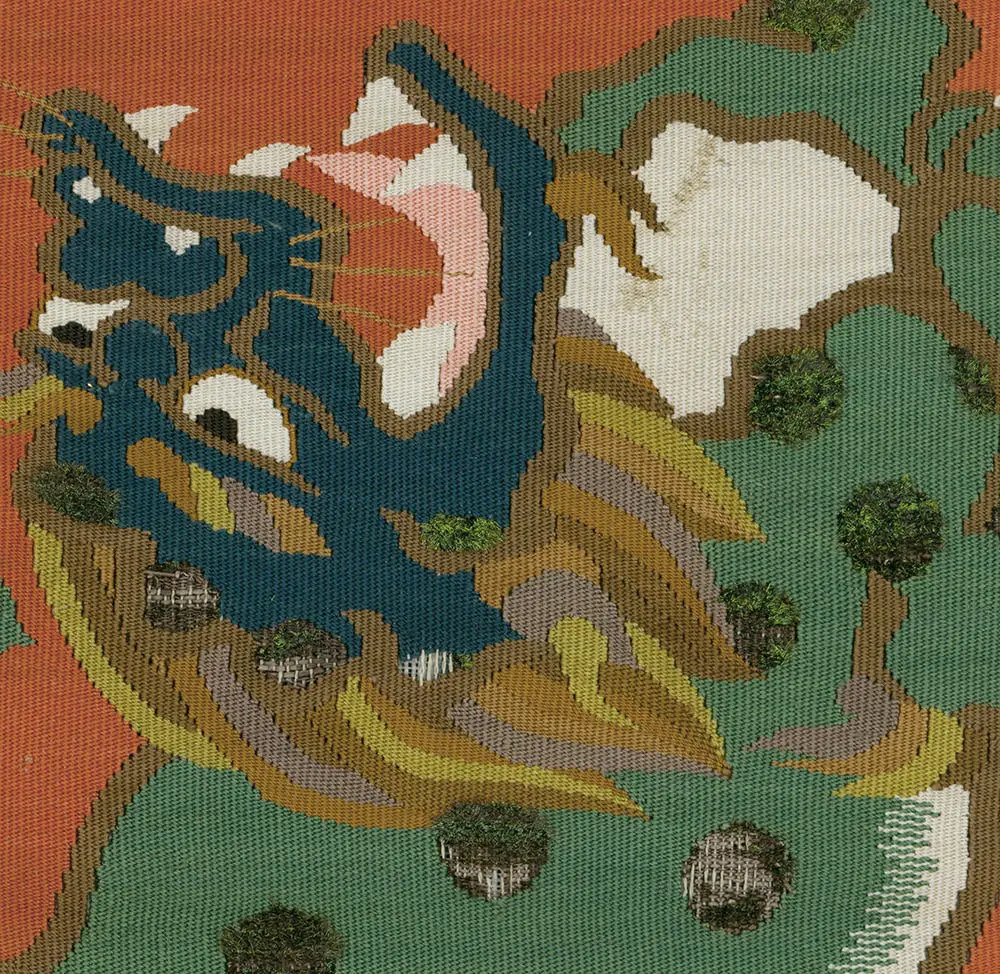
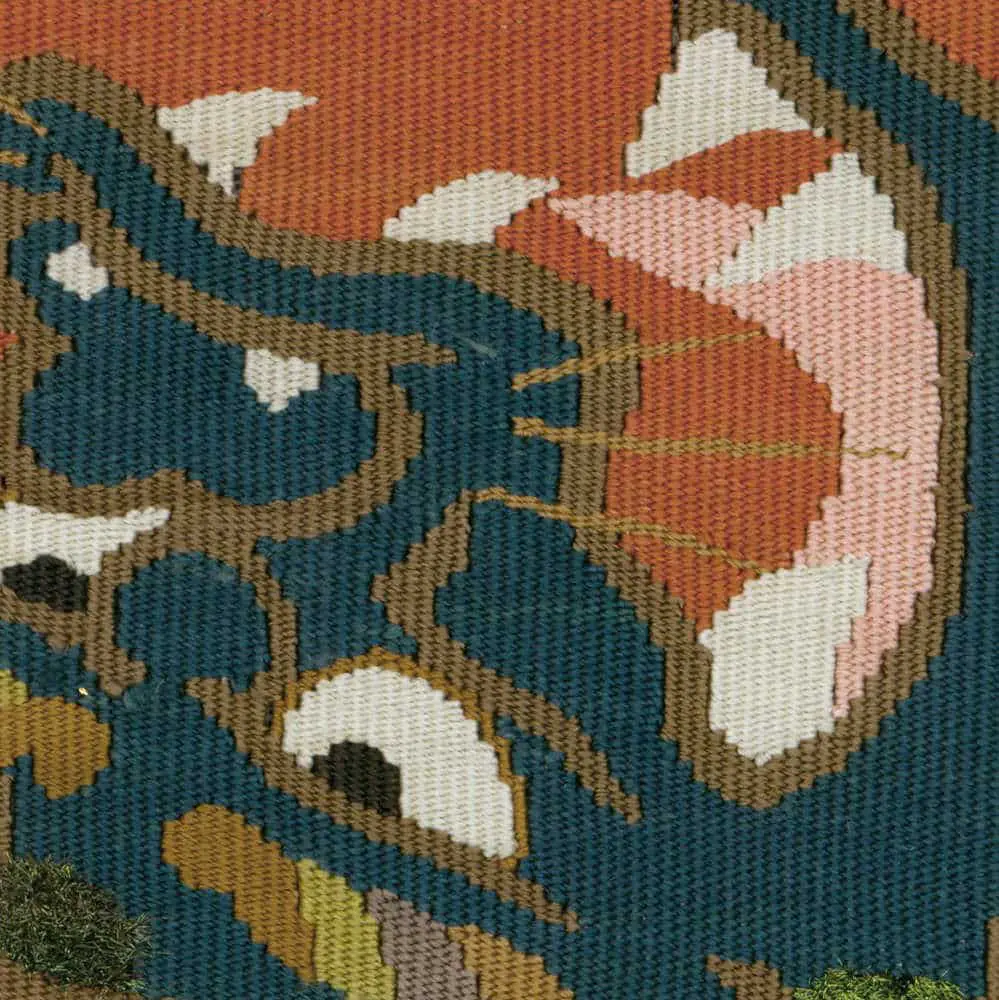

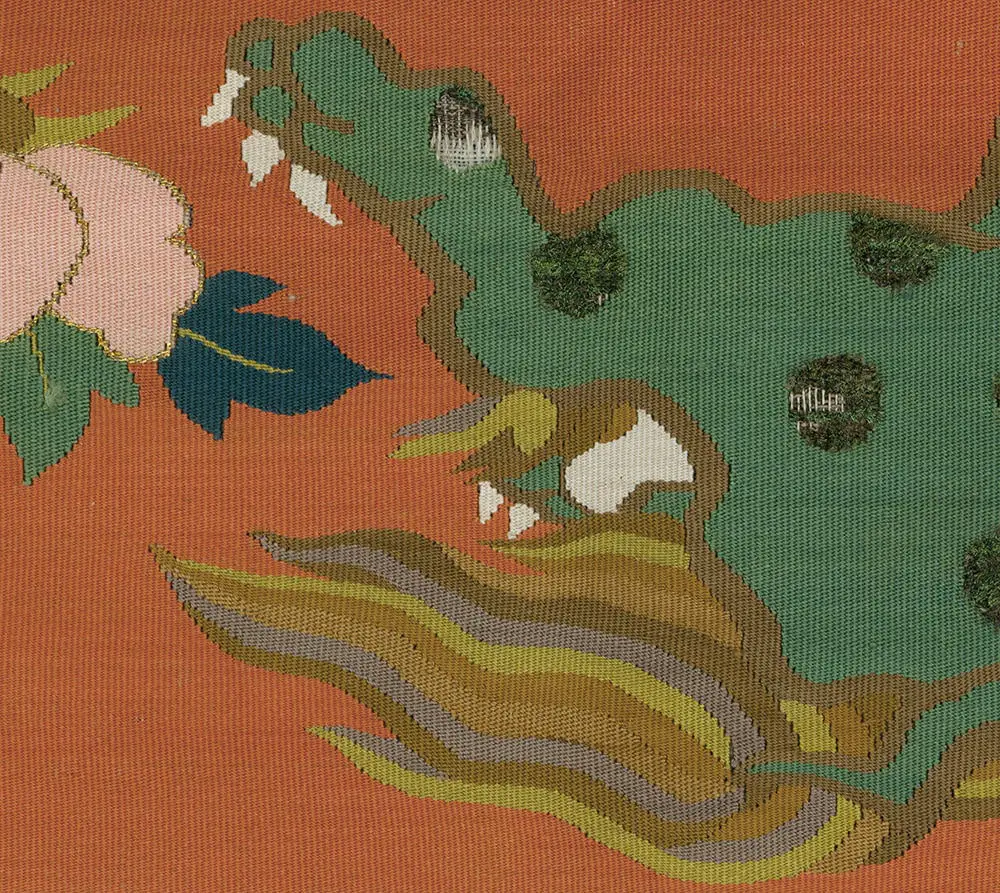
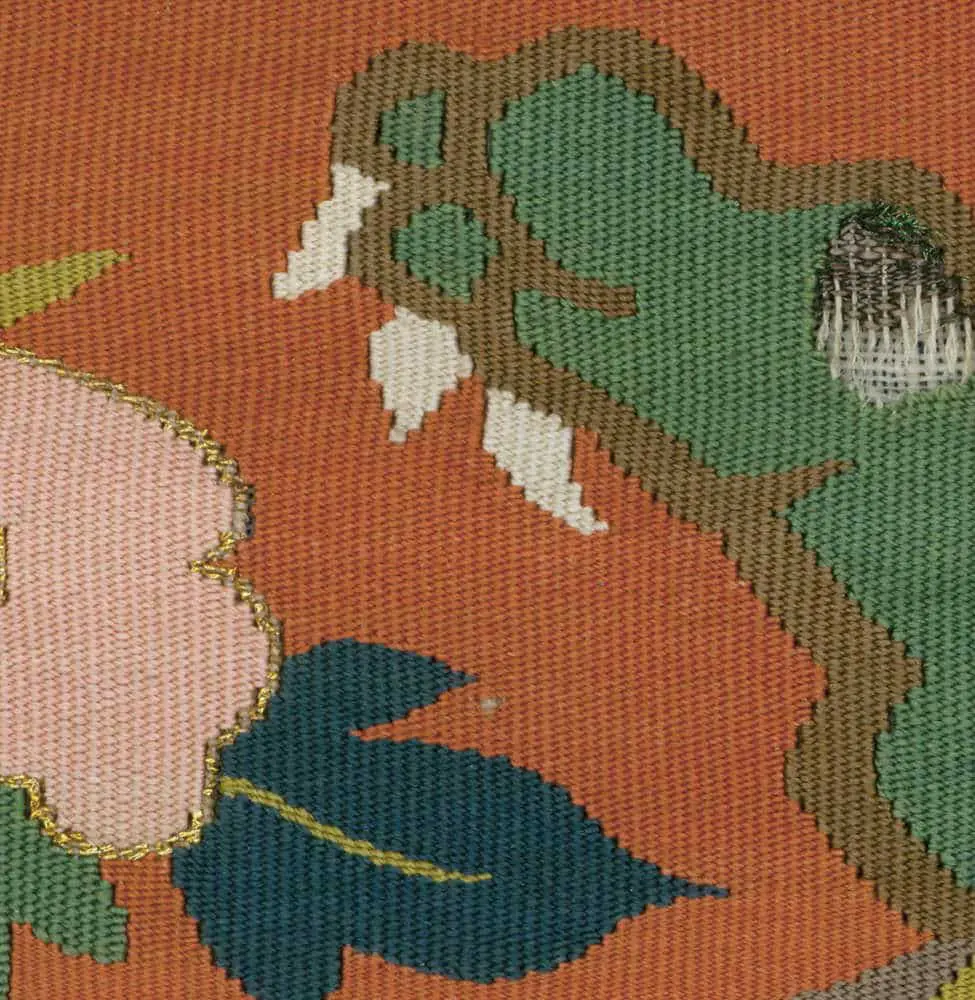
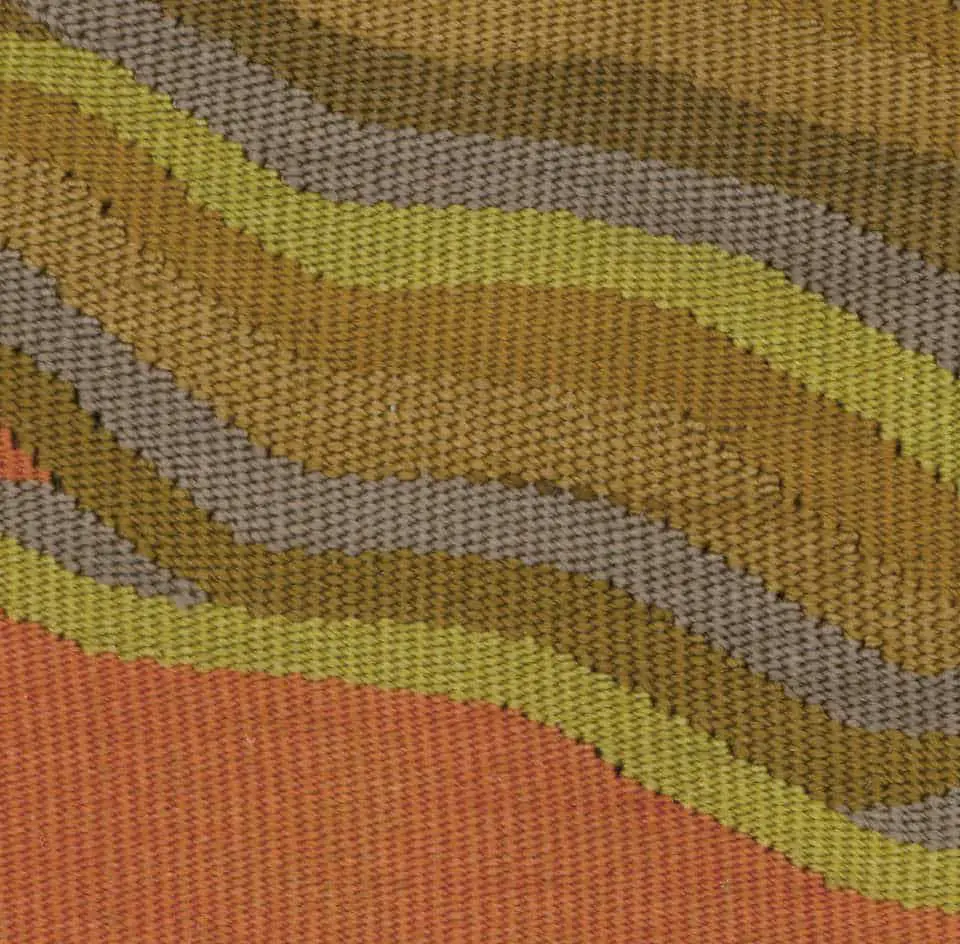


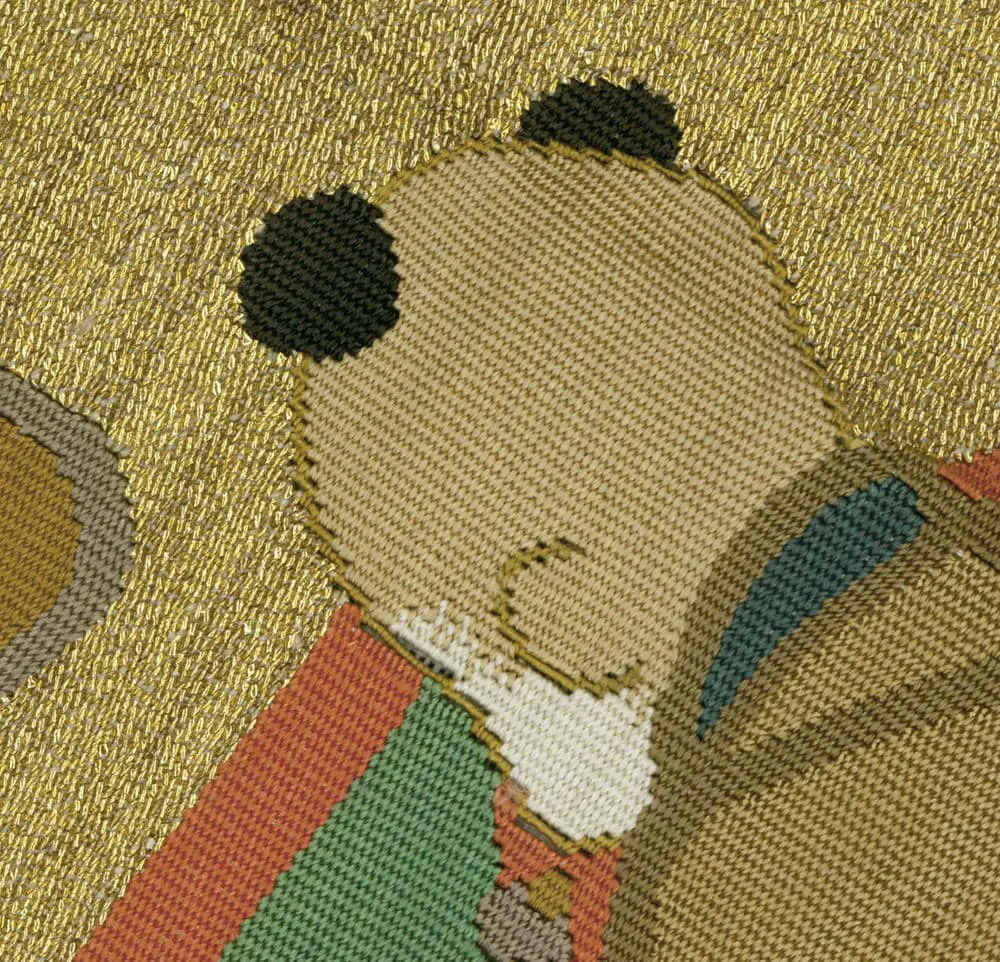

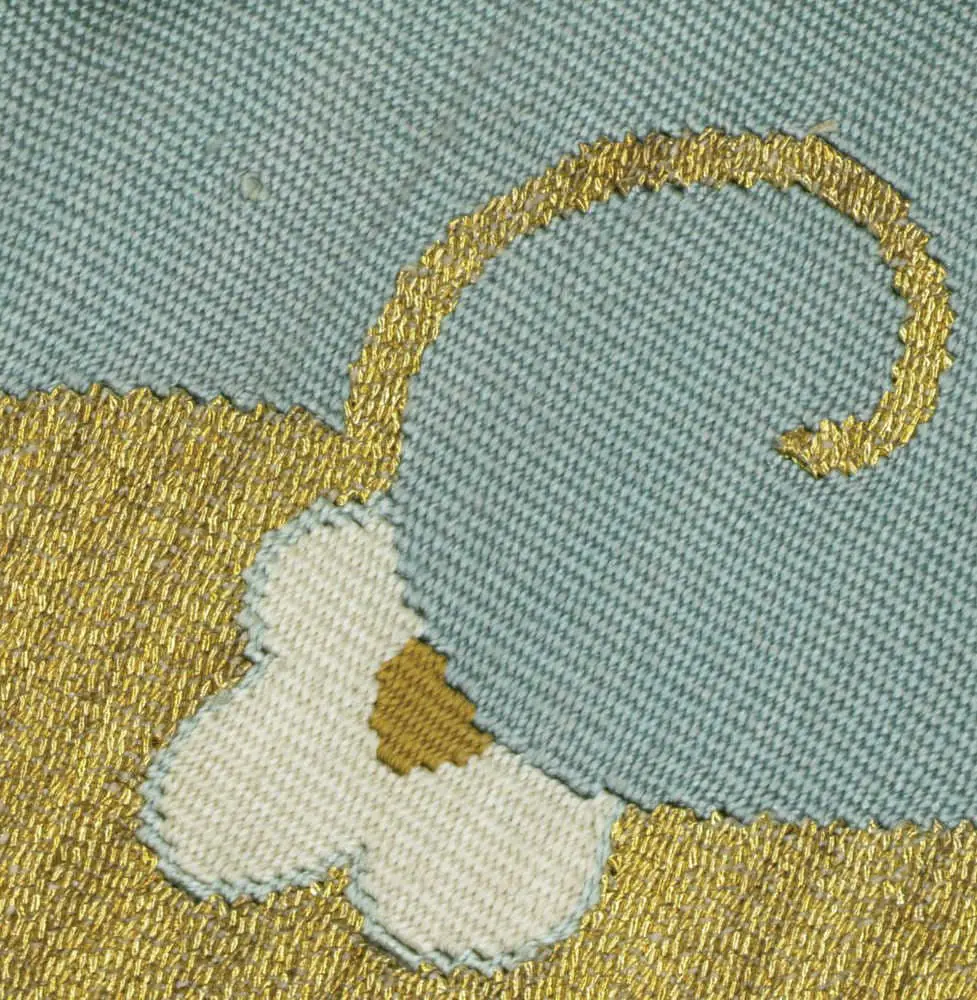
This masterful triangular uchishiki (Buddhist altar cloth), dating to the late Edo period (1820–1868), is a vibrant example of slit tapestry-weave silk. Measuring 26 inches by 26 inches along its edges (66 cm x 66 cm), the textile features a complex narrative composition divided by a horizon of stylized golden ground and swirling blue clouds. The upper portion is dominated by a fierce Karajishi (Chinese lion) entwined with lush pink botan (peonies), while the lower portion depicts a group of karako (Chinese children) at play within a garden setting. The piece is backed with a hand-woven asa (hemp) lining and remains in very good condition, showing only minor deterioration with small brownish spots on the lion figure.
The imagery is steeped in Buddhist folklore and cultural aspiration. The Karajishi serves as a mythical guardian against evil, often paired with peonies because the flower's fragrance was believed to cure a fatal liver parasite that plagued the beast. This relationship symbolizes the healing sanctuary provided by the Buddhist temple. Below, the karako represent a wish for high-status male heirs, prosperity, and happiness. The specific colors used also carry sacred weight: the red ground signifies the transmutation of passion into discerning wisdom, while the light and dark blue clouds evoke the spiritual purity of turquoise and lapis lazuli.
This artwork is featured on pages 60-63 of Ceremonial Textiles of Japan, 18th to 20th Centuries. This book, published by Yorke Antique Textiles, can be previewed or purchased on our website here.

Payment Options: We primarily accept PayPal for all transactions. Credit and debit cards are not accepted. If you prefer to pay by personal check instead of PayPal, please note this preference in the "Additional comments" field when placing your order.Ordering Process
To receive your PayPal invoice, simply fill out the form.
Shipping Details: We ship all orders to the address associated with your PayPal payment. Please ensure your PayPal shipping address is current and accurate.A phone number is required during checkout, as our shipping carrier may need to contact you regarding delivery questions.Shipping RatesUnited States and Canada: $20International destinations (air mail): $40
