Copyright © 2026 Yorke Antique Textiles
.avif)

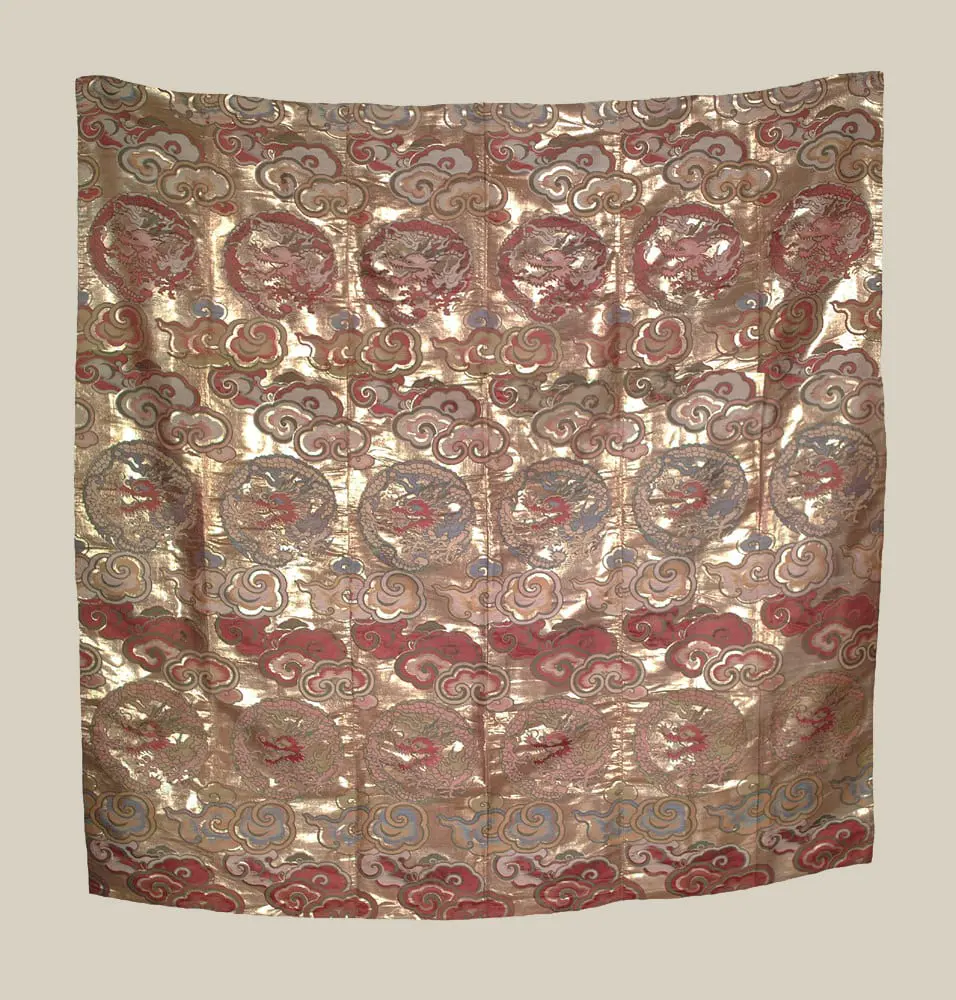
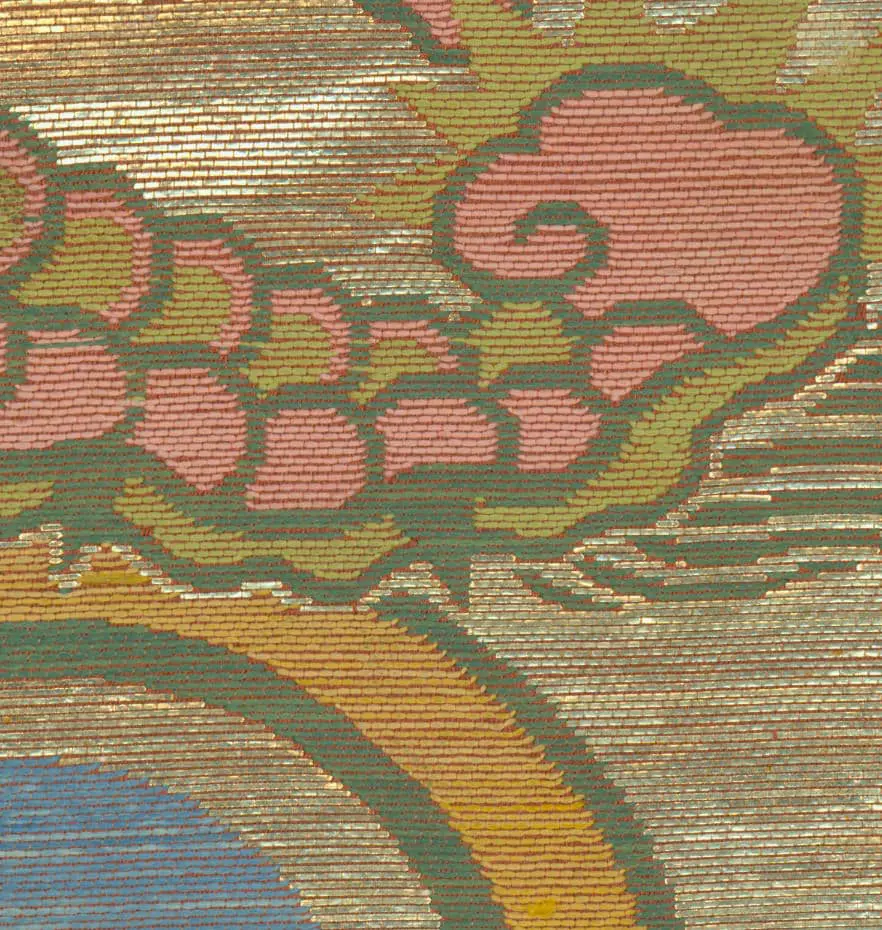
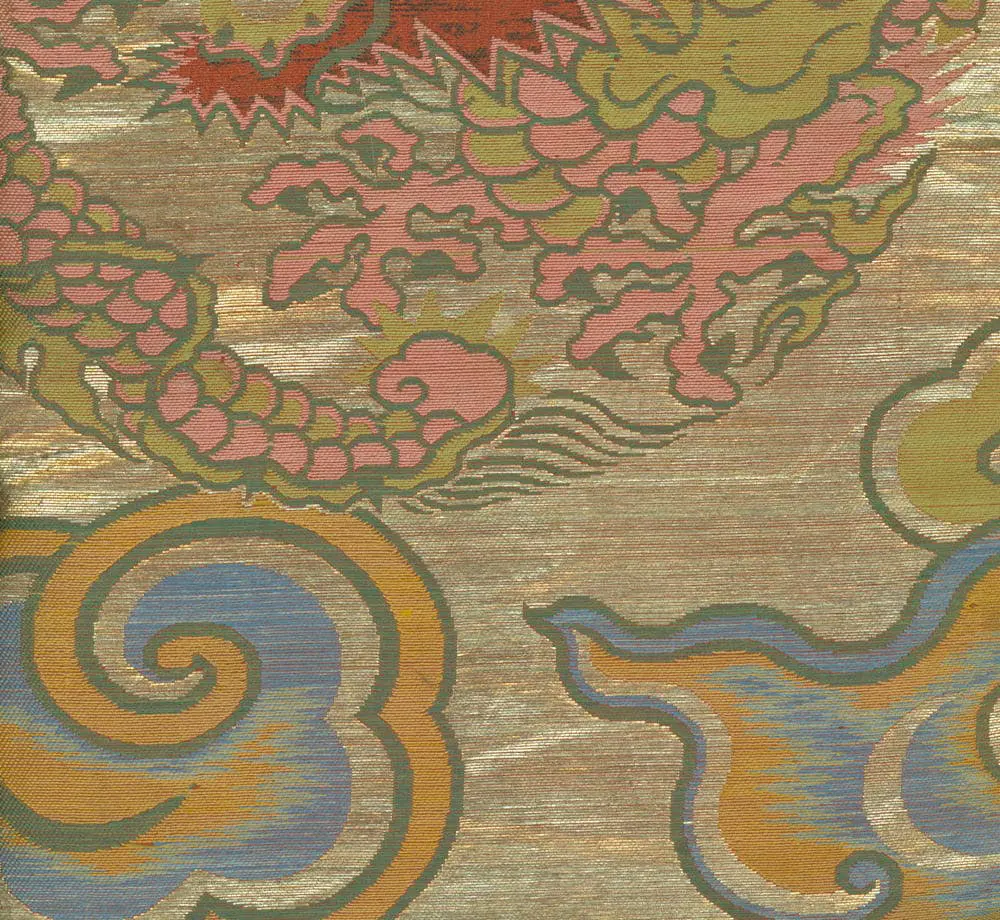
This exceptional silk kinran brocade Buddhist altar cloth is a monumental discovery, dated specifically to the 6th year of the Kansei reign (1789). It stands as a premier example of 18th-century Japanese weaving, featuring repeating roundels of unryu (Cloud Dragons) amidst stylized auspicious clouds. In Japanese Buddhist tradition, dragons are revered protectors of the law, with the Cloud Dragon specifically associated with the East, the spring season, and the wood element.
The technical construction of this piece is extraordinary: a burgundy plain-weave base is overlaid with supplementary wefts of silk and gold-leafed paper. These gold threads were created by hammering pure 24-carat gold onto mulberry bark paper, which was then lacquered and cut into microscopic strips for hand-weaving. Because of these wide, genuine gold threads, the textile is highly reflective, shifting in appearance and luster based on the viewer’s angle and the quality of light. Despite some oxidation of black threads, the textile retains remarkable structural strength and visual brilliance.
This artwork is featured on pages 98-101 of Ceremonial Textiles of Japan, 18th to 20th Centuries. This book, published by Yorke Antique Textiles, can be previewed or purchased on our website here.

Payment Options: We primarily accept PayPal for all transactions. Credit and debit cards are not accepted. If you prefer to pay by personal check instead of PayPal, please note this preference in the "Additional comments" field when placing your order.Ordering Process
To receive your PayPal invoice, simply fill out the form.
Shipping Details: We ship all orders to the address associated with your PayPal payment. Please ensure your PayPal shipping address is current and accurate.A phone number is required during checkout, as our shipping carrier may need to contact you regarding delivery questions.Shipping RatesUnited States and Canada: $20International destinations (air mail): $40
