Copyright © 2026 Yorke Antique Textiles
.avif)



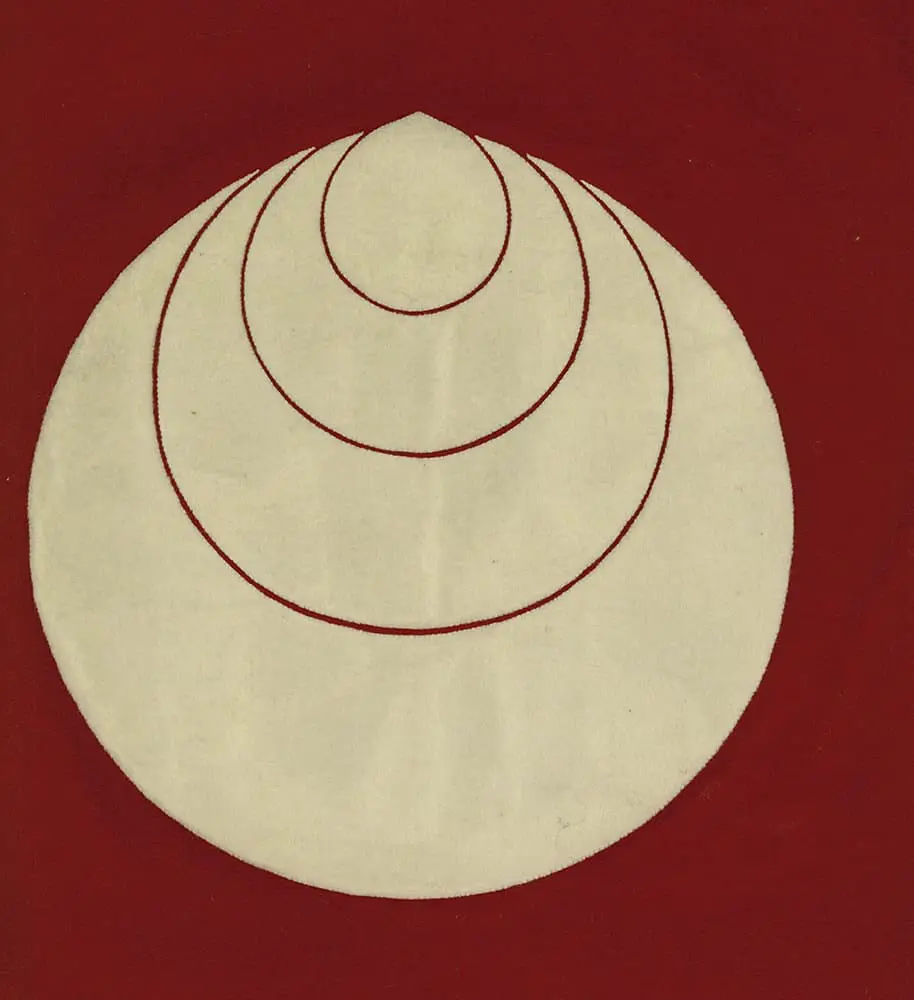
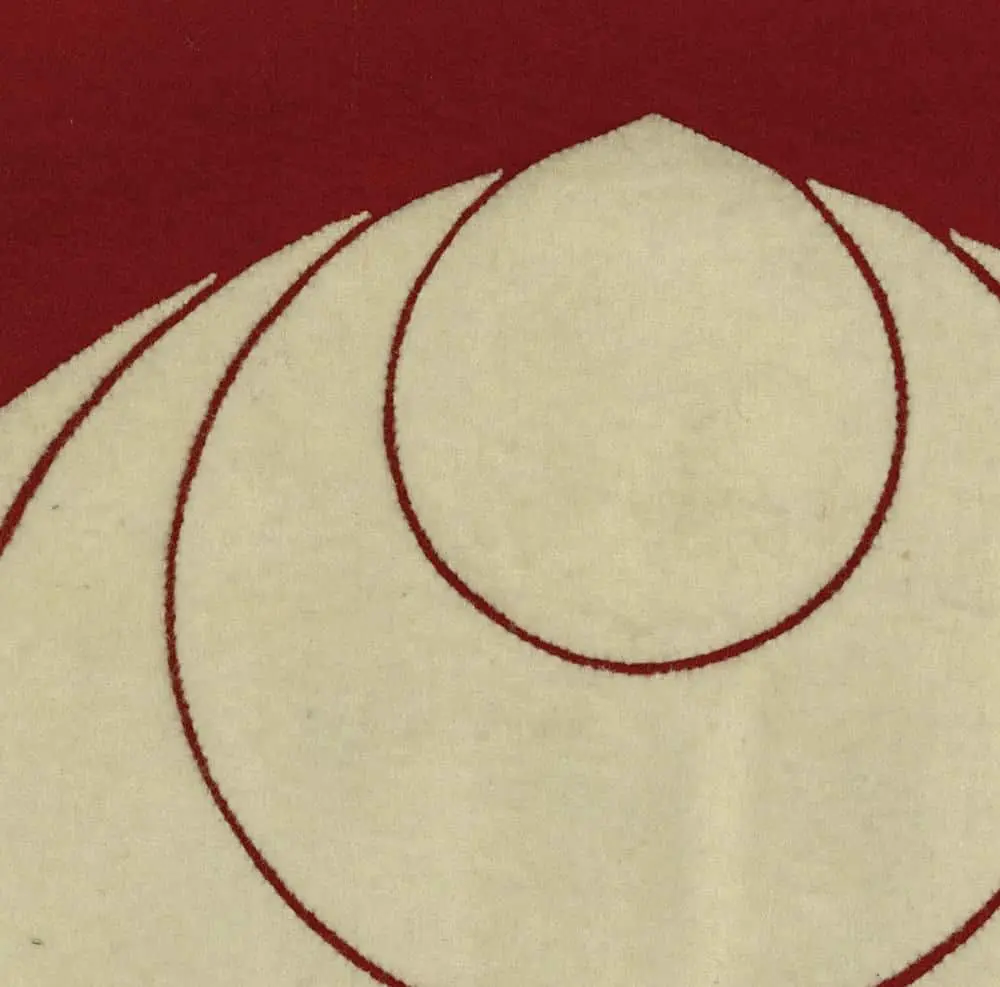
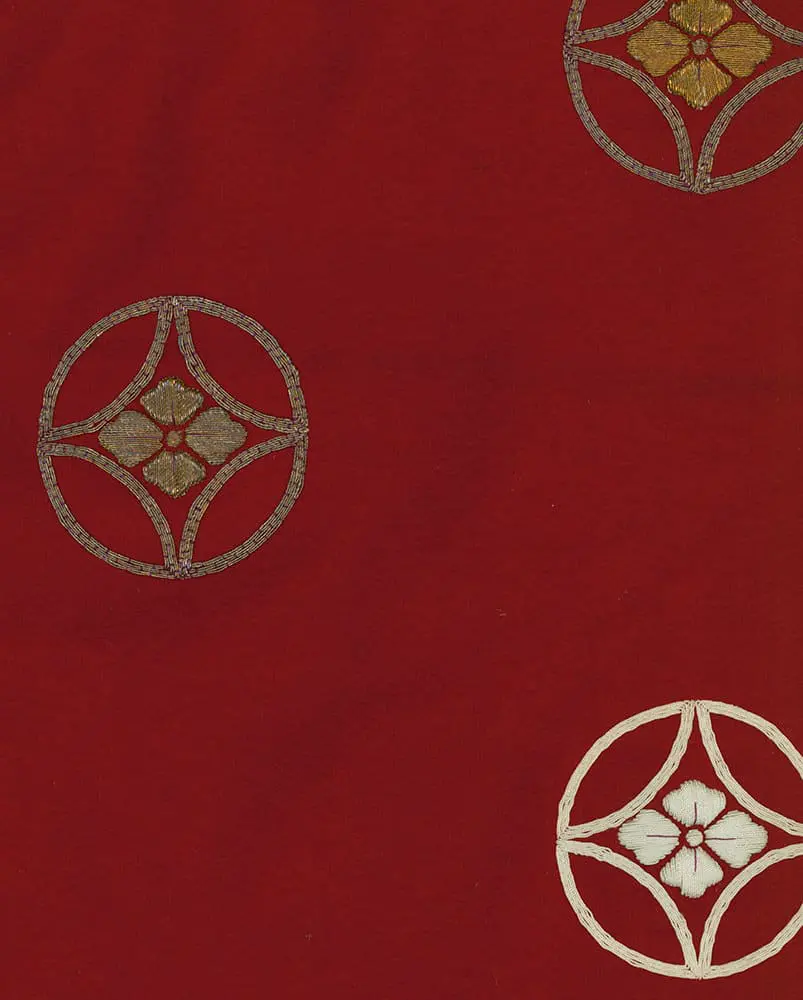

This rare and significant uchishiki (Buddhist altar cloth), originating from the early Meiji period, is a masterful example of religious dedication art. The textile is precisely dated to 1879 via an inscription on the reverse cotton lining, providing a definitive historical anchor for its creation. Measuring 35 inches by 43 inches (88.9 cm x 109.2 cm), the piece is uniquely crafted from a vibrant red felted wool, a material less common than silk in Japanese temple textiles, and features a combination of bold appliqué and detailed embroidery.
The dominant visual elements are two large, natural-white onion-shaped motifs that represent the houju (or hōyu), the sacred wish-granting jewel of Buddhist iconography. Within Buddhist belief, the houju is a powerful symbol of spiritual and material abundance, believed to bestow blessings upon the suffering, grant virtuous wishes, and provide a clear understanding of the Dharma (Buddhist law). Below these primary icons, the field is decorated with smaller circular medallions containing embroidered floral or crest-like motifs in white and gold-toned threads. The textile remains in very good condition with only minor imperfections, preserving the vivid contrast between the deep red wool and the ivory appliqués.
This artwork is featured on pages 50-51 of Ceremonial Textiles of Japan, 18th to 20th Centuries. This book, published by Yorke Antique Textiles, can be previewed or purchased on our website here.

Payment Options: We primarily accept PayPal for all transactions. Credit and debit cards are not accepted. If you prefer to pay by personal check instead of PayPal, please note this preference in the "Additional comments" field when placing your order.Ordering Process
To receive your PayPal invoice, simply fill out the form.
Shipping Details: We ship all orders to the address associated with your PayPal payment. Please ensure your PayPal shipping address is current and accurate.A phone number is required during checkout, as our shipping carrier may need to contact you regarding delivery questions.Shipping RatesUnited States and Canada: $20International destinations (air mail): $40
