Copyright © 2026 Yorke Antique Textiles
.avif)

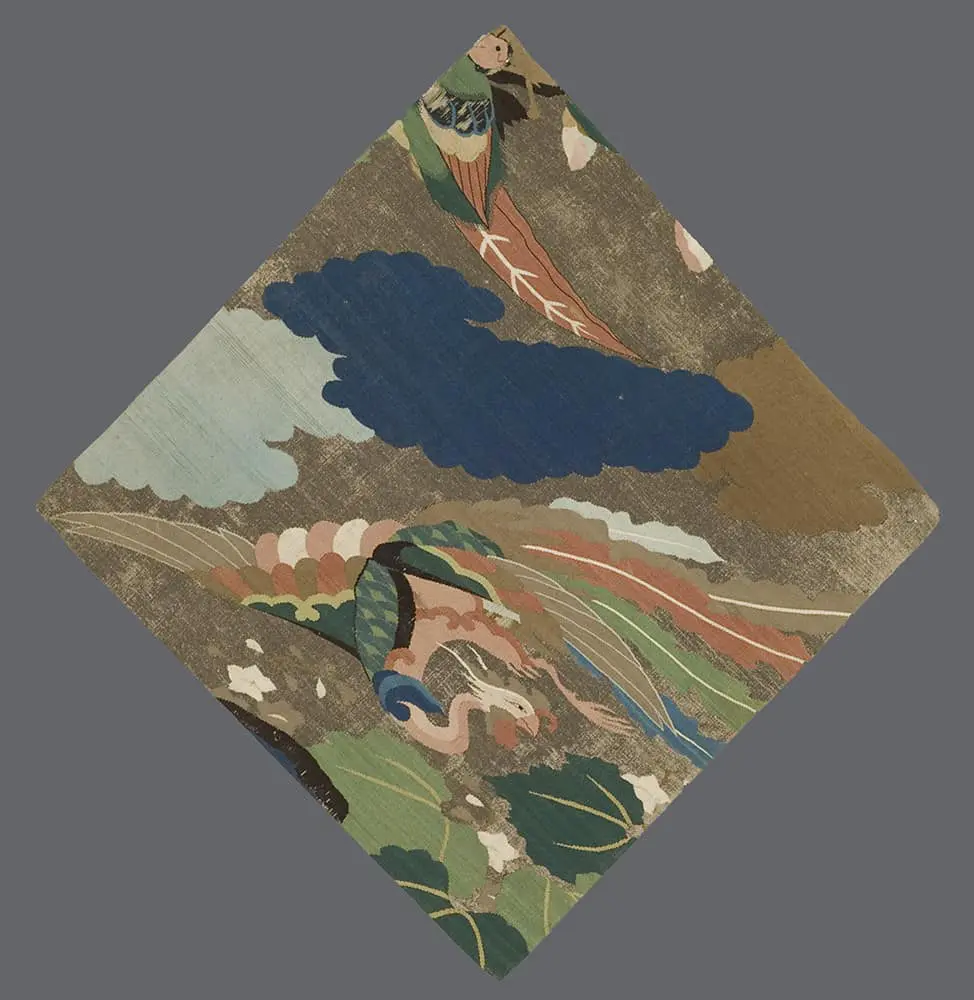
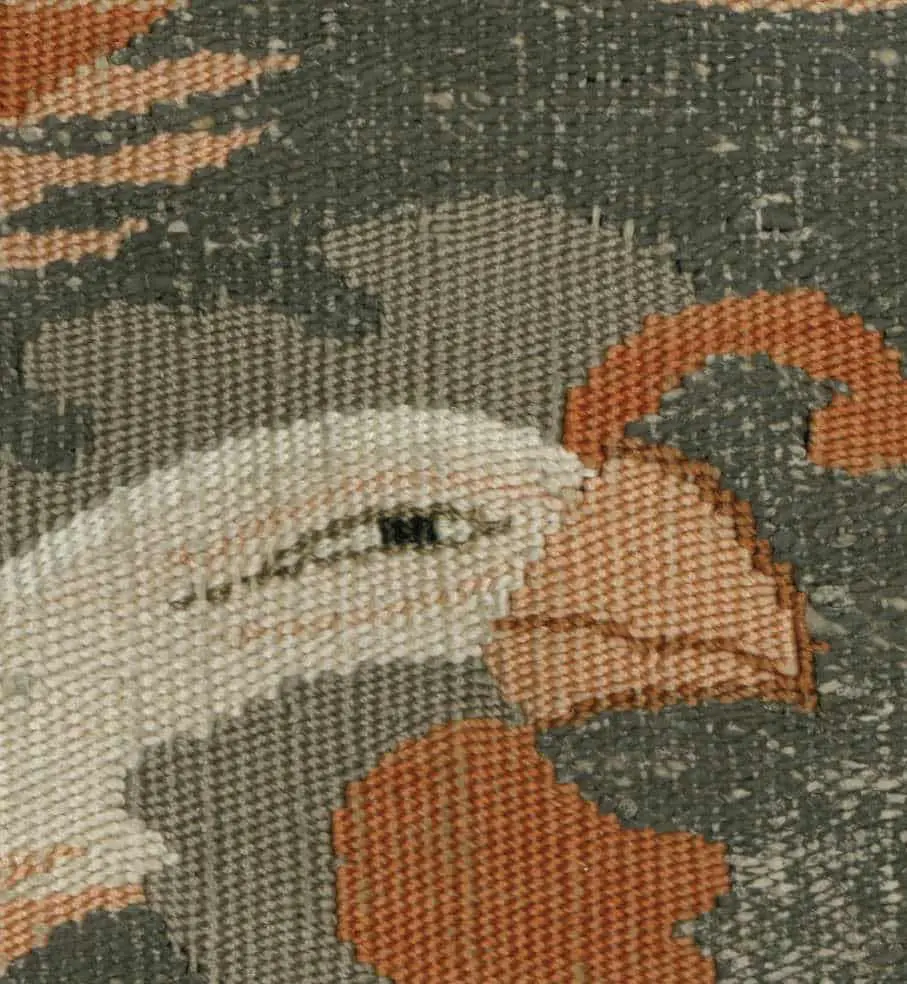



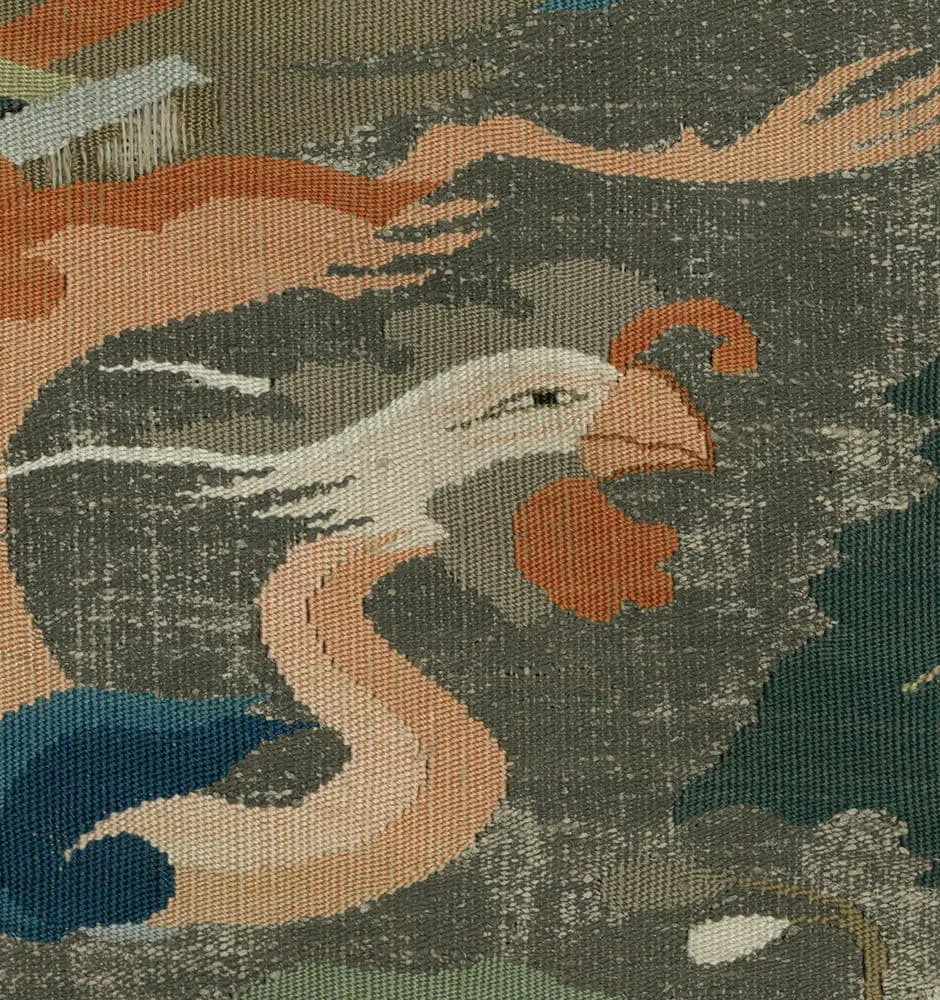
This delicate silk uchishiki (altar cloth), dating from the late Edo to mid-Meiji period (1840–1880), is a fine example of liturgical tapestry work. Measuring 14 inches by 15 inches (36 cm x 38 cm), the cloth is rendered in the demanding tsume tsuzure (fingernail tapestry or slit tapestry) technique, where the weaver uses their serrated fingernails to pack the weft threads, creating characteristic structural gaps or "slits" between color blocks.
The central motif features a majestic phoenix (ho-o) descending through a sky filled with vivid, stylized clouds. In Japanese tradition, the phoenix is a powerful auspicious symbol representing peace, tranquility, longevity, and resurrection. The bird's elaborate tail feathers are woven in a vibrant palette of coral, green, and blue, contrasting beautifully with the earthy, golden-brown ground. While the piece remains in good condition, there is some visible fraying consistent with its age and ritual use.

Payment Options: We primarily accept PayPal for all transactions. Credit and debit cards are not accepted. If you prefer to pay by personal check instead of PayPal, please note this preference in the "Additional comments" field when placing your order.Ordering Process
To receive your PayPal invoice, simply fill out the form.
Shipping Details: We ship all orders to the address associated with your PayPal payment. Please ensure your PayPal shipping address is current and accurate.A phone number is required during checkout, as our shipping carrier may need to contact you regarding delivery questions.Shipping RatesUnited States and Canada: $20International destinations (air mail): $40
