Copyright © 2026 Yorke Antique Textiles
.avif)

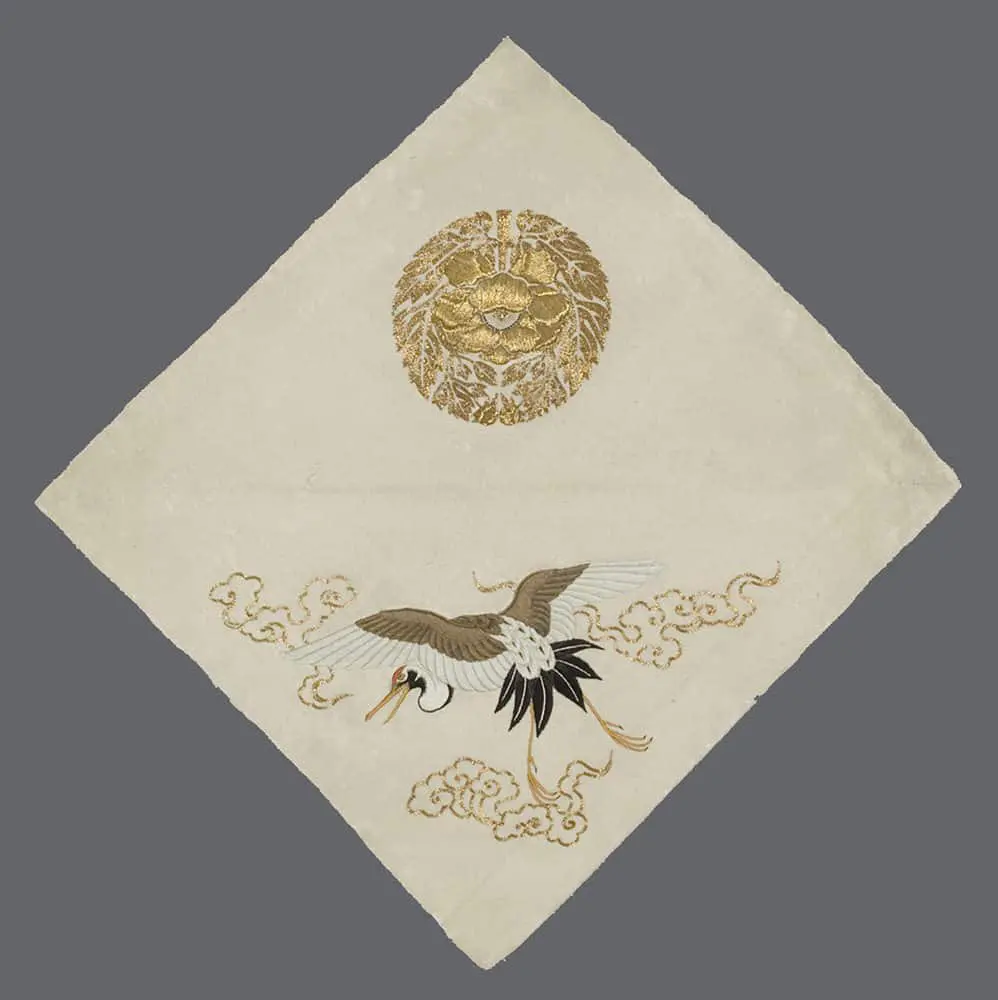
This rare silk and wool uchishiki (altar cloth), dating to approximately 1861 (Bunkyū 1), is a masterwork of late Edo-period textile art. Measuring approximately 12.5 inches by 12.5 inches (32 cm x 32 cm), the cloth is distinguished by its unusual white felt-wool background—a rare material choice for traditional Japanese liturgical textiles.
The diamond-oriented composition features highly detailed embroidery:
The piece remains in very good condition, although the delicate wool background shows some slight fraying consistent with its age.

Payment Options: We primarily accept PayPal for all transactions. Credit and debit cards are not accepted. If you prefer to pay by personal check instead of PayPal, please note this preference in the "Additional comments" field when placing your order.Ordering Process
To receive your PayPal invoice, simply fill out the form.
Shipping Details: We ship all orders to the address associated with your PayPal payment. Please ensure your PayPal shipping address is current and accurate.A phone number is required during checkout, as our shipping carrier may need to contact you regarding delivery questions.Shipping RatesUnited States and Canada: $20International destinations (air mail): $40
