Copyright © 2026 Yorke Antique Textiles
.avif)

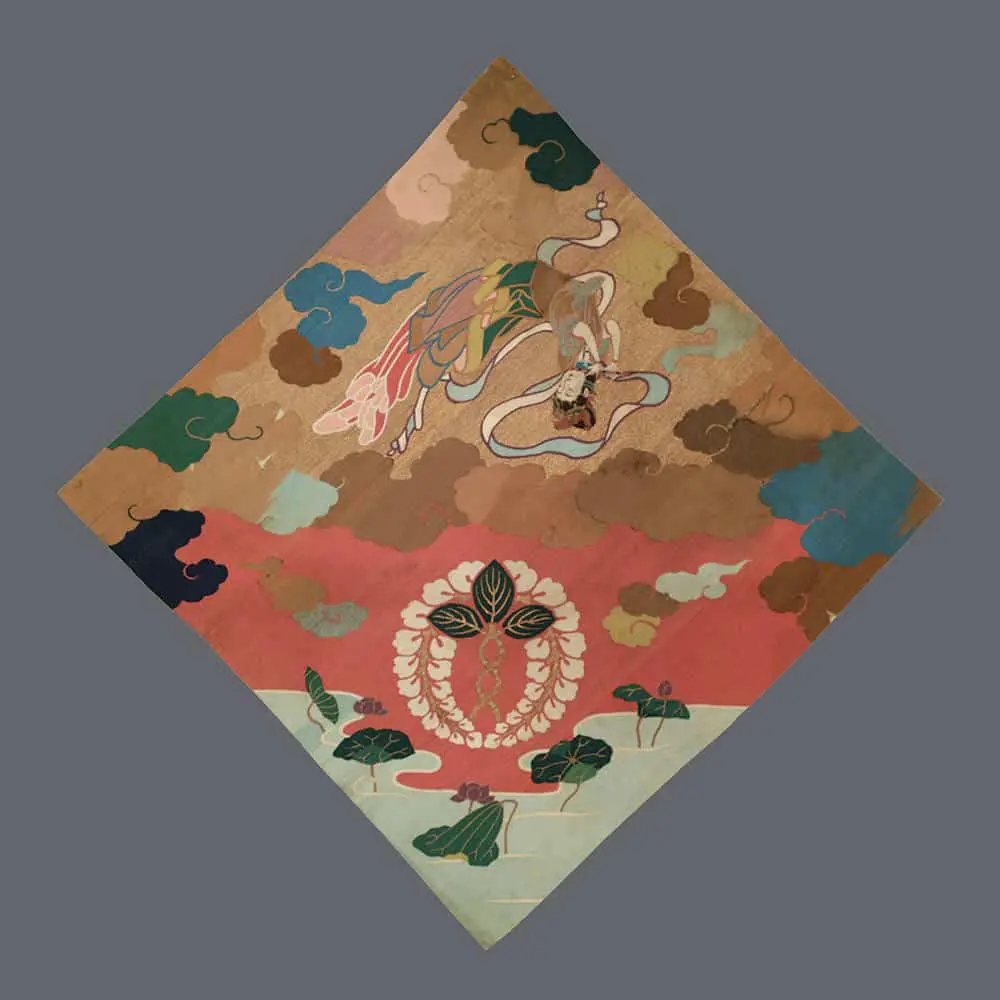
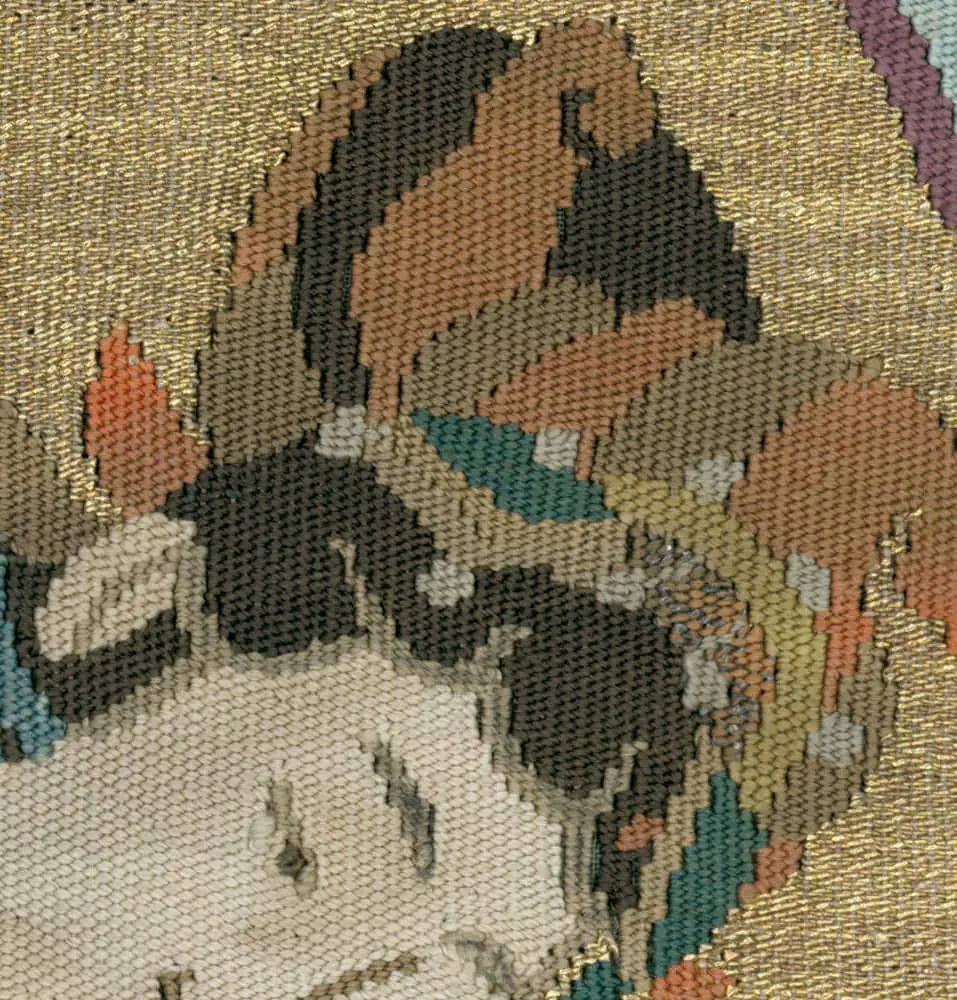
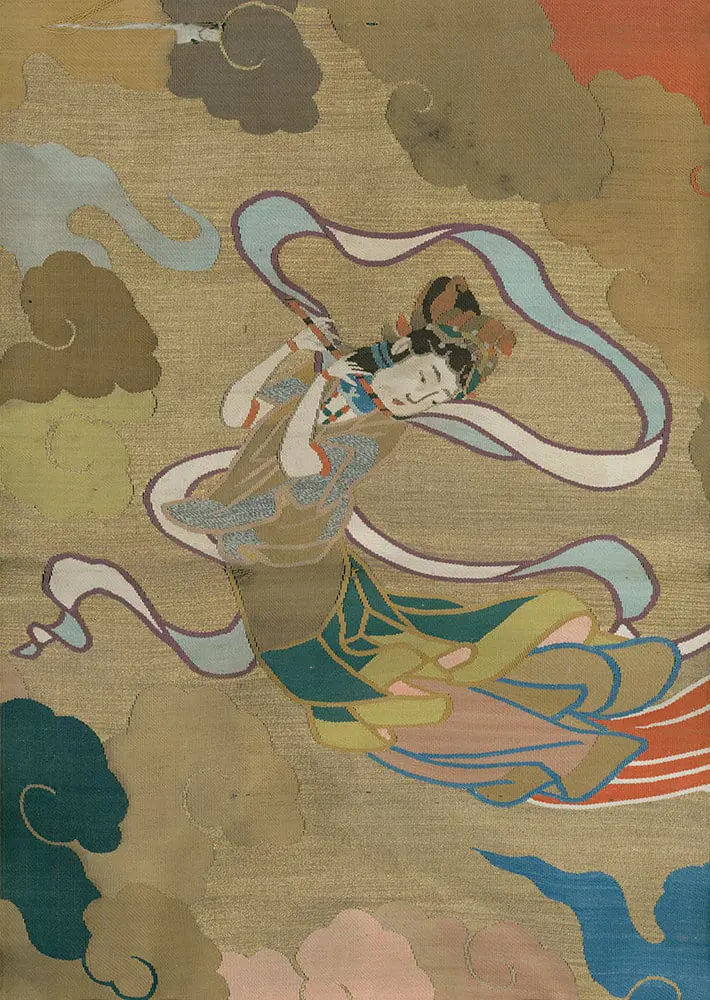

This silk uchishiki (altar cloth), dating to the late Edo period (1800–1850), is a rare example of a complex tapestry-weave textile used for Buddhist ritual. Measuring approximately 25 inches by 25 inches (64 cm x 64 cm), the cloth is oriented as a diamond, featuring a rich narrative composition divided by color and theme.
The upper half of the textile represents the heavens, with a celestial deity (tennin) descending through multi-colored auspicious clouds. The figure is shown playing a flute, with flowing robes and scarves that create a sense of divine movement. The lower half features a large, stylized lotus blossom—a central Buddhist symbol of purity—rising from a pond amidst floating lotus leaves. The piece is in fair condition, with significant tearing visible in the brown areas. This damage is a common phenomenon in antique Japanese textiles, caused by the acidic nature of historical iron-based mordants that weaken the silk fibers over time. Additionally, the backing lining is in a state of disrepair.

Payment Options: We primarily accept PayPal for all transactions. Credit and debit cards are not accepted. If you prefer to pay by personal check instead of PayPal, please note this preference in the "Additional comments" field when placing your order.Ordering Process
To receive your PayPal invoice, simply fill out the form.
Shipping Details: We ship all orders to the address associated with your PayPal payment. Please ensure your PayPal shipping address is current and accurate.A phone number is required during checkout, as our shipping carrier may need to contact you regarding delivery questions.Shipping RatesUnited States and Canada: $20International destinations (air mail): $40
