Copyright © 2026 Yorke Antique Textiles
.avif)

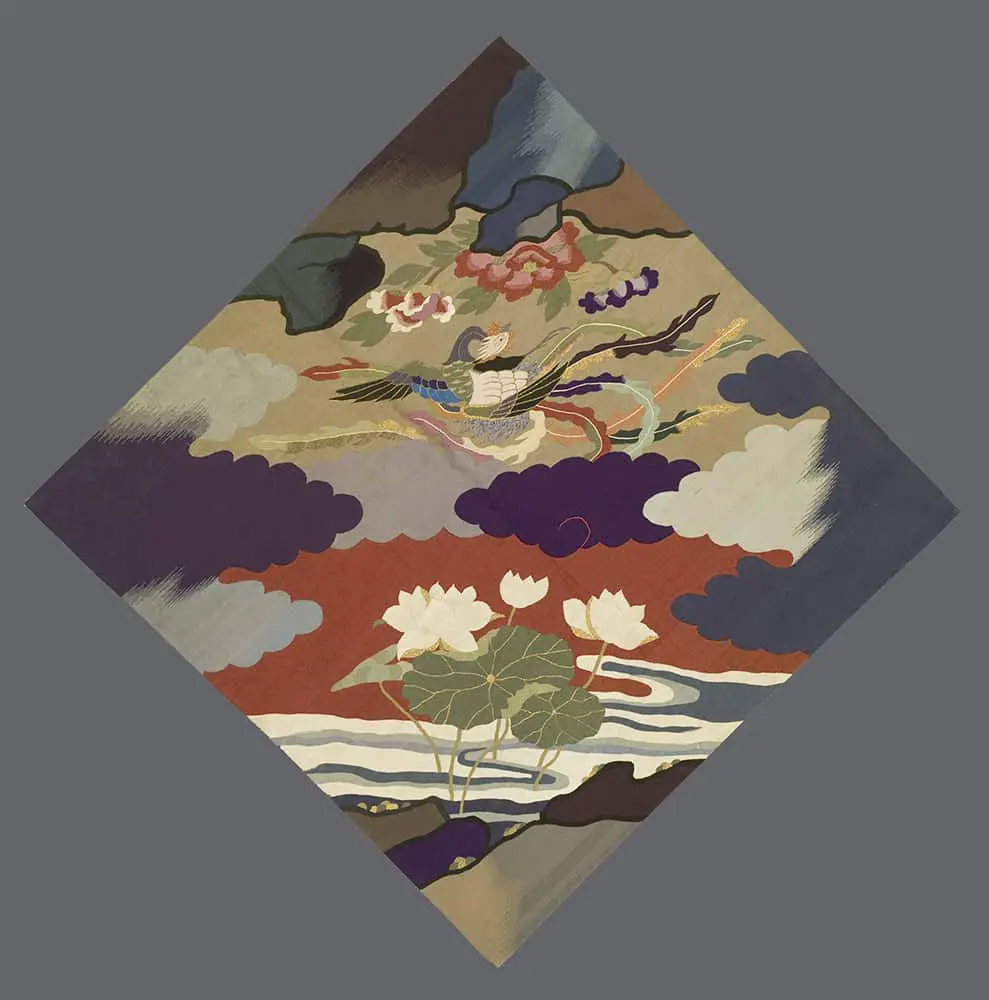
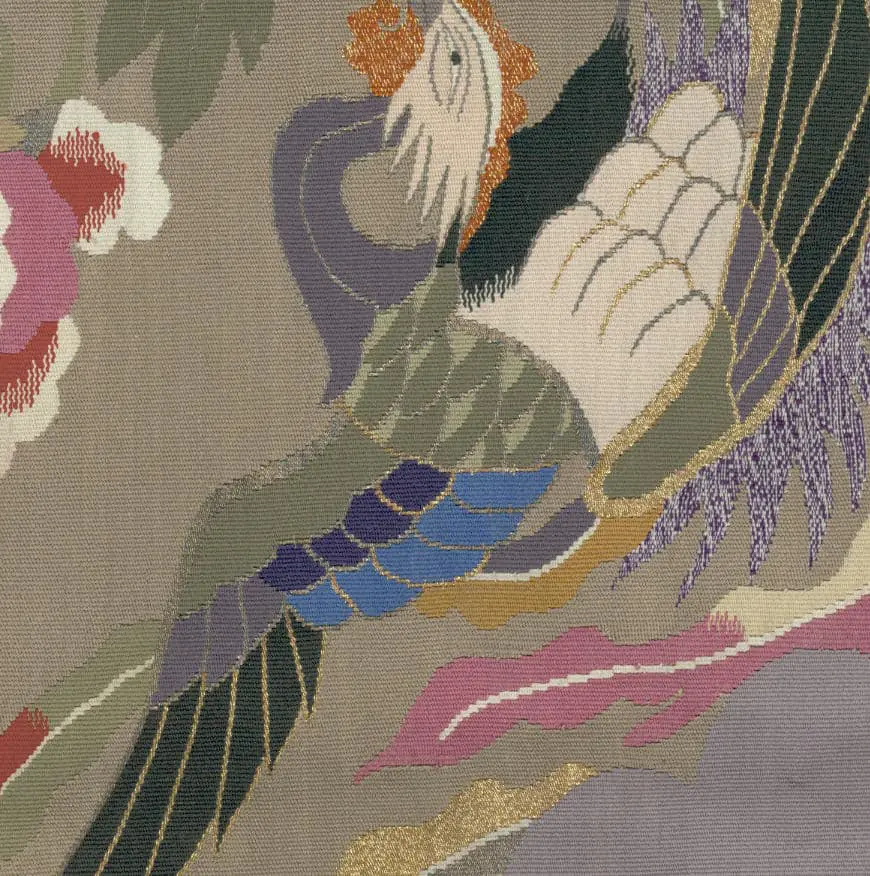
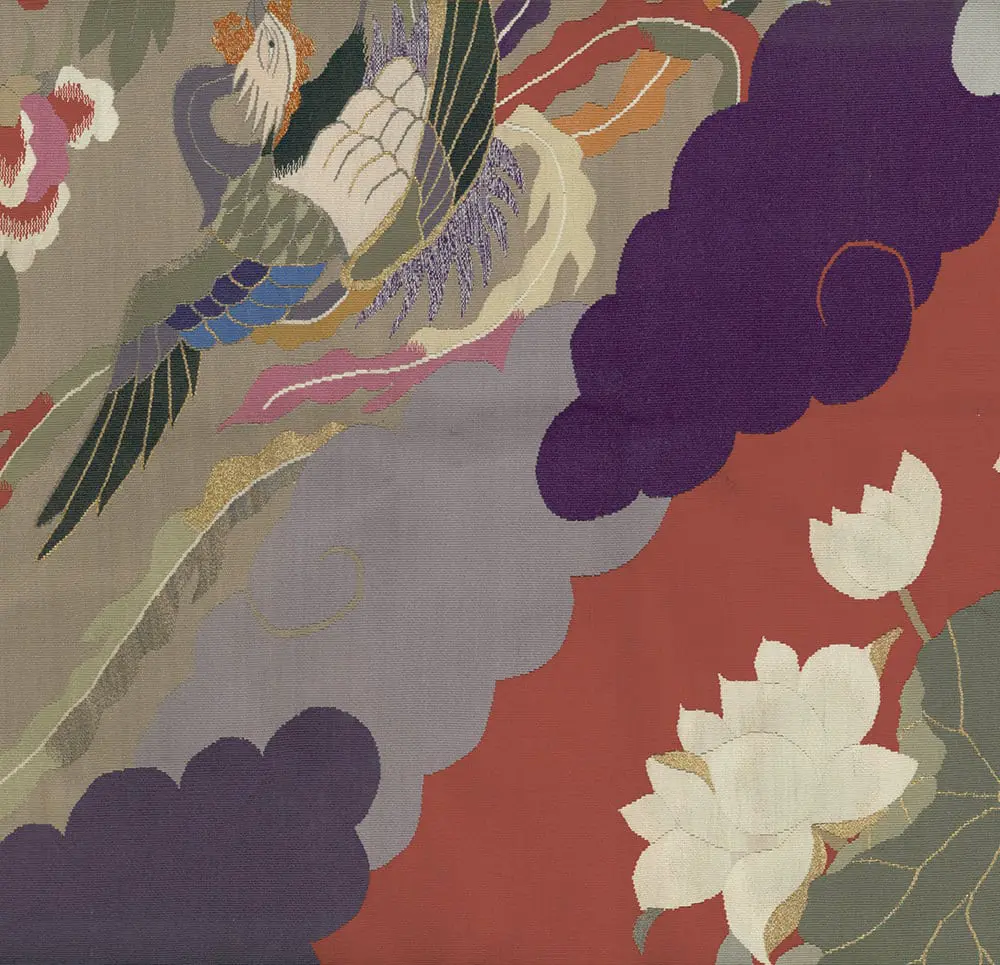
This exquisite uchishiki (Buddhist altar cloth) from Japan is precisely dated to 1903, falling within the late Meiji period. Measuring 25 inches by 25 inches (63.5 cm x 63.5 cm) along its sides, the textile is oriented as a diamond and woven in the challenging tsuzure-ori (slit-tapestry) style, where gaps are left between different colored wefts to create sharp, illustrative boundaries.
The composition is rich in Buddhist symbolism, divided into celestial and earthly realms. In the upper section, a colorful phoenix (ho-o)—representing peace and resurrection—soars through stylized purple and grey clouds toward a pink peony, a symbol of nobility. The lower half features white lotus flowers rising from a flowing stream. In Buddhism, the lotus symbolizes the soul's journey toward enlightenment, with the white petals specifically signifying mental purity. Notably, these lotuses are set against a deep red band, a sacred color associated with the five Buddhas and protective rituals. The piece is in very good condition, maintaining the vibrancy of its multi-colored silk threads.
This artwork is featured on pages 44-45 of Ceremonial Textiles of Japan, 18th to 20th Centuries. This book, published by Yorke Antique Textiles, can be previewed or purchased on our website here.

Payment Options: We primarily accept PayPal for all transactions. Credit and debit cards are not accepted. If you prefer to pay by personal check instead of PayPal, please note this preference in the "Additional comments" field when placing your order.Ordering Process
To receive your PayPal invoice, simply fill out the form.
Shipping Details: We ship all orders to the address associated with your PayPal payment. Please ensure your PayPal shipping address is current and accurate.A phone number is required during checkout, as our shipping carrier may need to contact you regarding delivery questions.Shipping RatesUnited States and Canada: $20International destinations (air mail): $40
