Copyright © 2026 Yorke Antique Textiles
.avif)

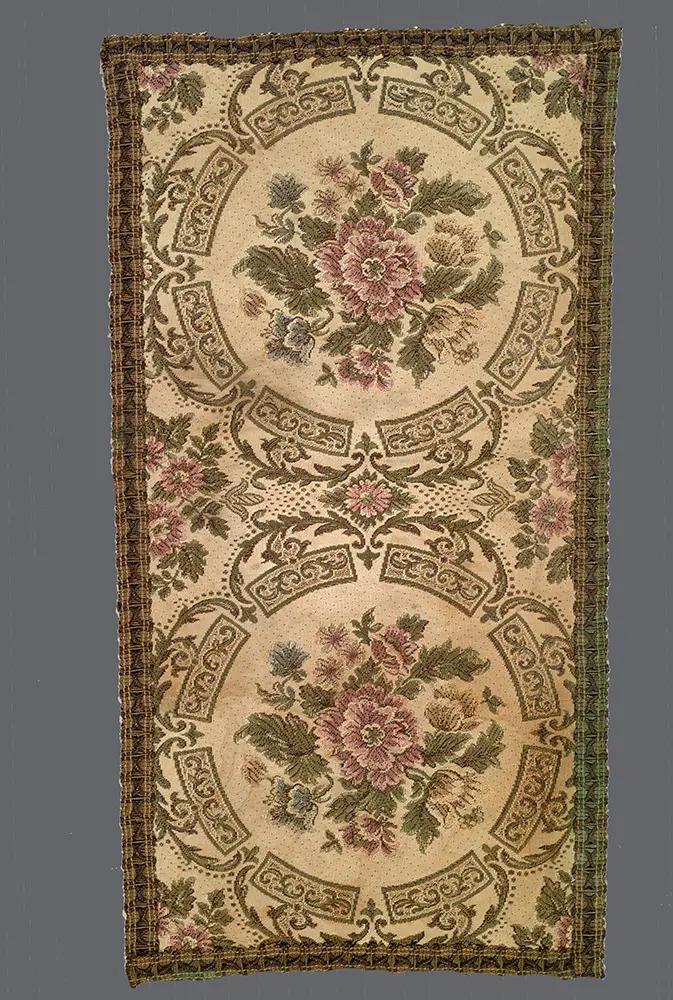
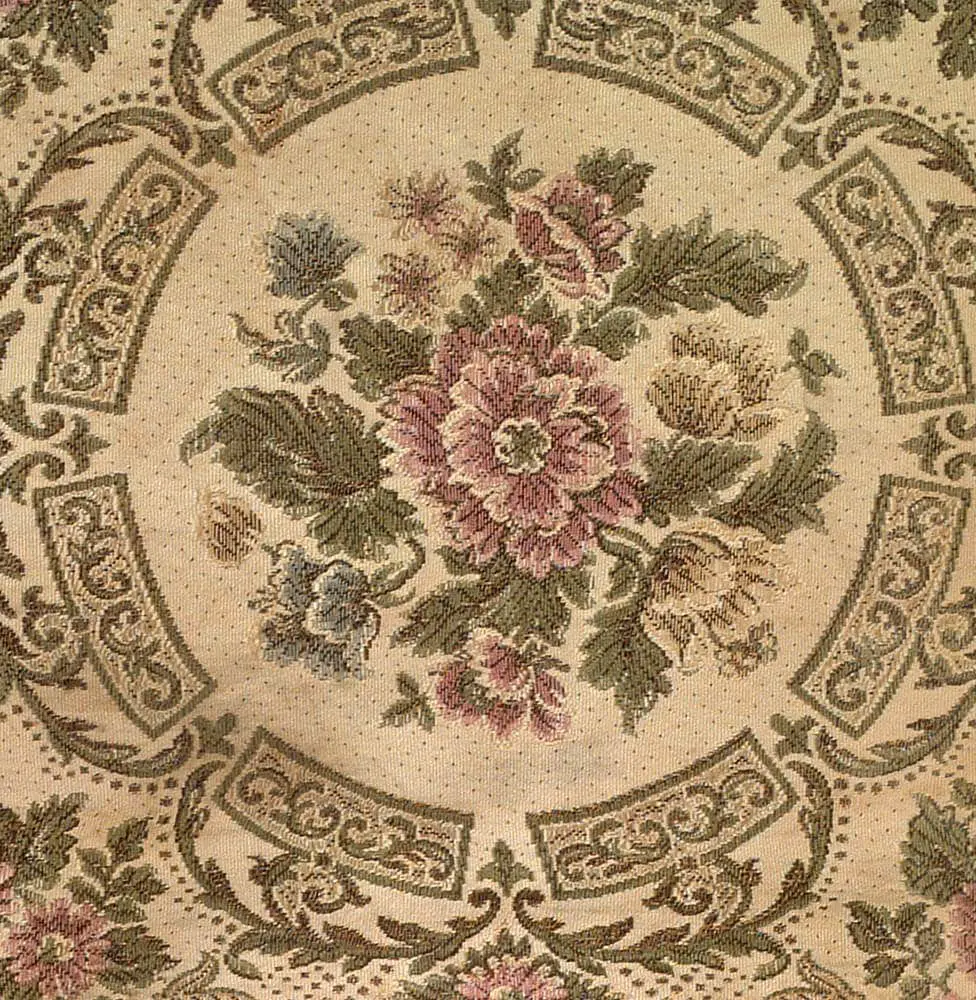
This elegant rectangular textile, originating from Western Europe during the second half of the 19th century (1850–1900), is a sophisticated example of late Victorian ormolu-style weaving. Measuring 18 inches by 9.5 inches (46 cm x 24 cm), the piece is constructed from a luminous cream satin brocade ground. The central composition features two large, circular medallions framed by scrolling neo-classical borders, each containing a lush bouquet of roses and mixed botanicals in shades of dusty pink, sage green, and muted gold.
The textile is characterized by a subtle integration of metallic threads within the brocade motifs and is framed by a distinctive 1-inch edging. This border showcases a complex, three-dimensional braiding and couching technique that creates a dense, dark textured perimeter. The reverse is finished with a dark olive green silk or satin backing, providing a rich tonal contrast to the cream face. While the structural integrity remains sound, there is noticeable soiling and staining on the light background, consistent with its history as a domestic decorative object.

Payment Options: We primarily accept PayPal for all transactions. Credit and debit cards are not accepted. If you prefer to pay by personal check instead of PayPal, please note this preference in the "Additional comments" field when placing your order.Ordering Process
To receive your PayPal invoice, simply fill out the form.
Shipping Details: We ship all orders to the address associated with your PayPal payment. Please ensure your PayPal shipping address is current and accurate.A phone number is required during checkout, as our shipping carrier may need to contact you regarding delivery questions.Shipping RatesUnited States and Canada: $20International destinations (air mail): $40
