Copyright © 2026 Yorke Antique Textiles
.avif)

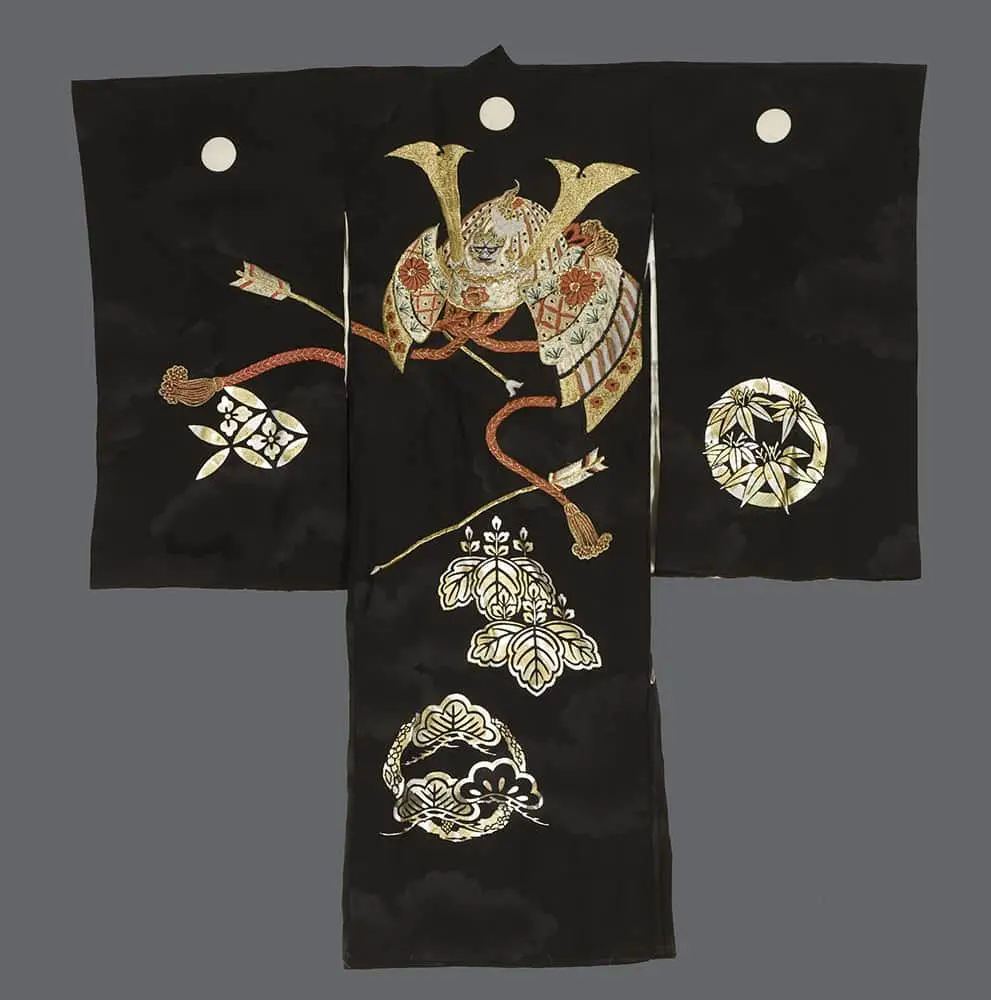
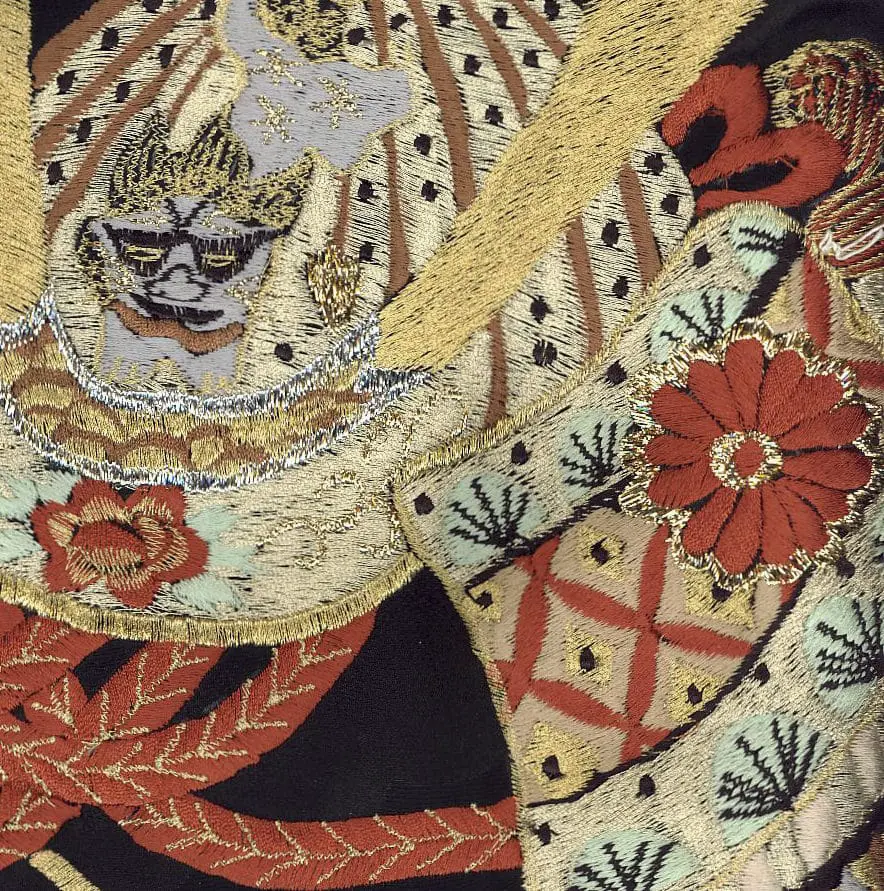
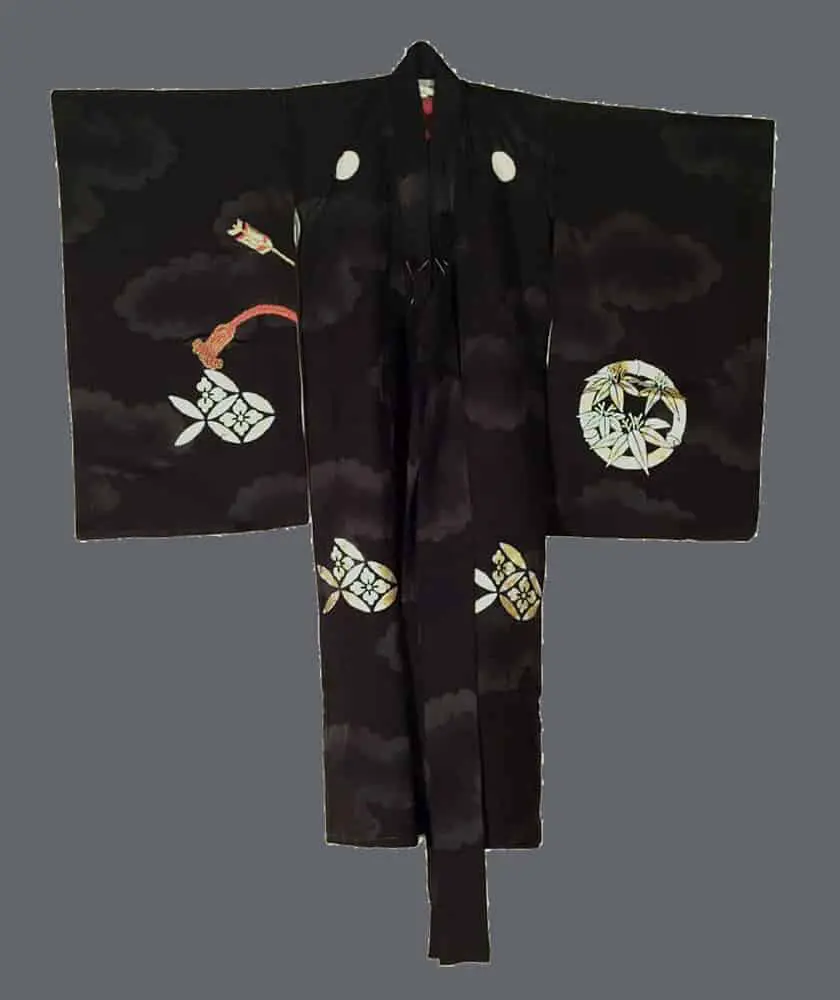
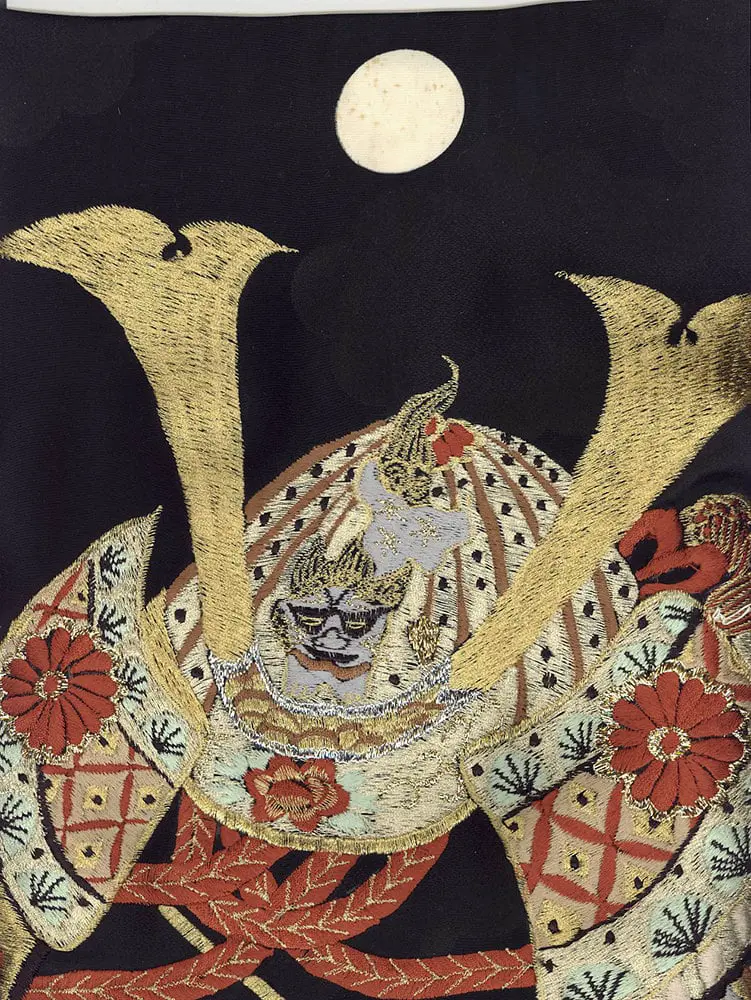

This boy’s miyamairi kimono is a powerful example of mid-century celebratory attire, specifically designed for a male infant’s visit to a Shinto shrine. The garment is crafted from a deep black silk, which serves as a formal, high-contrast backdrop for a dramatic central composition of samurai imagery. At the heart of the design is a large, meticulously machine-embroidered kabuto (samurai helmet), rendered in shimmering gold and silver threads with vibrant orange accents.
The helmet is flanked by crossed arrows (ya) and several bold, auspicious family crests (mon), including a paulownia (kiri) and a stylized bamboo circle, all executed in brilliant metallic embroidery. Symbolically, the kabuto and arrows represent the parents' wishes for the boy to grow up with strength, bravery, and protection. The presence of three white circular mon across the shoulders further emphasizes the formal and ceremonial status of the piece. This kimono reflects the post-war Showa era's ability to blend traditional warrior symbolism with the precision and luster of modern machine embroidery techniques.
It remains in very good condition. It measures 35 inches along the sleeves and stands at 37 inches tall.

Payment Options: We primarily accept PayPal for all transactions. Credit and debit cards are not accepted. If you prefer to pay by personal check instead of PayPal, please note this preference in the "Additional comments" field when placing your order.Ordering Process
To receive your PayPal invoice, simply fill out the form.
Shipping Details: We ship all orders to the address associated with your PayPal payment. Please ensure your PayPal shipping address is current and accurate.A phone number is required during checkout, as our shipping carrier may need to contact you regarding delivery questions.Shipping RatesUnited States and Canada: $20International destinations (air mail): $40
