Copyright © 2026 Yorke Antique Textiles
.avif)

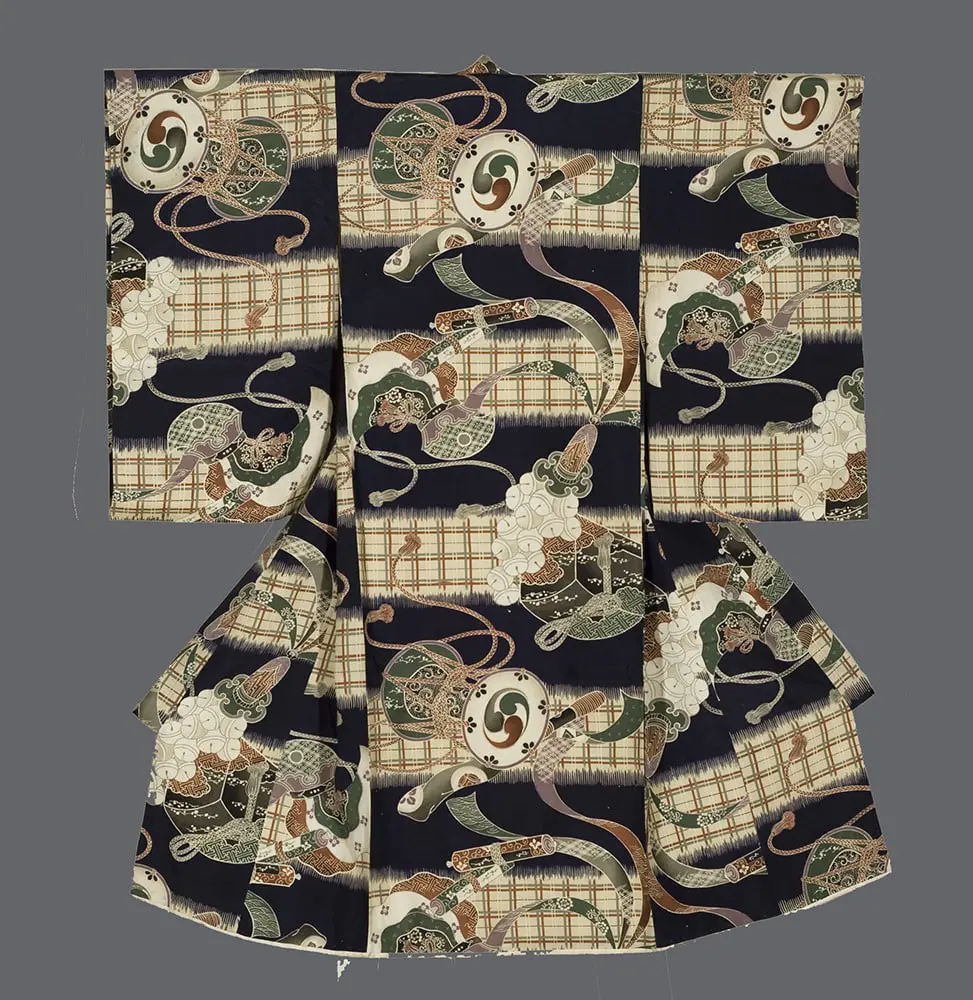
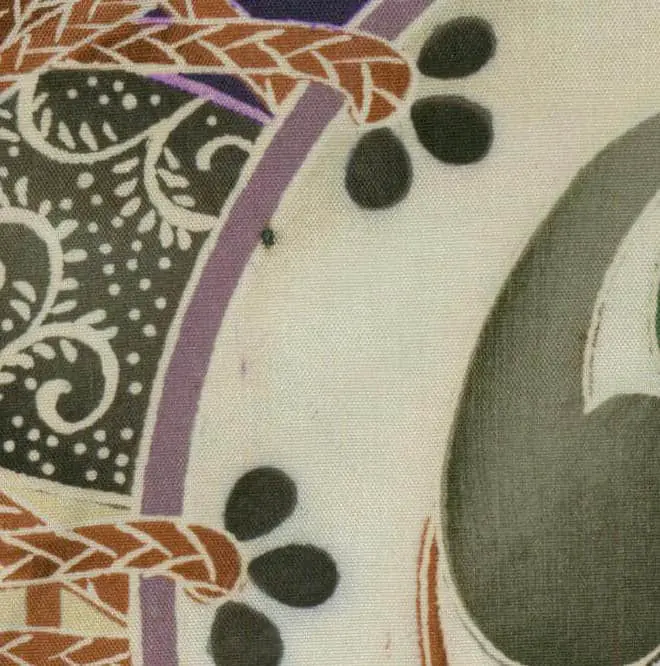
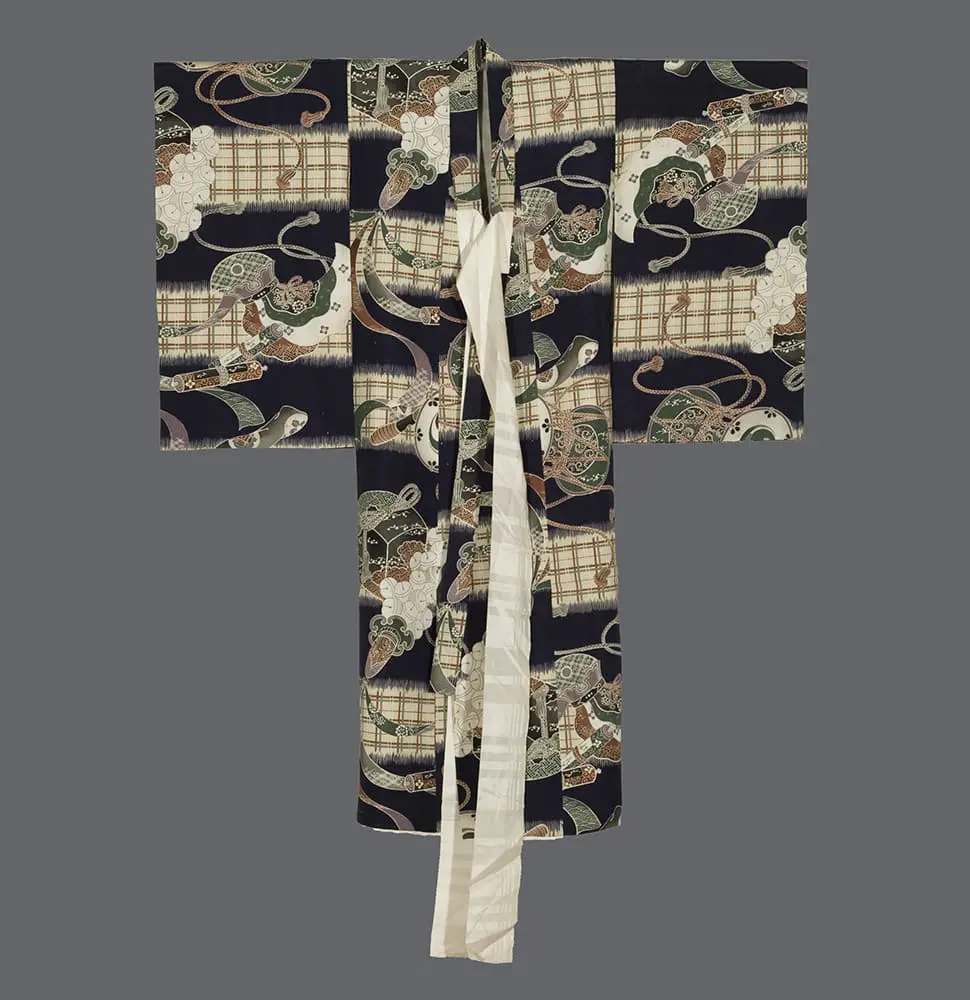


This boy's kimono presents a dynamic arrangement of martial and ceremonial objects through bold printed design, creating imagery rich with auspicious meaning for a young male wearer. Against a deep navy-black ground, cream-colored passages with rust and brown grid patterns alternate in horizontal bands, their boundaries featuring characteristic feathered ikat-like edges that create visual texture and movement.
Scattered across this striking ground, various implements associated with samurai culture and festival celebrations appear in olive green, rust, cream, and brown tones. Prominent among these are taiko drums bearing the mitsudomoe symbol—the three-comma design associated with Shinto shrines, the god of war Hachiman, and protective spiritual power. Katana (swords) with ornately decorated handles and scabbards suggest martial prowess and honor, while flowing ribbons and decorative cords weave throughout, adding graceful movement to the composition.
The imagery connects to Tango no Sekku (Boys' Day, now Children's Day), when families traditionally display martial objects to inspire strength, courage, and success in young boys. Each element carries meaning: drums suggest celebration and spiritual protection, swords represent honor and the warrior spirit, and the overall abundance of auspicious objects multiplies good wishes for the child's future.
The bold graphic quality—combining geometric plaid patterns with figurative martial imagery against dramatic dark ground—creates a festive, celebratory garment appropriate for special occasions marking important moments in a boy's childhood.
Its measurements are 34 inches (86.4 cm) from sleeve-end to sleeve-end and 40 inches (101.6 cm) in height.

Payment Options: We primarily accept PayPal for all transactions. Credit and debit cards are not accepted. If you prefer to pay by personal check instead of PayPal, please note this preference in the "Additional comments" field when placing your order.Ordering Process
To receive your PayPal invoice, simply fill out the form.
Shipping Details: We ship all orders to the address associated with your PayPal payment. Please ensure your PayPal shipping address is current and accurate.A phone number is required during checkout, as our shipping carrier may need to contact you regarding delivery questions.Shipping RatesUnited States and Canada: $20International destinations (air mail): $40
