Copyright © 2026 Yorke Antique Textiles
.avif)




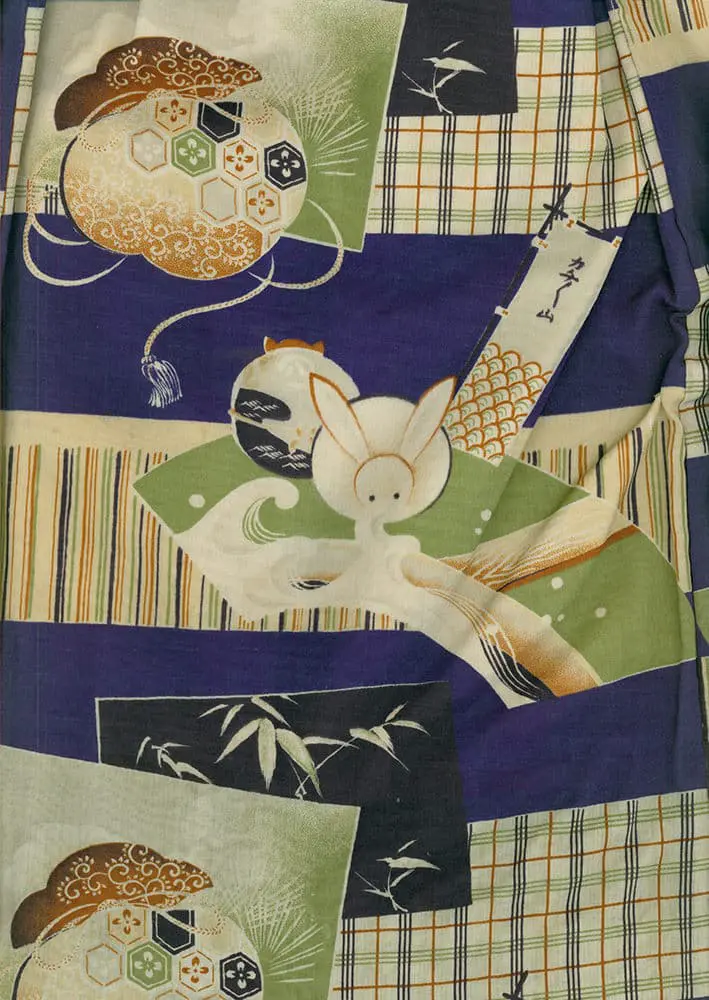
This small cotton boy's kimono presents a lively patchwork-style composition through printed motifs, combining playful imagery with bold graphic structure against a deep navy-blue ground. The design arranges rectangular sections of varying patterns—plaids, stripes, and solid colors in olive green, black, tan, and cream—creating an effect reminiscent of traditional kire-tsuzure (patchwork) aesthetics.
Within this geometric framework, charming figural motifs repeat throughout. White usagi (rabbits) leap energetically across olive-green passages, their long ears and animated poses conveying youthful vitality. Rabbits symbolize cleverness, good fortune, and advancement—the animals associated with the moon in Japanese folklore, carrying wishes for the child's bright future.
Ornate temari (decorative handballs) appear in golden-tan tones, their surfaces patterned with kikko (tortoiseshell hexagons) and other geometric designs. These traditional toys symbolize childhood happiness, parental wishes for a good life, and the hope that life will "bounce back" from difficulties.
Black rectangular sections feature take (bamboo) leaves with small birds in flight, adding natural imagery with bamboo's associations of flexibility and resilience. Vertical panels bearing calligraphic elements suggest tanzaku (poem cards), adding literary refinement to the playful composition.
The cotton construction indicates practical everyday wear suitable for an active child, while the cheerful, auspicious imagery would bring good-fortune symbolism to daily life.
It has a hole on the front side and a few other imperfections. Its dimensions are approximately 32 inches by 32 inches (81 cm x 81 cm).

Payment Options: We primarily accept PayPal for all transactions. Credit and debit cards are not accepted. If you prefer to pay by personal check instead of PayPal, please note this preference in the "Additional comments" field when placing your order.Ordering Process
To receive your PayPal invoice, simply fill out the form.
Shipping Details: We ship all orders to the address associated with your PayPal payment. Please ensure your PayPal shipping address is current and accurate.A phone number is required during checkout, as our shipping carrier may need to contact you regarding delivery questions.Shipping RatesUnited States and Canada: $20International destinations (air mail): $40
