Copyright © 2026 Yorke Antique Textiles
.avif)

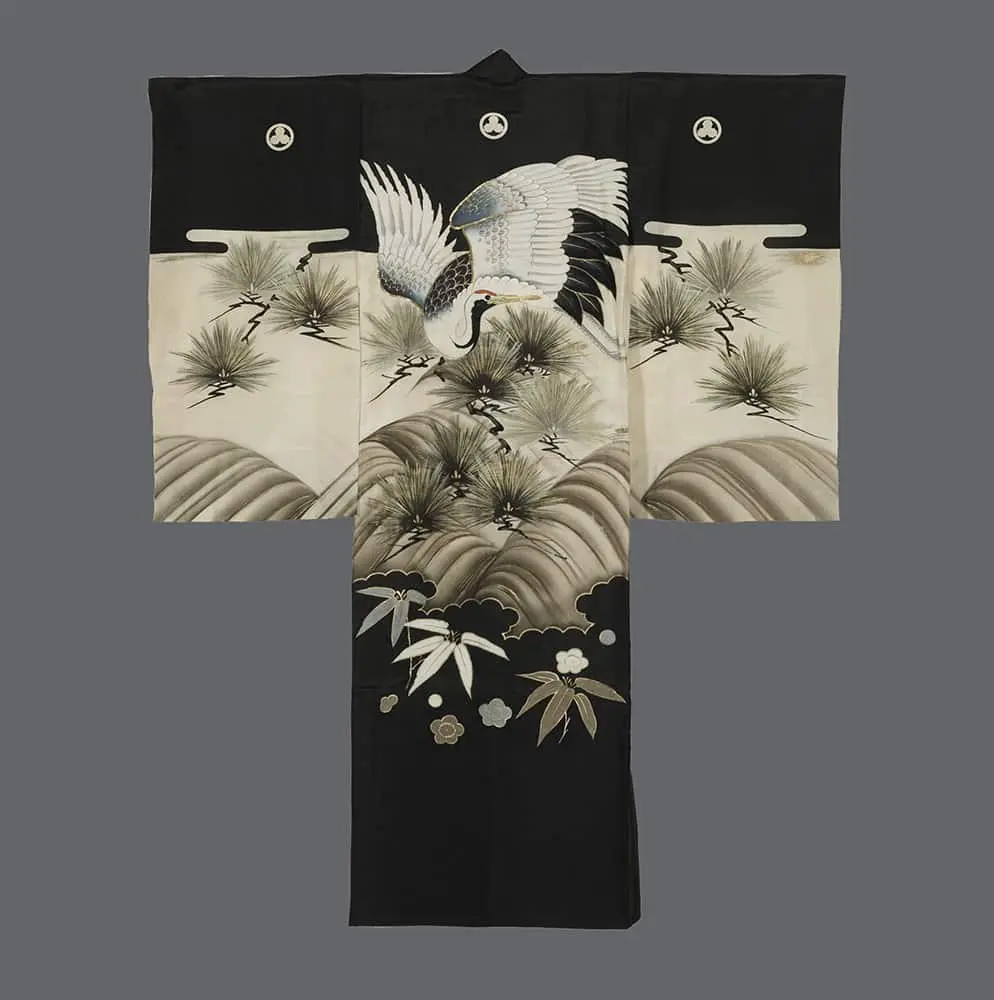

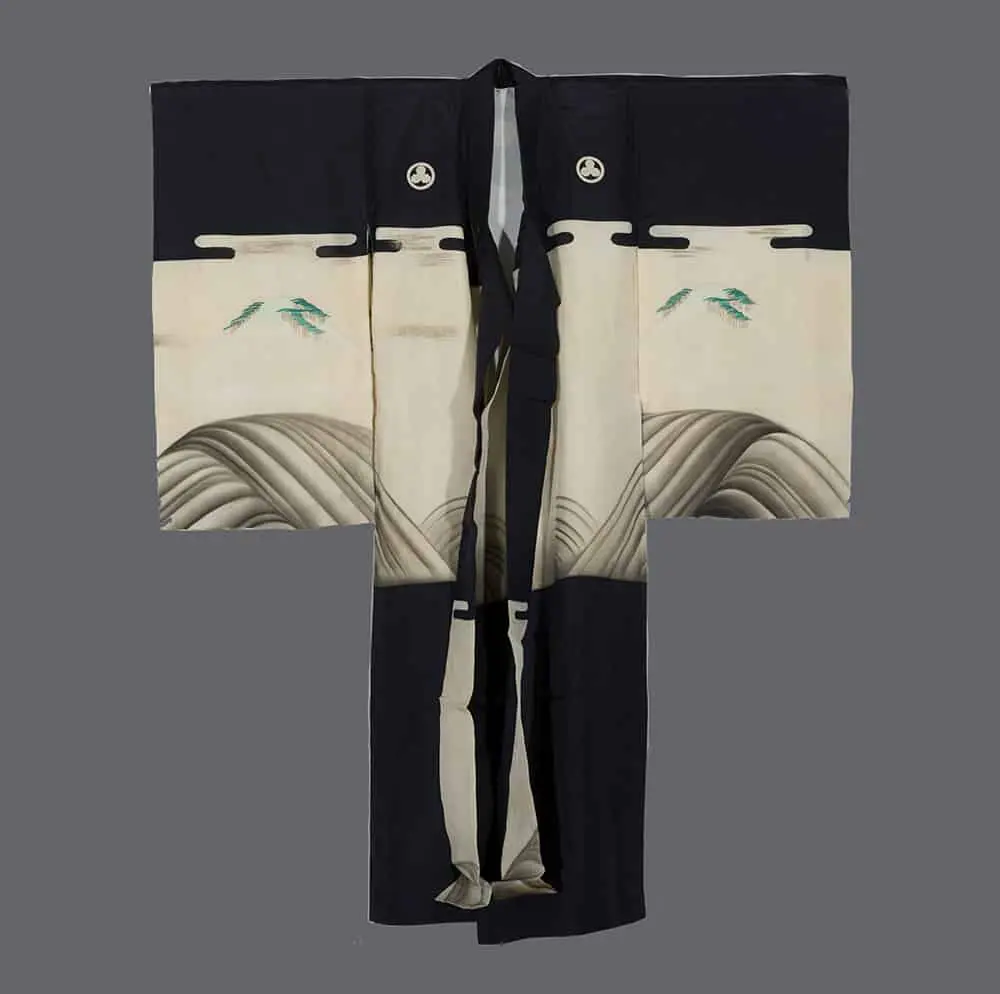
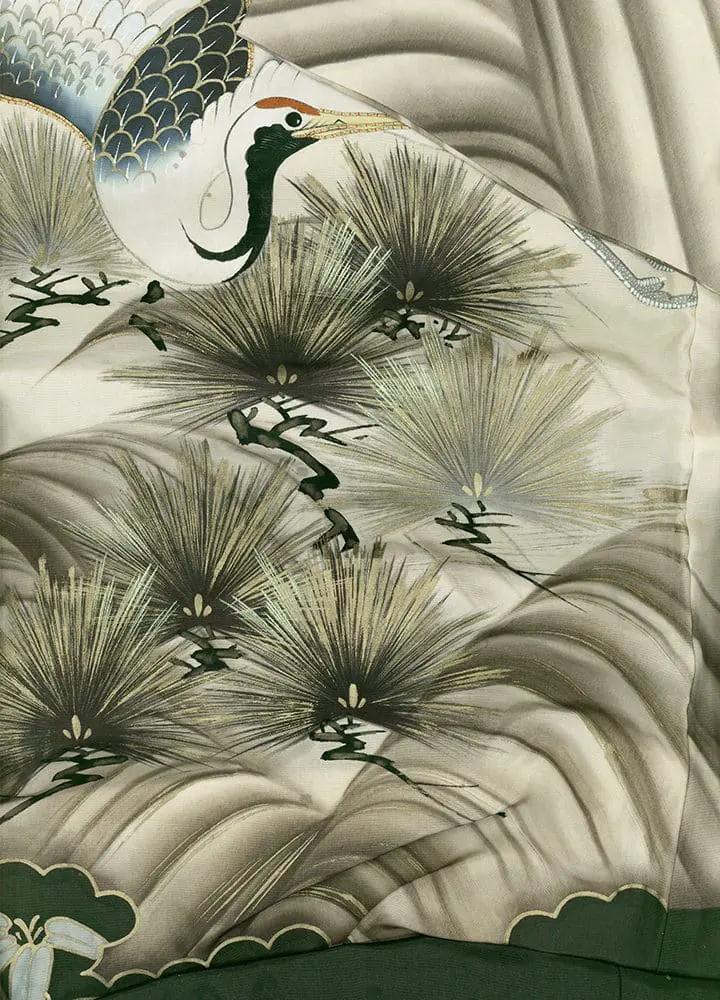
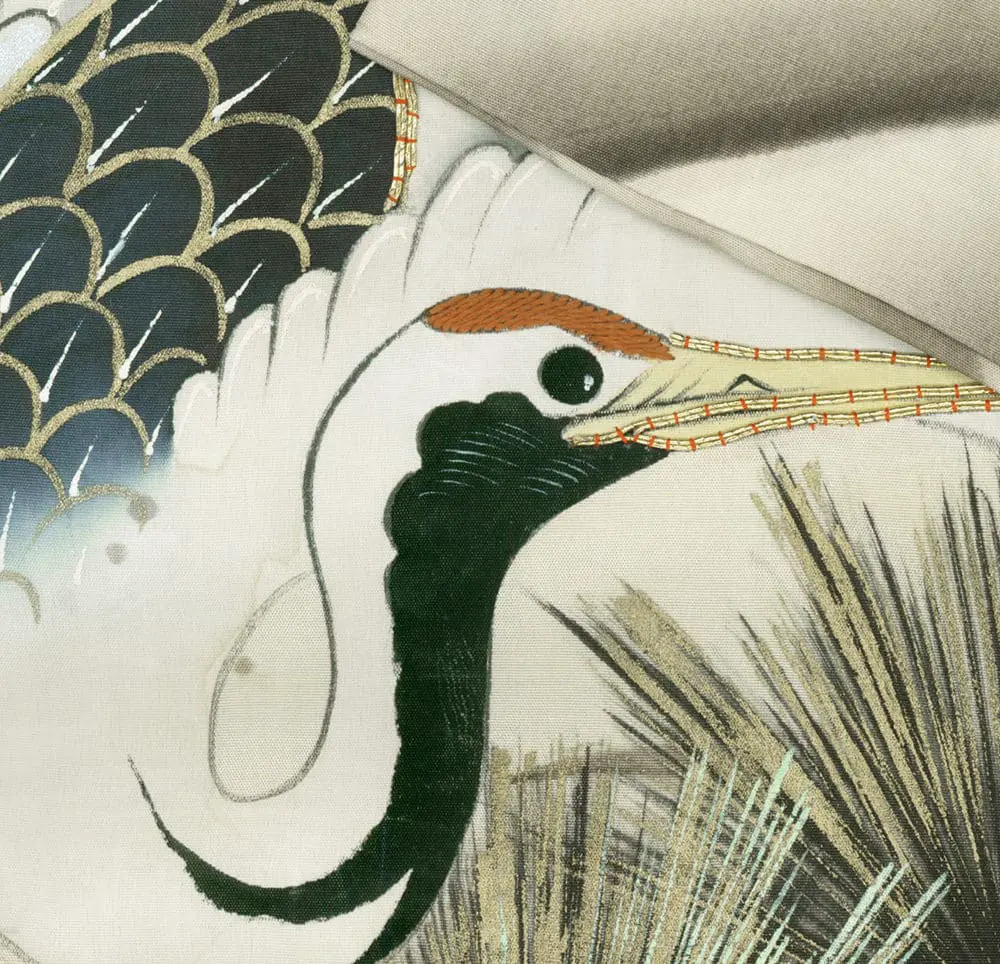
This silk miyamairi kimono for a boy's first Shinto shrine blessing presents a magnificent tableau of auspicious imagery, dominated by a striking tsuru (crane) descending with wings fully spread above an ancient pine grove. The composition masterfully combines painting, gold foil, embroidery, and couching techniques to create a work of considerable artistic refinement.
The crane appears in dramatic flight, its white and gray plumage meticulously rendered with individual feathers detailed through careful brushwork and dimensional embroidery. The bird carries what appears to be a small branch in its beak—perhaps a pine sprig—reinforcing the symbolic connection between these two longevity symbols. Below, gnarled pine trees spread across undulating hills rendered in soft gray-brown tones, their characteristic needle clusters radiating in olive-green profusion.
The design flows across three zones: black silk at the shoulders bearing three white mitsudomoe family crests, a cream central passage where the main pictorial scene unfolds, and a black lower section featuring bamboo leaves, stylized clouds, and small plum blossoms. This combination of pine, bamboo, and plum references shōchikubai, the "Three Friends of Winter"—an supremely auspicious grouping representing endurance, flexibility, and renewal.
Cranes, believed to live a thousand years, symbolize longevity, good fortune, and fidelity. Paired with the evergreen pine, this imagery expresses profound hopes for the child's long, prosperous life under divine protection following his formal presentation to the guardian deity.
It measures 33 inches (84 cm) from sleeve-end to sleeve-end and stands 41 inches (104 cm) in height.

Payment Options: We primarily accept PayPal for all transactions. Credit and debit cards are not accepted. If you prefer to pay by personal check instead of PayPal, please note this preference in the "Additional comments" field when placing your order.Ordering Process
To receive your PayPal invoice, simply fill out the form.
Shipping Details: We ship all orders to the address associated with your PayPal payment. Please ensure your PayPal shipping address is current and accurate.A phone number is required during checkout, as our shipping carrier may need to contact you regarding delivery questions.Shipping RatesUnited States and Canada: $20International destinations (air mail): $40
