Copyright © 2026 Yorke Antique Textiles
.avif)

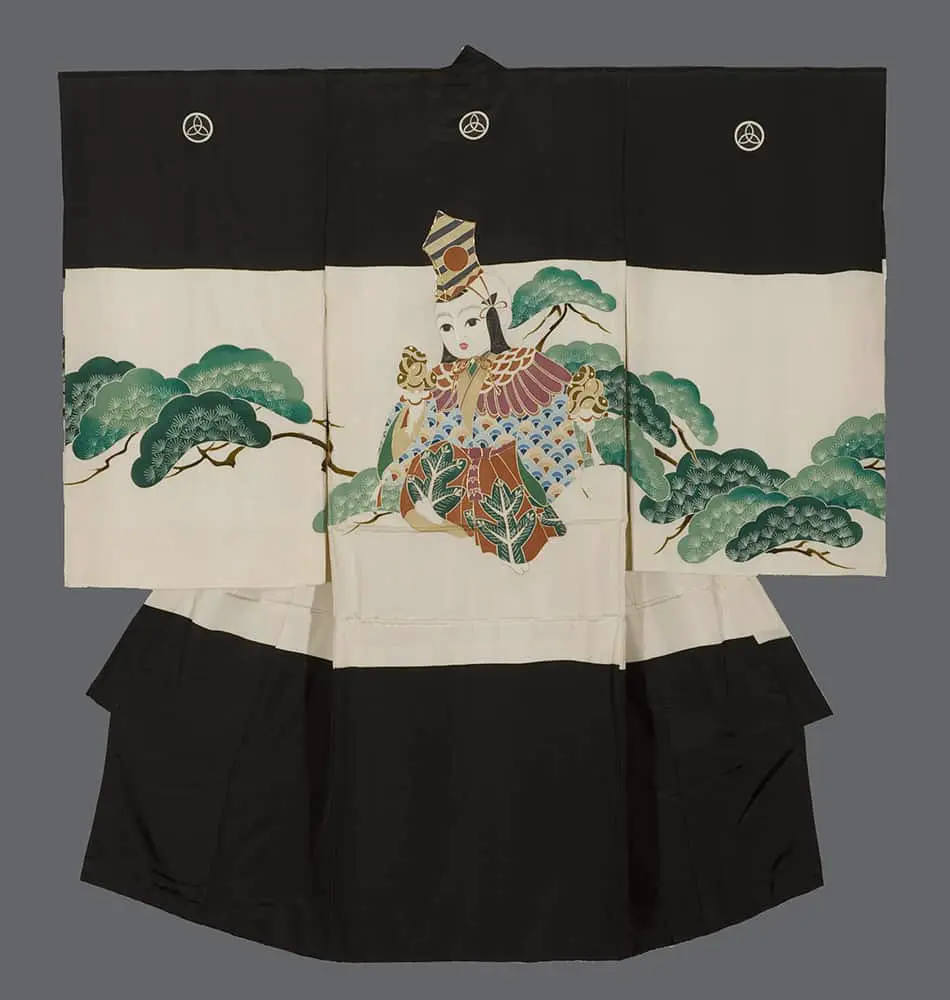

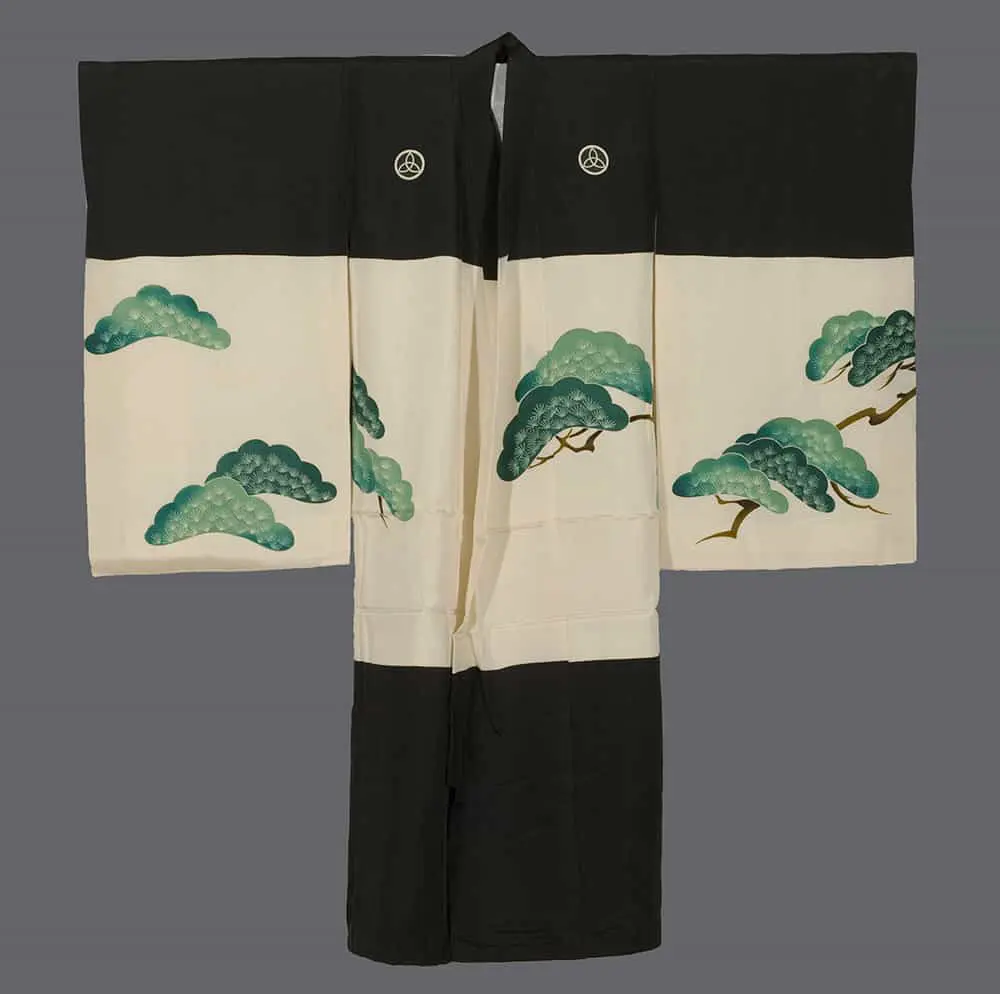


This silk miyamairi kimono for a boy's first Shinto shrine blessing presents a striking figural composition featuring what appears to be a young nobleman or theatrical character from the classical performing arts tradition. The central figure, rendered with elegant precision, wears elaborate layered robes displaying multiple decorative patterns: seigaiha (wave scales) in blue tones, bold leaf motifs in rust-brown, and scalloped designs suggesting aristocratic refinement. A distinctive tall eboshi-style hat with diagonal stripes crowns the figure, while the serene, white-complexioned face suggests connections to Noh theater or courtly traditions.
Flanking this central figure, magnificent matsu (pine trees) spread their characteristic cloud-like foliage in graduating tones of teal and green, their needles rendered with detailed scale-like patterning through katazome stencil-dyeing techniques. The composition unfolds across three tonal zones: deep black silk at shoulders and hem frames a cream central passage where the primary imagery emerges.
Multiple techniques combine to create this refined imagery. Yūzen-dyeing provides precise color areas and delicate details, katazome contributes the intricate repeated patterns within the pine foliage, and metallic couching embroidery adds dimensional highlights to key elements. Three white family crests (mon) at the shoulders identify the child's lineage.
The figural subject—whether representing a specific legendary hero, theatrical character, or idealized young nobleman—expresses wishes that the child will embody refinement, cultural achievement, and noble bearing throughout his life.
Measuring 37 inches by 32 inches (94 cm x 81.3 cm).

Payment Options: We primarily accept PayPal for all transactions. Credit and debit cards are not accepted. If you prefer to pay by personal check instead of PayPal, please note this preference in the "Additional comments" field when placing your order.Ordering Process
To receive your PayPal invoice, simply fill out the form.
Shipping Details: We ship all orders to the address associated with your PayPal payment. Please ensure your PayPal shipping address is current and accurate.A phone number is required during checkout, as our shipping carrier may need to contact you regarding delivery questions.Shipping RatesUnited States and Canada: $20International destinations (air mail): $40
