Copyright © 2026 Yorke Antique Textiles
.avif)

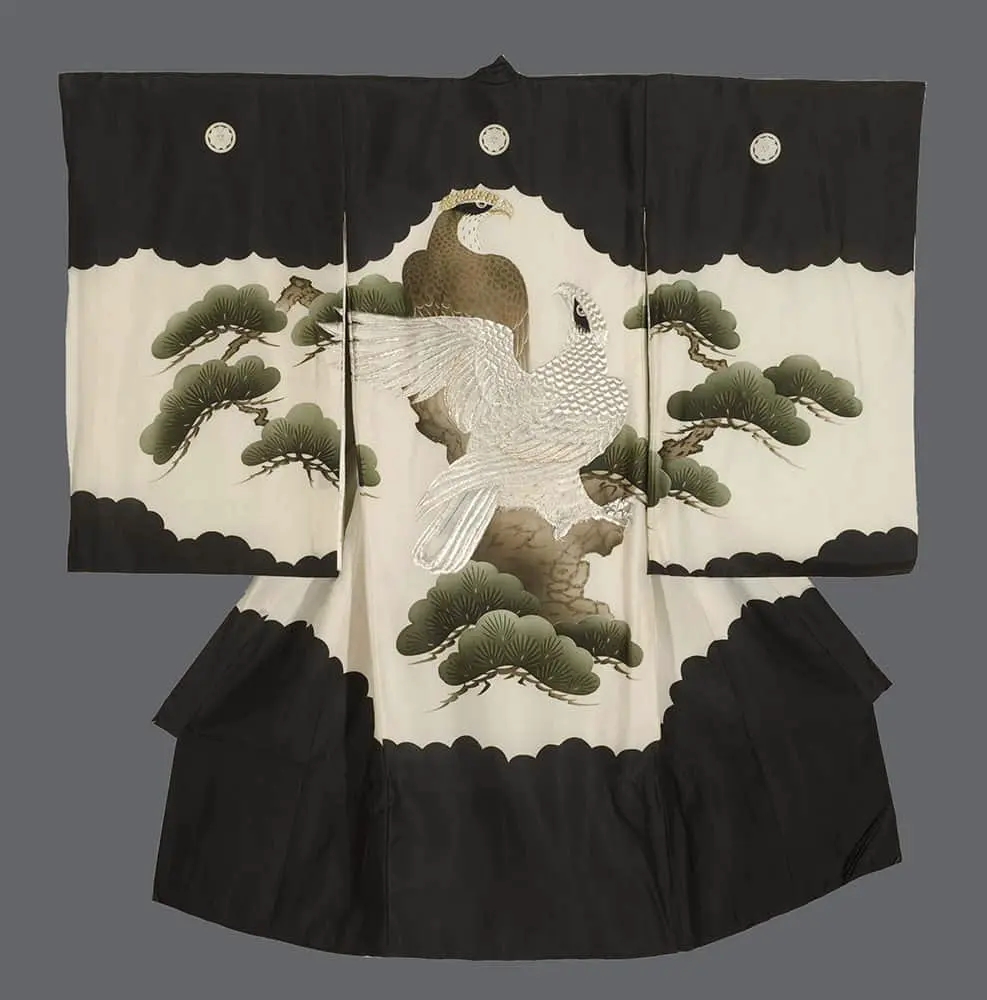
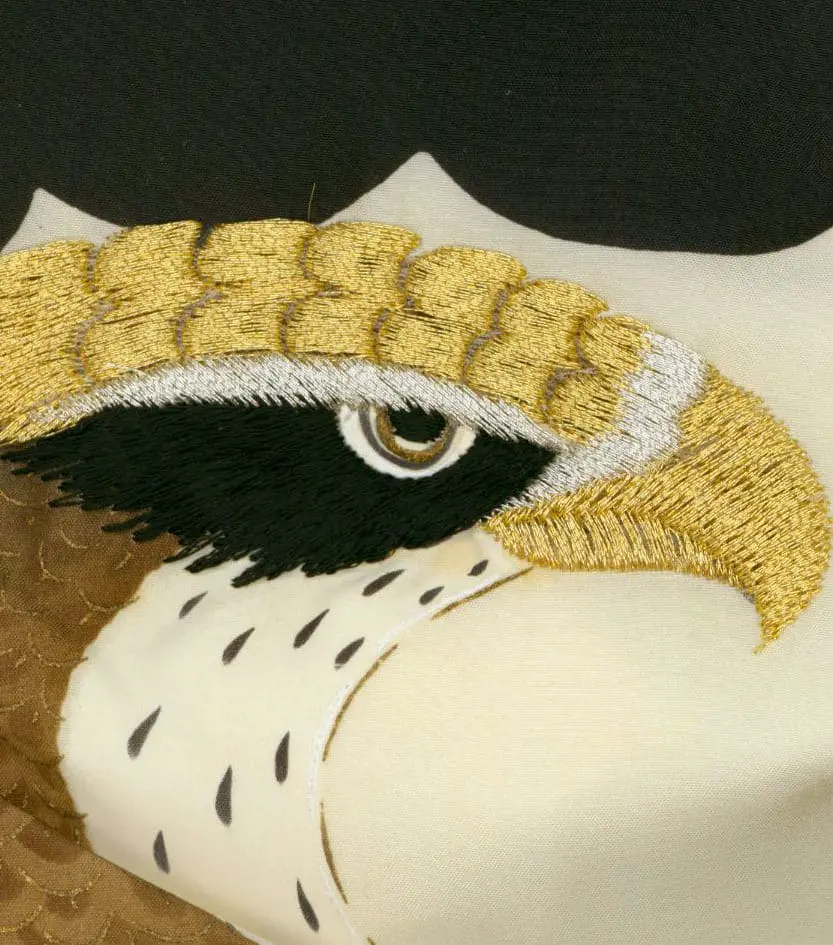

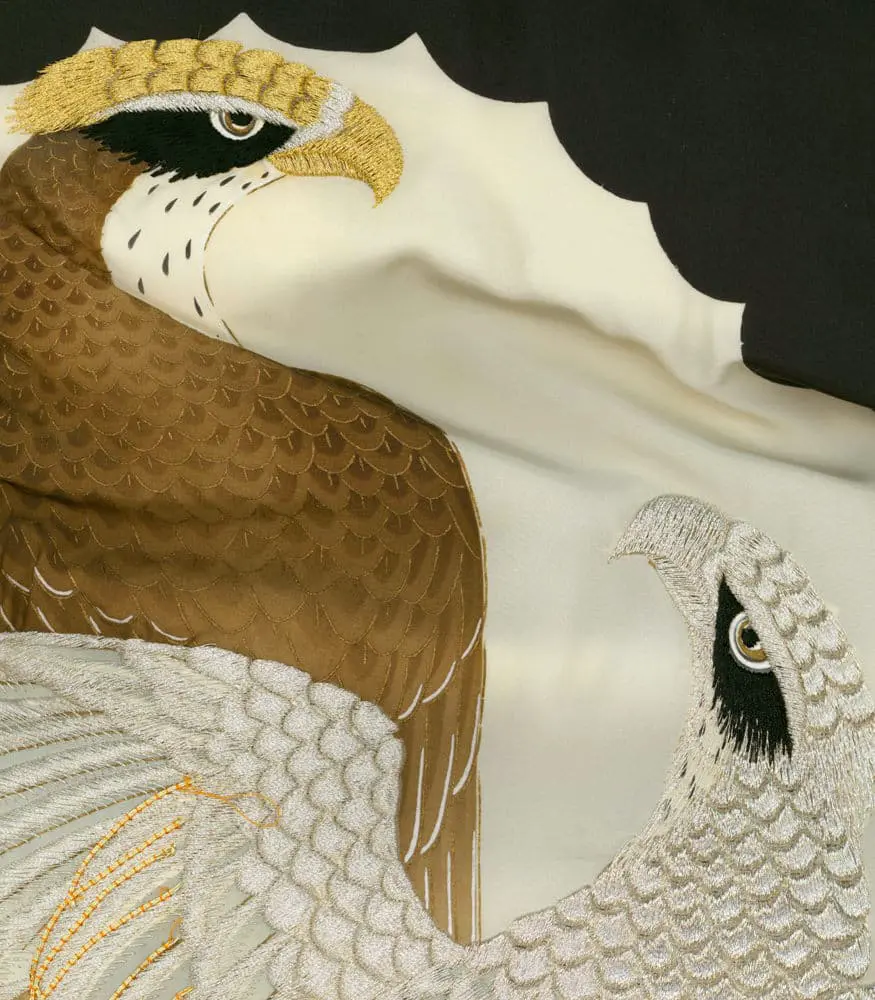
This silk miyamairi kimono for a boy's first Shinto shrine blessing presents a powerful composition featuring two magnificent taka (hawks) as its central subjects. The birds, rendered through silk-screening with embroidery highlights adding dimensional texture, perch alertly on rocky crags amid gnarled matsu (pine) branches—a classic pairing in Japanese art known as "hawk on pine."
The two raptors display contrasting plumage: one in golden-brown tones with speckled feathering, the other in striking silvery-white with meticulously detailed wing scales created through lustrous embroidery work. Both birds project alertness and nobility, their keen eyes and powerful forms embodying the qualities they symbolize. The composition unfolds across a cream central ground framed by deep black silk at shoulders and hem, with characteristic kasumi (mist) edges creating soft, cloud-like transitions between zones.
Hawks held profound significance in samurai culture—falconry was an elite pursuit, and the birds represented martial virtues prized by the warrior class: keen perception, swift decisive action, courage, and noble bearing. For a boy's ceremonial garment, hawk imagery expresses wishes that the child will develop sharp intelligence, strength of character, and the ability to seize opportunities with precision.
The combination of paired hawks with evergreen pine—symbol of longevity and steadfastness—creates imagery of exceptional auspicious power for this important ceremony presenting the newborn to divine protection.
Its dimensions are 33 inches (83.8 cm) from sleeve-end to sleeve-end and 39 inches (99.1 cm) in height.

Payment Options: We primarily accept PayPal for all transactions. Credit and debit cards are not accepted. If you prefer to pay by personal check instead of PayPal, please note this preference in the "Additional comments" field when placing your order.Ordering Process
To receive your PayPal invoice, simply fill out the form.
Shipping Details: We ship all orders to the address associated with your PayPal payment. Please ensure your PayPal shipping address is current and accurate.A phone number is required during checkout, as our shipping carrier may need to contact you regarding delivery questions.Shipping RatesUnited States and Canada: $20International destinations (air mail): $40
