Copyright © 2026 Yorke Antique Textiles
.avif)

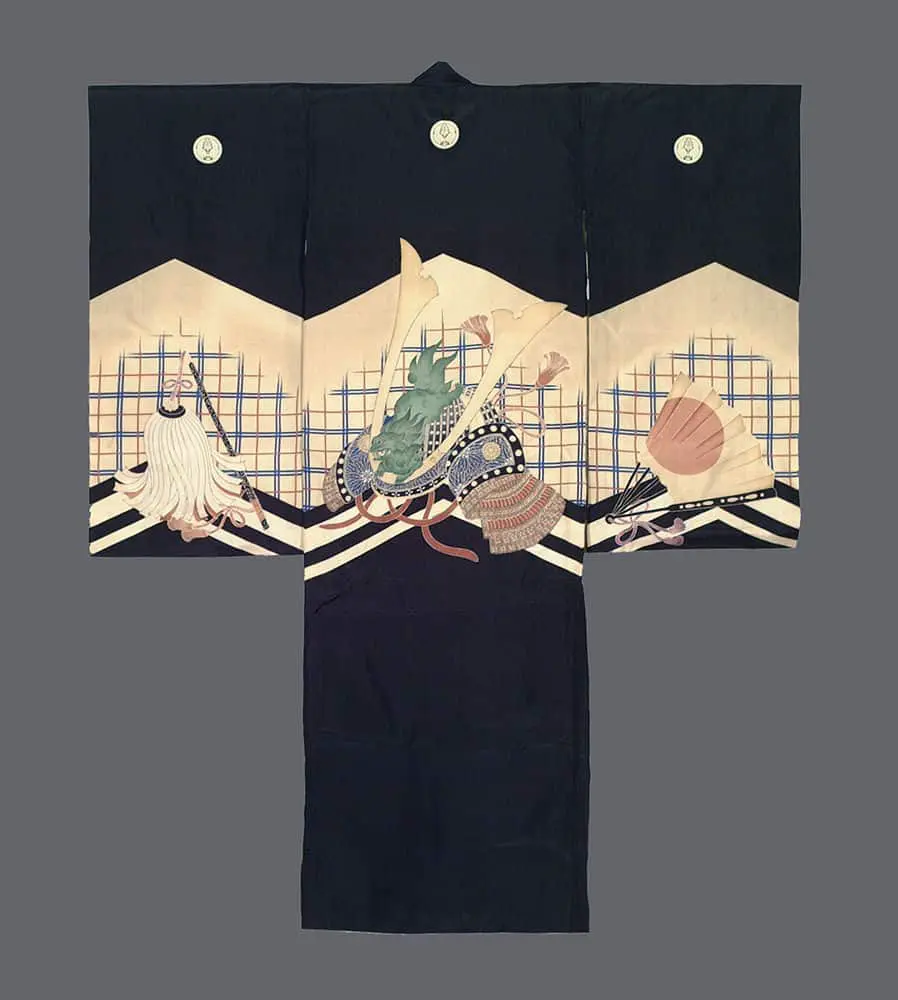

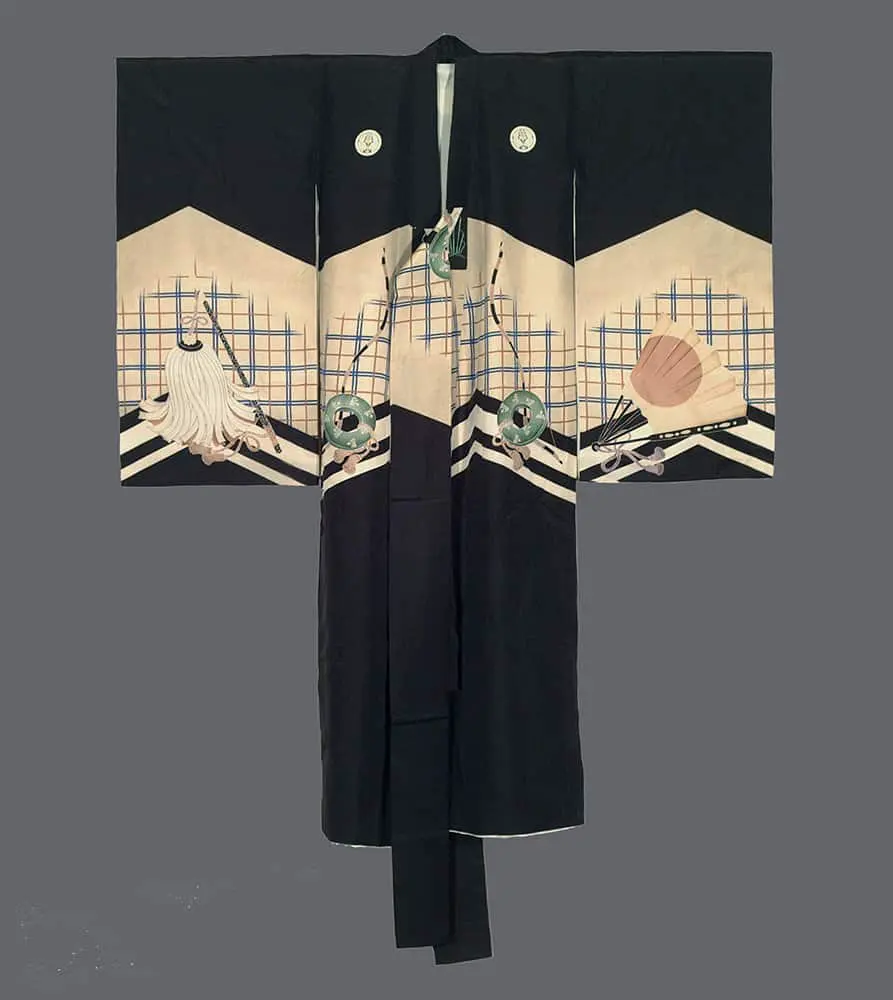
This silk miyamairi kimono for a boy's Shinto shrine blessing presents martial imagery through silkscreen printing, concentrating auspicious objects within a distinctive compositional framework. Deep black silk dominates the shoulders and lower portion, while a cream horizontal band with bold zigzag borders contains the central tableau.
Against a blue and tan grid pattern suggesting refined textile or architectural lattice, an elaborate arrangement of samurai regalia commands attention. The magnificent kabuto (samurai helmet) features a dramatic shachihoko or dragon-like crest in green, its fierce form rising from the helmet's crown. The helmet displays intricate construction with layered lamellar plates, decorative roundels, and flowing cord ties.
Flanking this central armor, additional martial and ceremonial objects complete the composition: a saihai (commander's tassel baton) with flowing white horsehair at left signifies military leadership, while a gunbai (war fan) in warm peach tones at right represents strategic command—both implements carried by generals to direct troops. Additional elements including decorative cords and what appear to be writing implements suggest cultivation alongside martial prowess.
This imagery connects to Tango no Sekku (Boys' Day) traditions, expressing hopes that the boy will embody leadership, courage, strategic wisdom, and noble bearing throughout his life under divine protection.
It measures 33 inches from sleeve-end to sleeve-end (84 cm) with a height of 40 inches (102 cm).

Payment Options: We primarily accept PayPal for all transactions. Credit and debit cards are not accepted. If you prefer to pay by personal check instead of PayPal, please note this preference in the "Additional comments" field when placing your order.Ordering Process
To receive your PayPal invoice, simply fill out the form.
Shipping Details: We ship all orders to the address associated with your PayPal payment. Please ensure your PayPal shipping address is current and accurate.A phone number is required during checkout, as our shipping carrier may need to contact you regarding delivery questions.Shipping RatesUnited States and Canada: $20International destinations (air mail): $40
