Copyright © 2026 Yorke Antique Textiles
.avif)

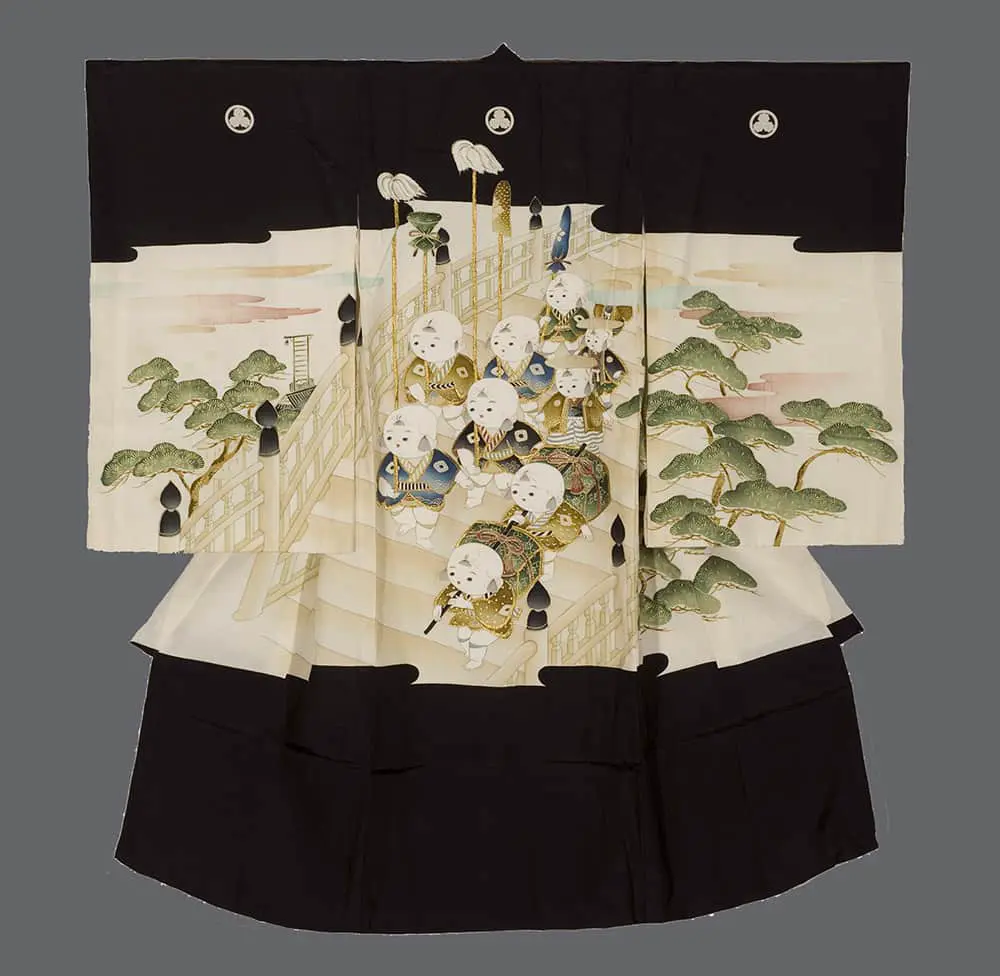
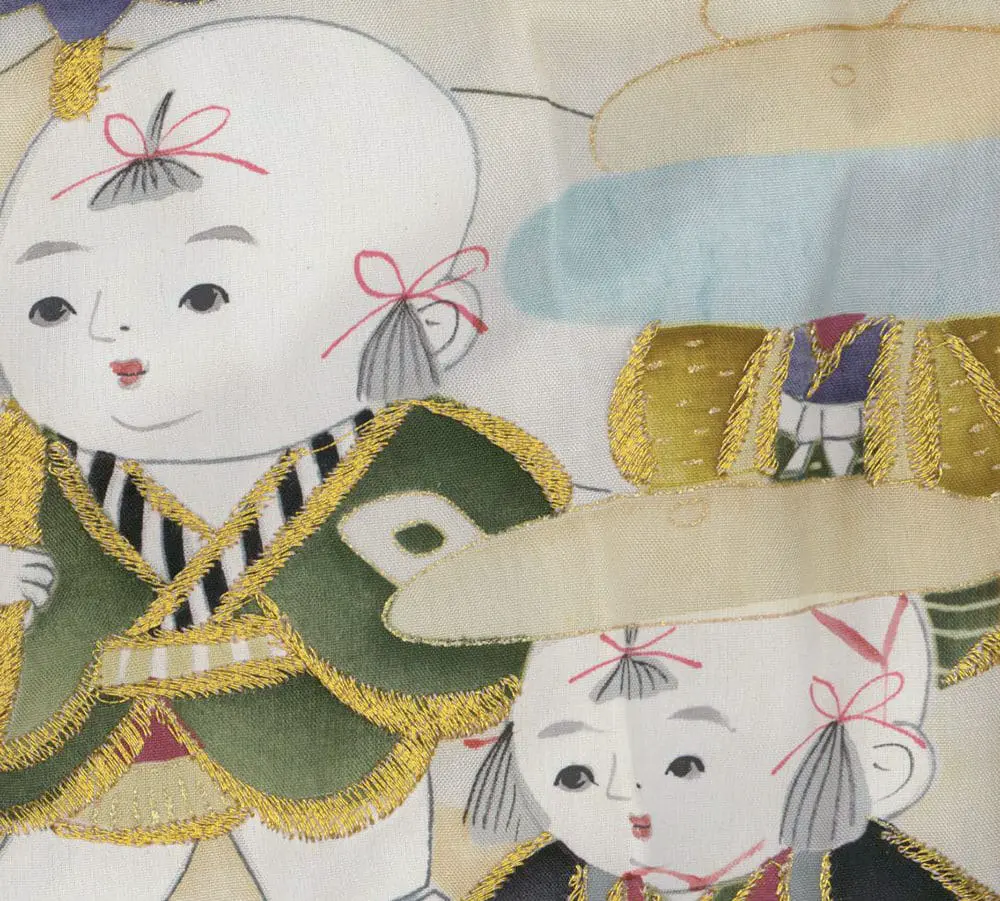
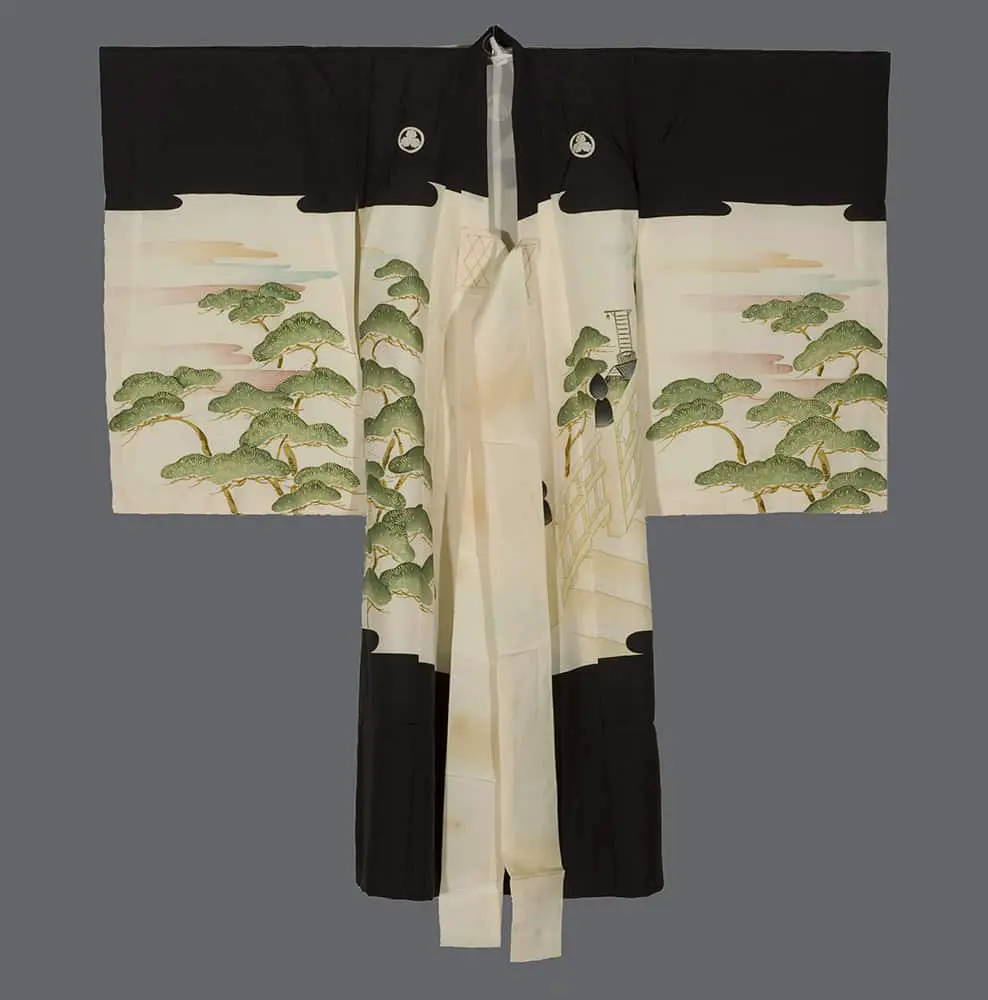
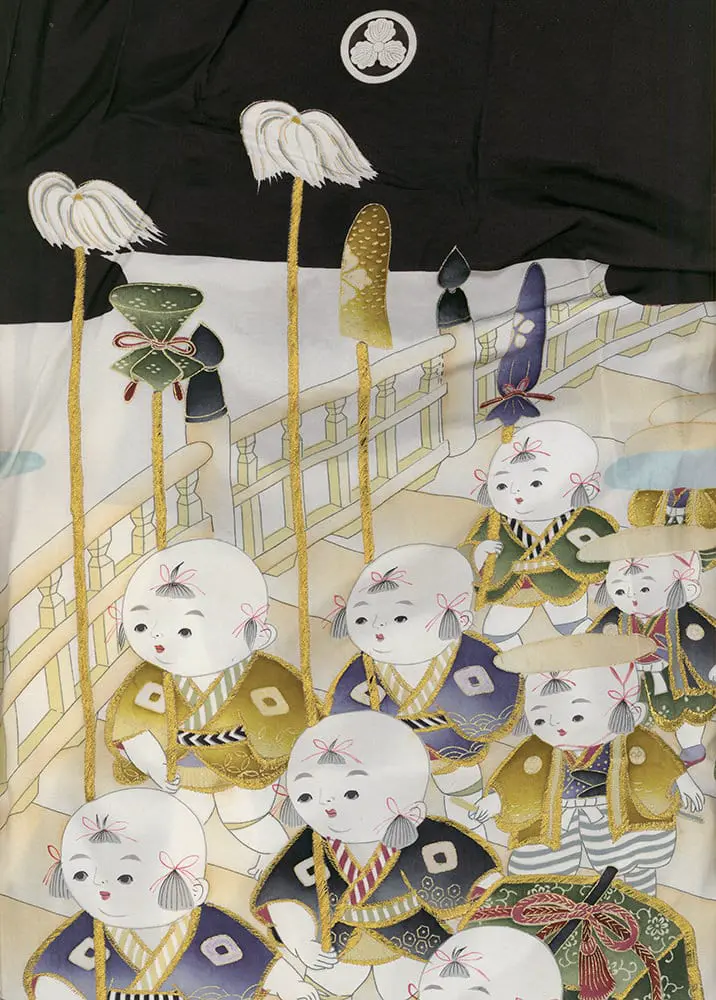
This silk miyamairi kimono for a boy's first Shinto shrine blessing presents a charming and elaborate scene of karako (Chinese-style children) reenacting a daimyō procession in the manner of Edo-period pageantry. The composition transforms dignified feudal imagery into something playful and endearing while retaining its auspicious associations with leadership, prosperity, and success.
The scene unfolds across a cream-colored central passage framed by deep black silk at shoulders and hem, with stylized kasumi (mist) edges creating scalloped boundaries between zones. Plump, cheerful karako figures—recognizable by their round faces, distinctive hairstyles, and colorful garments—descend a grand staircase bearing the accoutrements of a formal procession: standards topped with white feathered ornaments, ceremonial poles, and other implements of noble travel. Their clothing features rich patterns in blue, gold, green, and striped designs, rendered through yūzen-dyeing with metallic embroidery adding dimensional shimmer to key details.
Flanking this central procession, carefully rendered matsu (pine trees) with characteristic horizontal branch structures establish a landscape of refinement, while architectural elements suggest a noble residence or shrine compound. Three white family crests (mon) at the shoulders mark the child's lineage. Pink-tinged clouds drift through the pale sky, adding atmospheric softness.
Karako imagery traditionally symbolizes wishes for many children and family prosperity, while the daimyō procession expresses hopes that the boy will achieve positions of honor and authority throughout a long, successful life.
Despite minor imperfections, the kimono is in good condition and measures 27 inches (68.6 cm) from sleeve-end to sleeve-end and 39 inches (99.1 cm) in height.

Payment Options: We primarily accept PayPal for all transactions. Credit and debit cards are not accepted. If you prefer to pay by personal check instead of PayPal, please note this preference in the "Additional comments" field when placing your order.Ordering Process
To receive your PayPal invoice, simply fill out the form.
Shipping Details: We ship all orders to the address associated with your PayPal payment. Please ensure your PayPal shipping address is current and accurate.A phone number is required during checkout, as our shipping carrier may need to contact you regarding delivery questions.Shipping RatesUnited States and Canada: $20International destinations (air mail): $40
