Copyright © 2026 Yorke Antique Textiles
.avif)


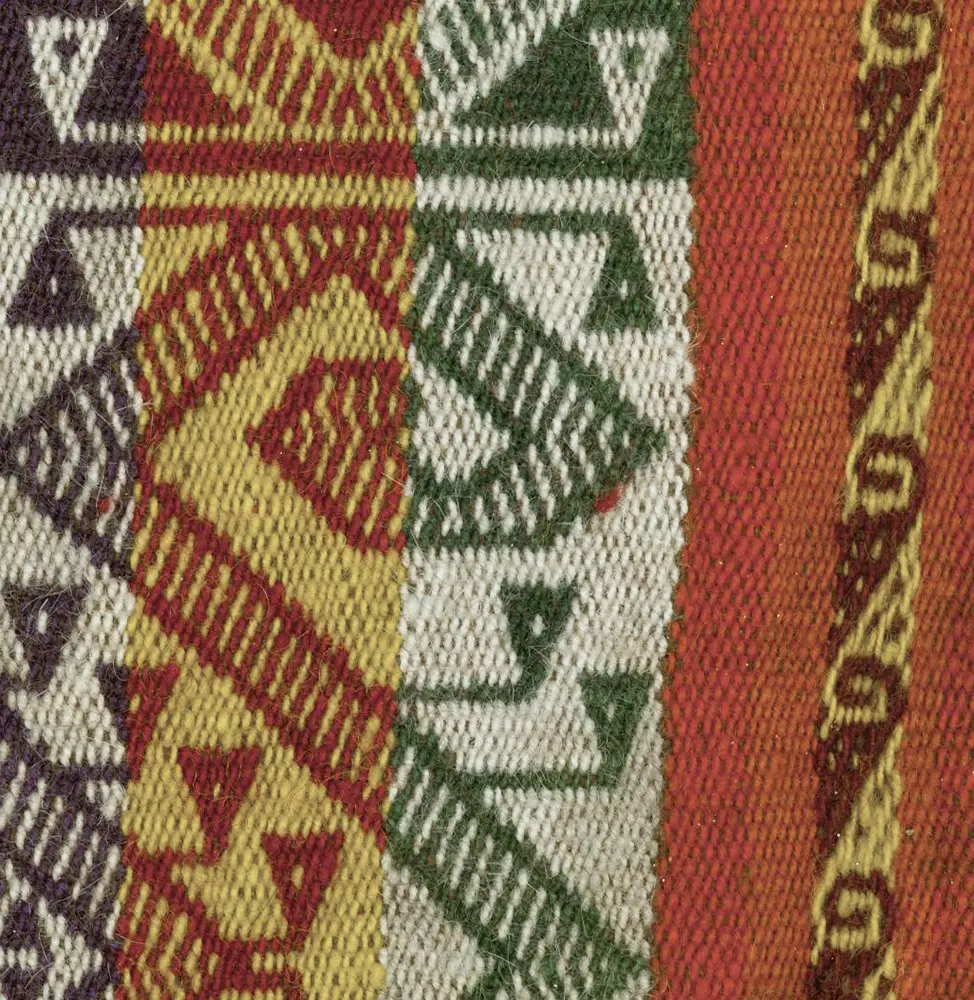
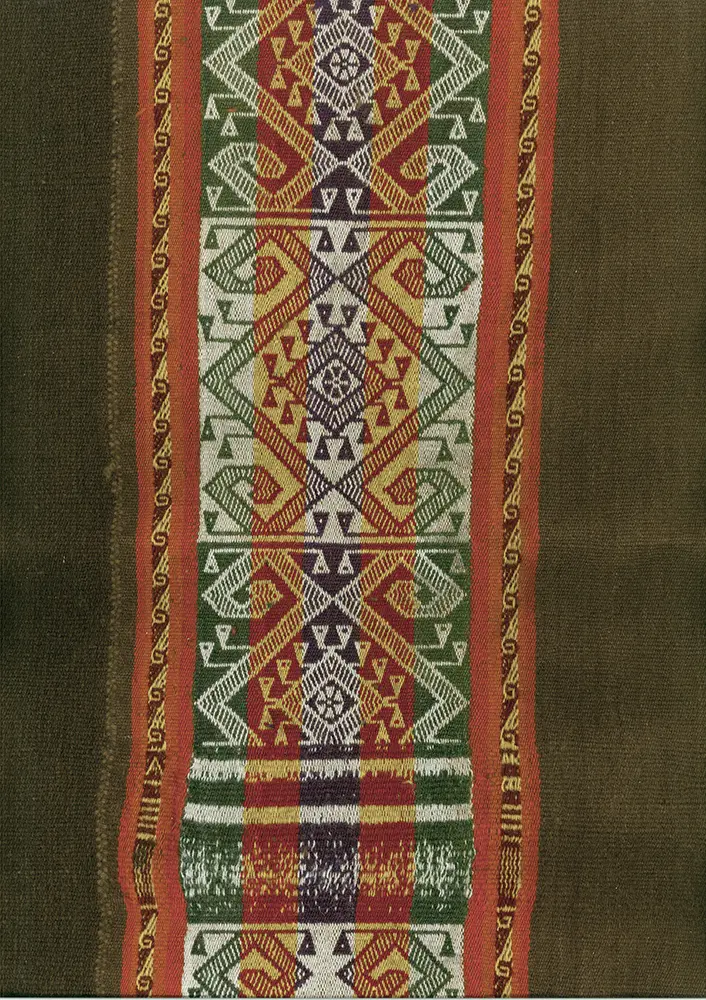


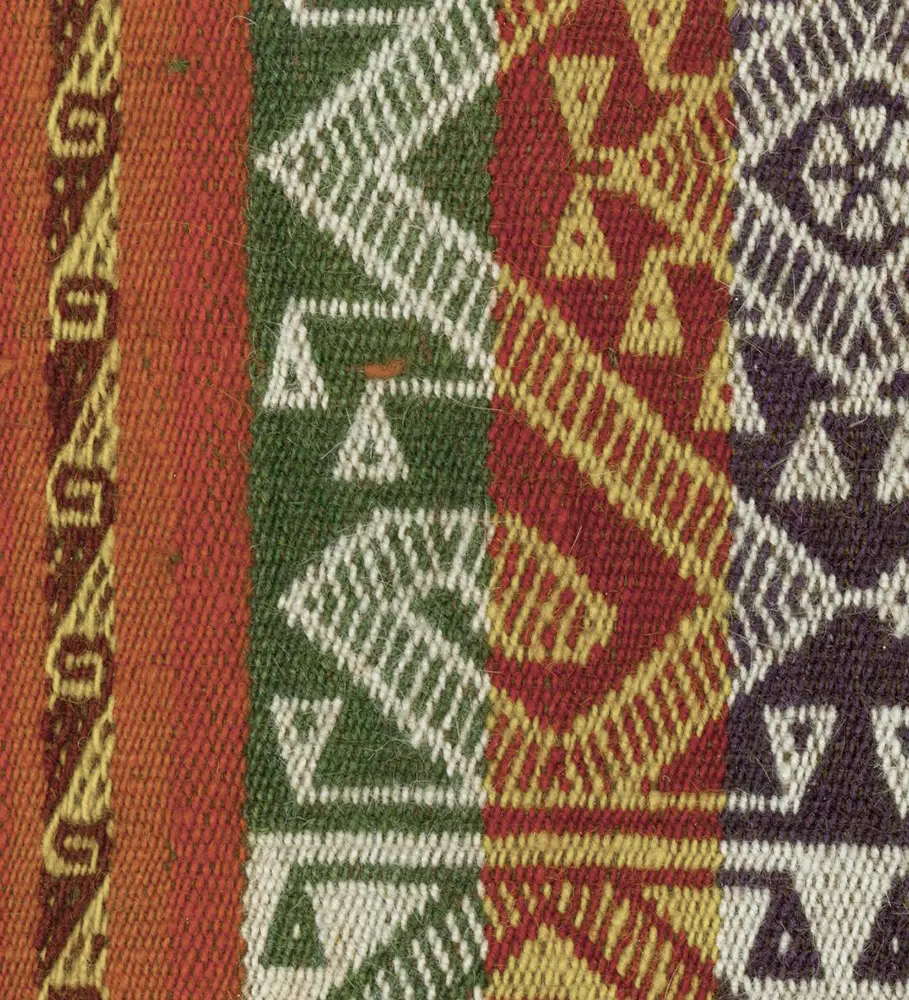
This rare ceremonial woman’s awayu (an Andean cape or carrying cloth) originates from the Bolivar weaving region in the southwest Department of Cochabamba, Bolivia. Dating to the early 20th century (1920–1940), the garment is meticulously hand-woven from fine alpaca fiber, a material historically prized for its natural insulation and silky texture. This specific awayu is notable for its unique construction; while most are formed by joining two identical halves with a centered hand-stitched seam, this piece features an off-center seam positioned along a distinct, thick pattern band.
The aesthetic of the Bolivar region is distinguished by a sophisticated double-cloth technique, which produces a reversible, two-layered fabric where complex motifs are mirrored on both sides. The wide central motif band is exceptionally thick due to this weave, showcasing dense geometric and symbolic patterns that interpenetrate to form a weighty, luxurious drape. The color palette typically incorporates rich, naturally dyed tones—such as deep reds or dark charcoal—that contrast with the detailed imagery of the pattern band, a hallmark of high-status ceremonial textiles from the Cochabamba highlands.

Payment Options: We primarily accept PayPal for all transactions. Credit and debit cards are not accepted. If you prefer to pay by personal check instead of PayPal, please note this preference in the "Additional comments" field when placing your order.Ordering Process
To receive your PayPal invoice, simply fill out the form.
Shipping Details: We ship all orders to the address associated with your PayPal payment. Please ensure your PayPal shipping address is current and accurate.A phone number is required during checkout, as our shipping carrier may need to contact you regarding delivery questions.Shipping RatesUnited States and Canada: $20International destinations (air mail): $40
