Copyright © 2026 Yorke Antique Textiles
.avif)


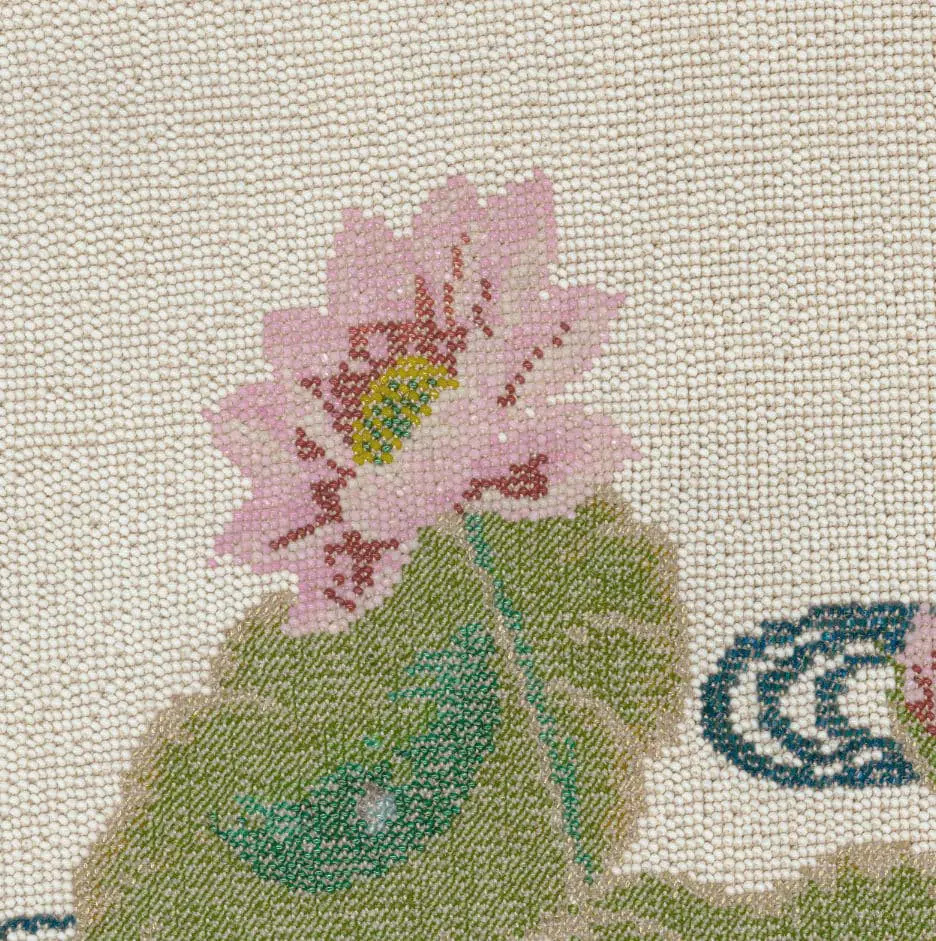

This unusual and highly intricate uchishiki (Buddhist altar cloth) from Japan dates to the Taisho period (1912–1926). Measuring 18 inches by 26 inches (45.7 cm by 66 cm), the textile is masterfully constructed using approximately 35,000 individually strung small beads. While the beaded main panel is in excellent condition, the cream-colored silk damask backing and upper border show minor staining and a natural patina consistent with ritual use.
The central imagery features a lotus motif, one of the most significant symbols in Buddhist art, representing the soul’s journey through the "mud" of materialism to the light of enlightenment. The design showcases various stages of growth—the bud, the utpala (mid-blossom), and the full blossoming throne—which respectively symbolize the past, present, and future. Above the pink blossoms and green leaves sits a circular mon (family or temple crest) featuring a stylized floral design, also rendered in gold-toned beads. The base of the composition is anchored by flowing, dark green lines representing a sacred stream.
This artwork is featured on pages 42-43 of Ceremonial Textiles of Japan, 18th to 20th Centuries. This book, published by Yorke Antique Textiles, can be previewed or purchased on our website here.

Payment Options: We primarily accept PayPal for all transactions. Credit and debit cards are not accepted. If you prefer to pay by personal check instead of PayPal, please note this preference in the "Additional comments" field when placing your order.Ordering Process
To receive your PayPal invoice, simply fill out the form.
Shipping Details: We ship all orders to the address associated with your PayPal payment. Please ensure your PayPal shipping address is current and accurate.A phone number is required during checkout, as our shipping carrier may need to contact you regarding delivery questions.Shipping RatesUnited States and Canada: $20International destinations (air mail): $40
