Copyright © 2026 Yorke Antique Textiles
.avif)

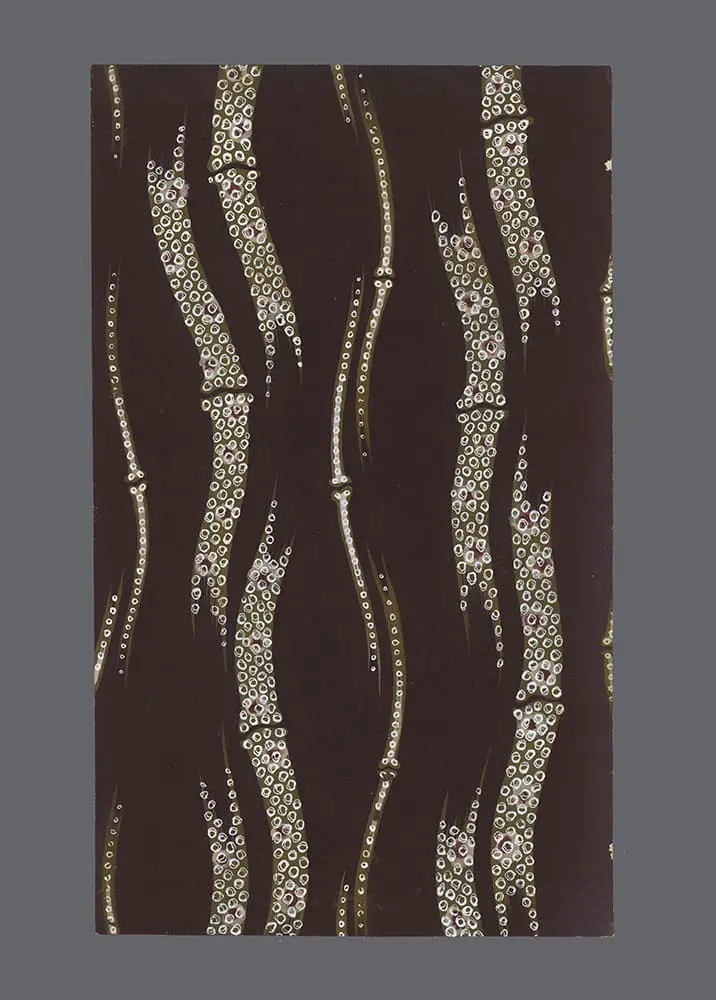
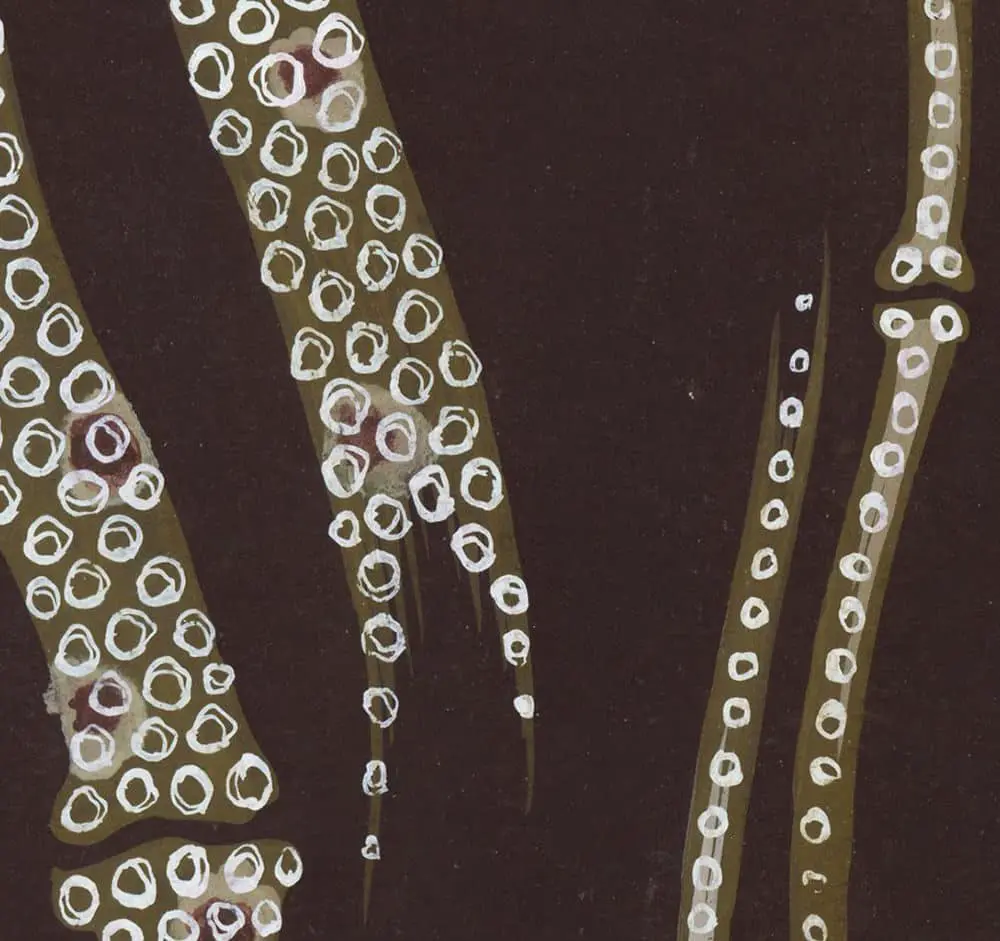
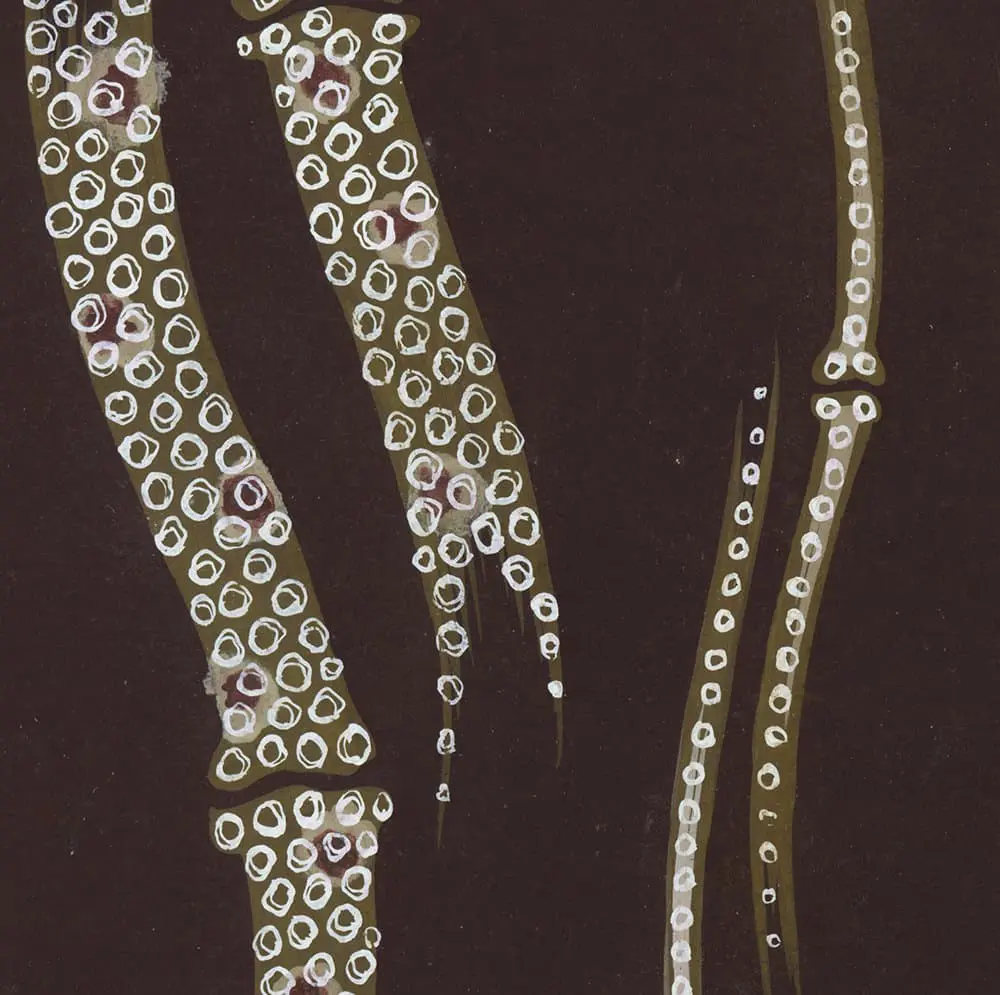
This striking textile design originates from Japan, dating to the transitional Showa period between 1930 and 1950. Measuring 9 inches by 15 inches (22.86 cm x 38.1 cm), this artwork represents a sophisticated departure from literal botanical representation, leaning instead toward the modernist and abstract sensibilities that defined pre-war Japanese commercial art. The piece is rendered on a deep, chocolate brown or dark plum ground, providing a high-contrast foundation for the rhythmic patterns above.
The visual narrative is an evocative, stylized interpretation of bamboo stalks, depicted through vertical, undulating forms. Rather than solid lines, the stalks are composed of dense, meticulously placed circular dots in shades of cream and pale sage green, mimicking the textured "joints" and nodes of bamboo. Thinner, tapering lines of dots weave between the primary stalks, suggesting the presence of smaller shoots or the play of light through a dense grove. This pointillist approach creates a sense of organic vibration and depth, capturing the essence of a bamboo forest through a purely decorative, graphic lens.

Payment Options: We primarily accept PayPal for all transactions. Credit and debit cards are not accepted. If you prefer to pay by personal check instead of PayPal, please note this preference in the "Additional comments" field when placing your order.Ordering Process
To receive your PayPal invoice, simply fill out the form.
Shipping Details: We ship all orders to the address associated with your PayPal payment. Please ensure your PayPal shipping address is current and accurate.A phone number is required during checkout, as our shipping carrier may need to contact you regarding delivery questions.Shipping RatesUnited States and Canada: $20International destinations (air mail): $40
