Copyright © 2026 Yorke Antique Textiles
.avif)


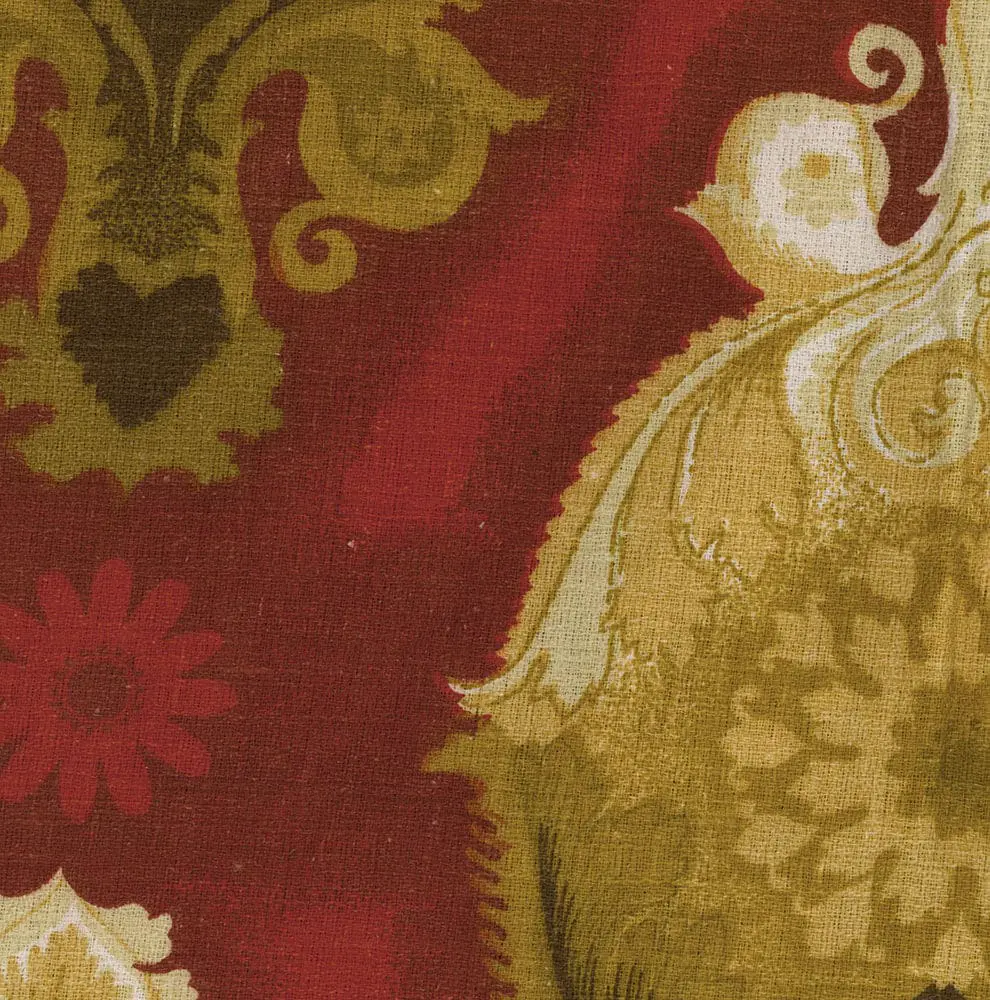
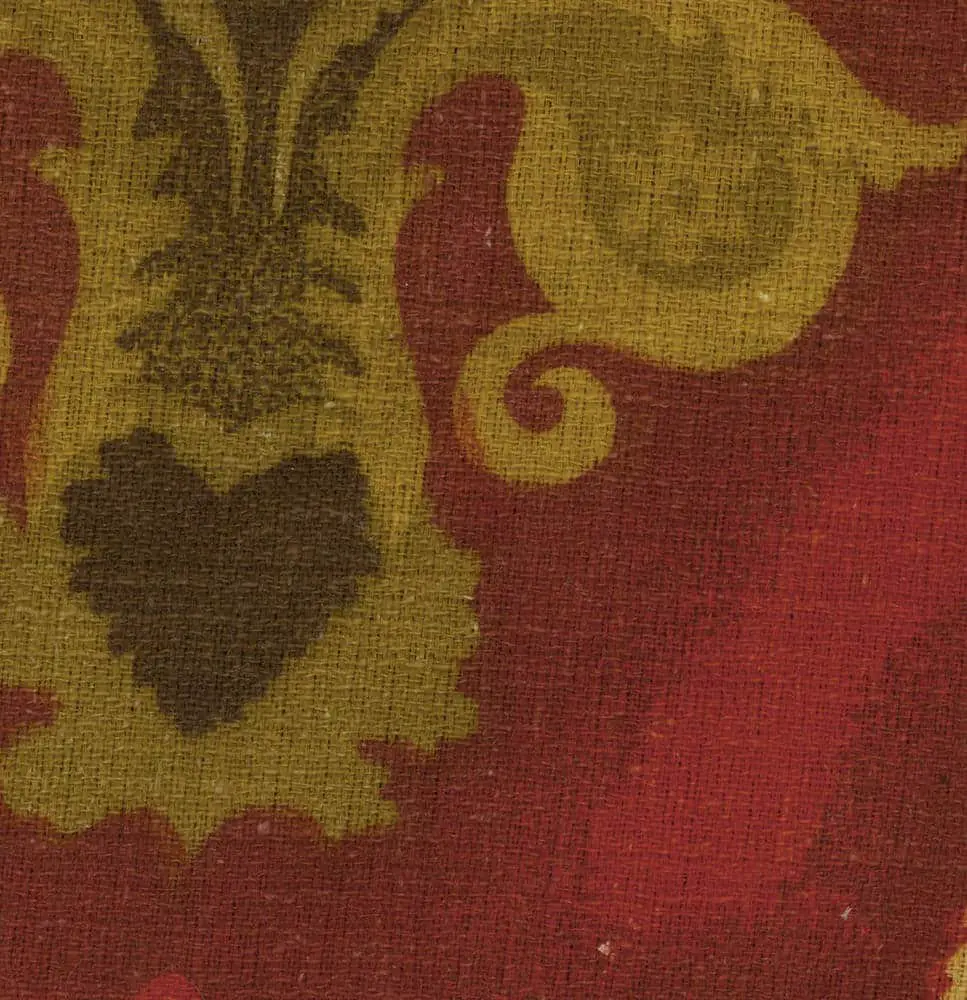

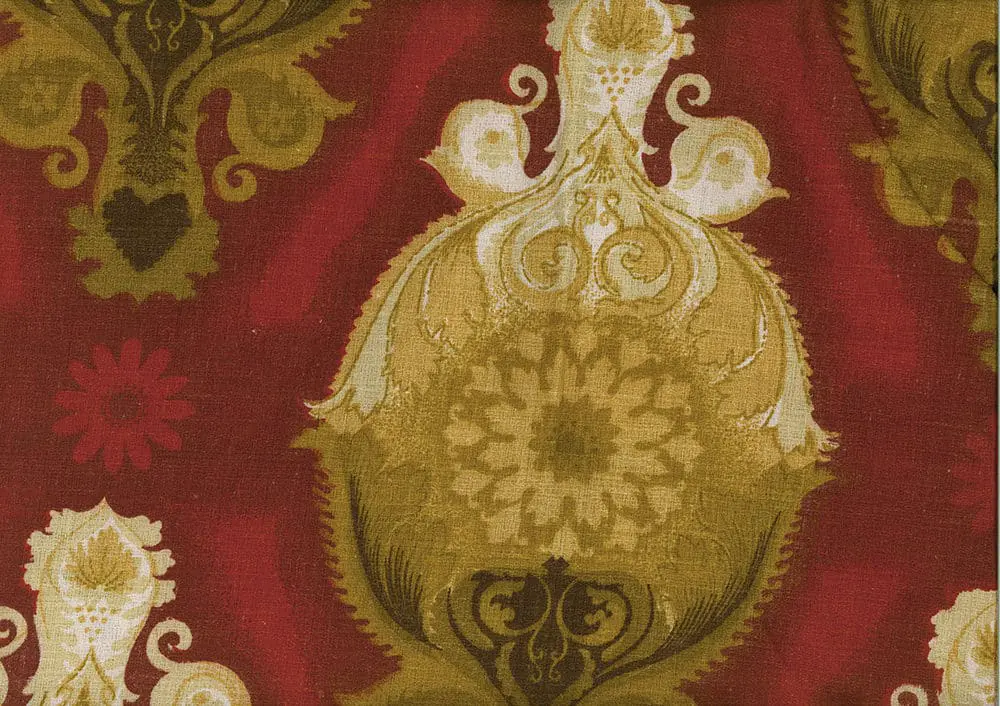
This vibrant textile originates from England during the first quarter of the 20th century (1900–1925) and is a scholarly example of the bold, organic symmetry characteristic of the Art Nouveau movement. Measuring 48 inches by 22 inches (122 cm x 56 cm), this piece is crafted from a durable double-rolled barkcloth. Sourced from an unused roll, the fabric remains in mint condition and retains two original selvedges, making it an exceptional candidate for archival preservation or framing.
The visual narrative is defined by a rhythmic, repeating pattern of large-scale architectural medallions set against a saturated magenta field. These medallions feature intricate, shield-like centers with stylized floral bursts in tones of cream, tan, and olive green. Interspersed between the primary motifs are smaller, bright pink floral sunbursts that add a sense of playful geometry to the composition. This specific design reflects the transition from Victorian density toward the more fluid, whip-lash curves of Art Nouveau, utilizing a high-contrast palette to emphasize its structural and ornamental balance.

Payment Options: We primarily accept PayPal for all transactions. Credit and debit cards are not accepted. If you prefer to pay by personal check instead of PayPal, please note this preference in the "Additional comments" field when placing your order.Ordering Process
To receive your PayPal invoice, simply fill out the form.
Shipping Details: We ship all orders to the address associated with your PayPal payment. Please ensure your PayPal shipping address is current and accurate.A phone number is required during checkout, as our shipping carrier may need to contact you regarding delivery questions.Shipping RatesUnited States and Canada: $20International destinations (air mail): $40
