Copyright © 2026 Yorke Antique Textiles
.avif)

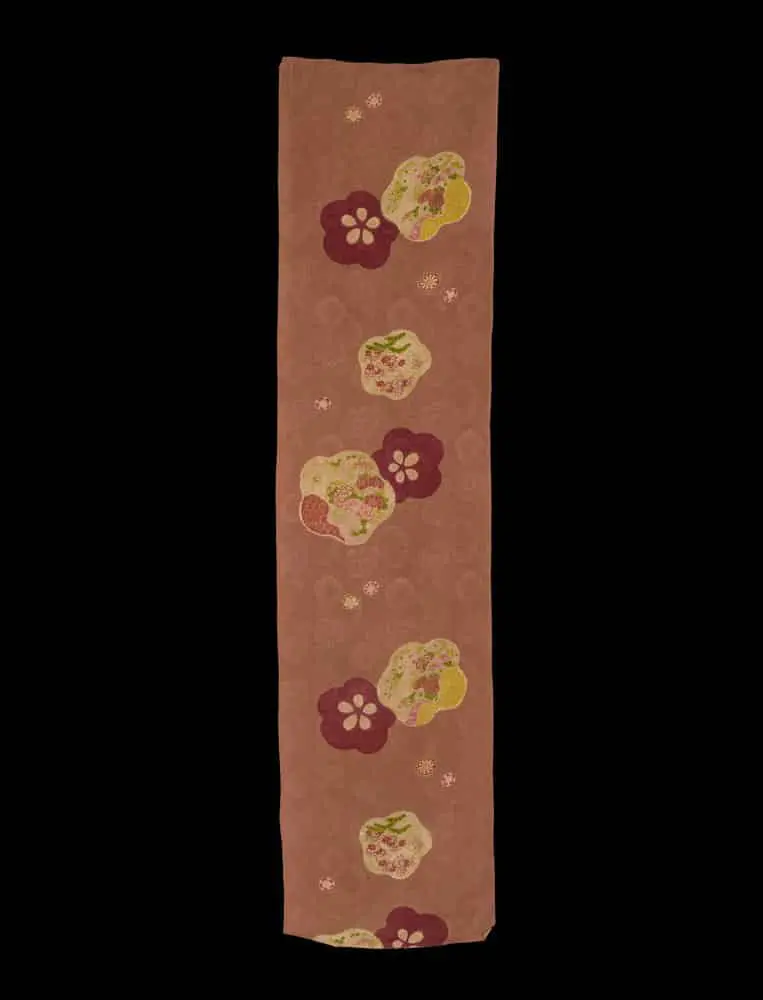
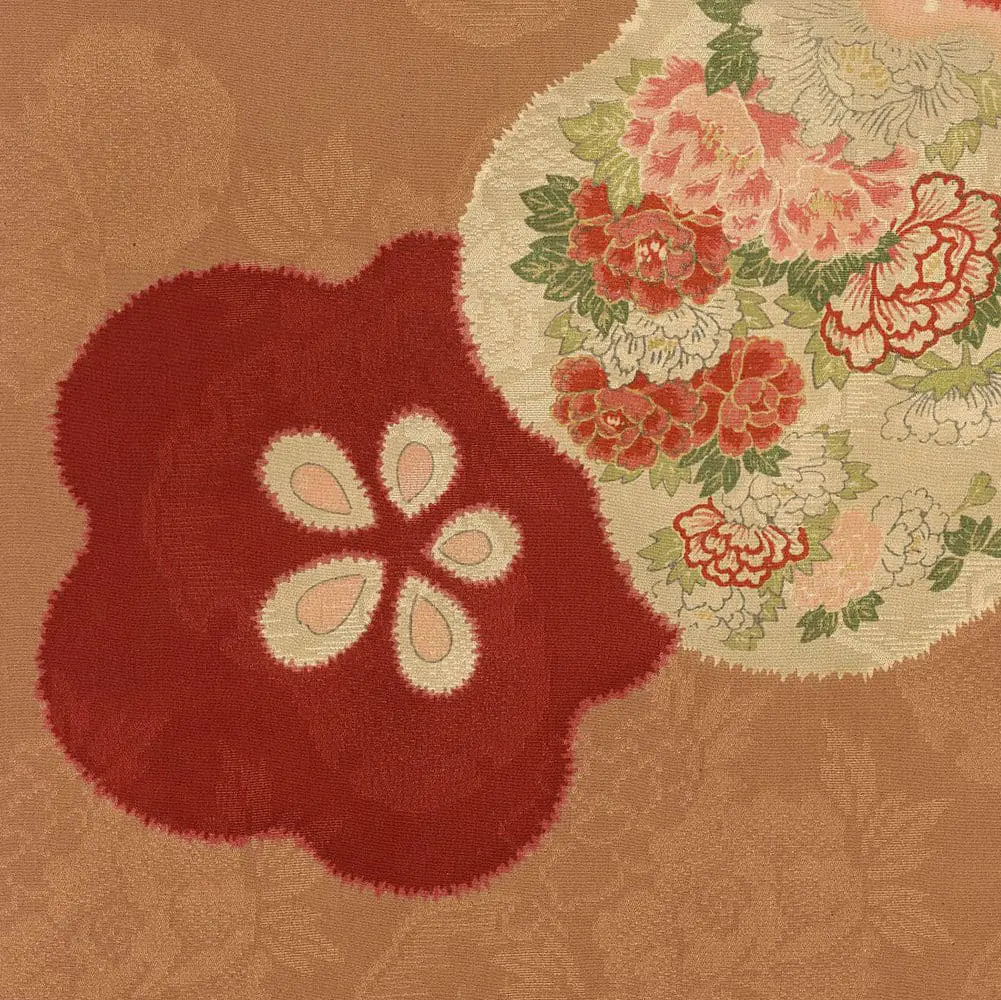
This elegant textile originates from Japan’s early Showa period (1930–1940) and is a scholarly example of the sophisticated, multi-seasonal botanical compositions favored in pre-war garment design. Measuring 13.5 inches by 65 inches (34 cm x 165 cm), the panel is crafted from a high-quality crepe silk that embodies the distinct material characteristics of the era. The silk is of a lighter weight, providing a fantastic drape and a soft, textured handle that has been preserved in excellent condition.
The visual narrative is set against a unique light rust hue, a complex shade that serves as a warm substrate for a series of floating medallions. These white areas are shaped like ume (plum blossoms) and serve as frames for delicate, multi-colored floral motifs, including botan (peony), momiji (maple), and kiku (chrysanthemum). Complementing these detailed medallions are solid deep-burgundy plum silhouettes and smaller scattered blossoms. By combining spring, autumn, and winter symbols within a single field, this panel reflects the early 20th-century aesthetic of "timelessness," allowing the textile to be worn or displayed across various seasons.

Payment Options: We primarily accept PayPal for all transactions. Credit and debit cards are not accepted. If you prefer to pay by personal check instead of PayPal, please note this preference in the "Additional comments" field when placing your order.Ordering Process
To receive your PayPal invoice, simply fill out the form.
Shipping Details: We ship all orders to the address associated with your PayPal payment. Please ensure your PayPal shipping address is current and accurate.A phone number is required during checkout, as our shipping carrier may need to contact you regarding delivery questions.Shipping RatesUnited States and Canada: $20International destinations (air mail): $40
