Copyright © 2026 Yorke Antique Textiles
.avif)

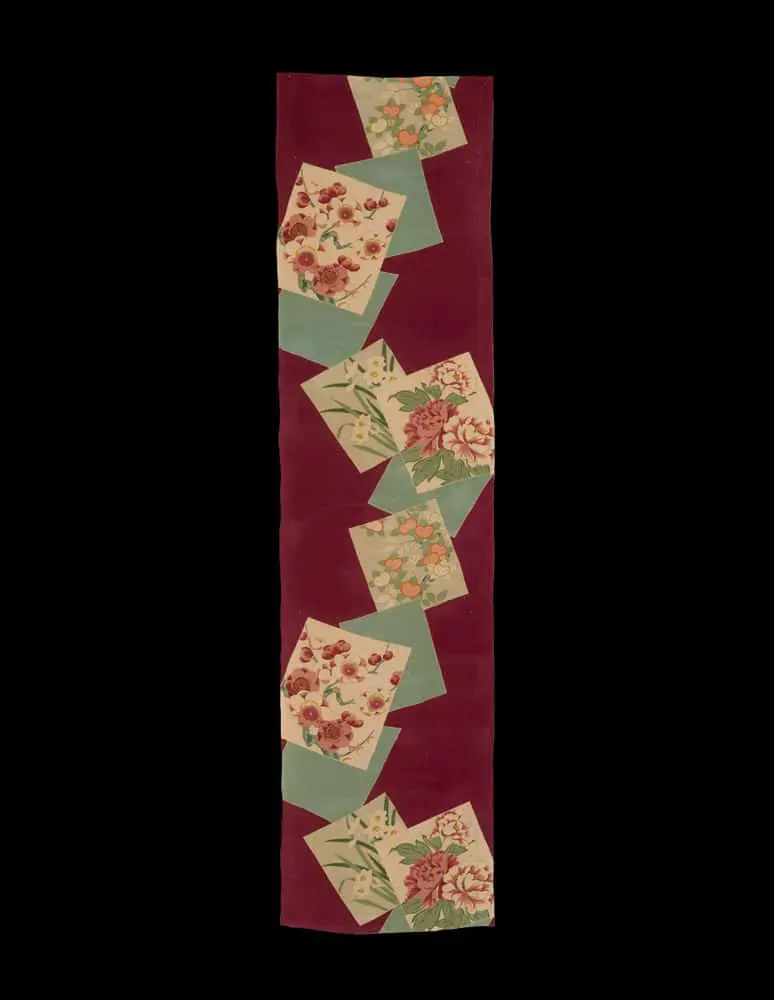
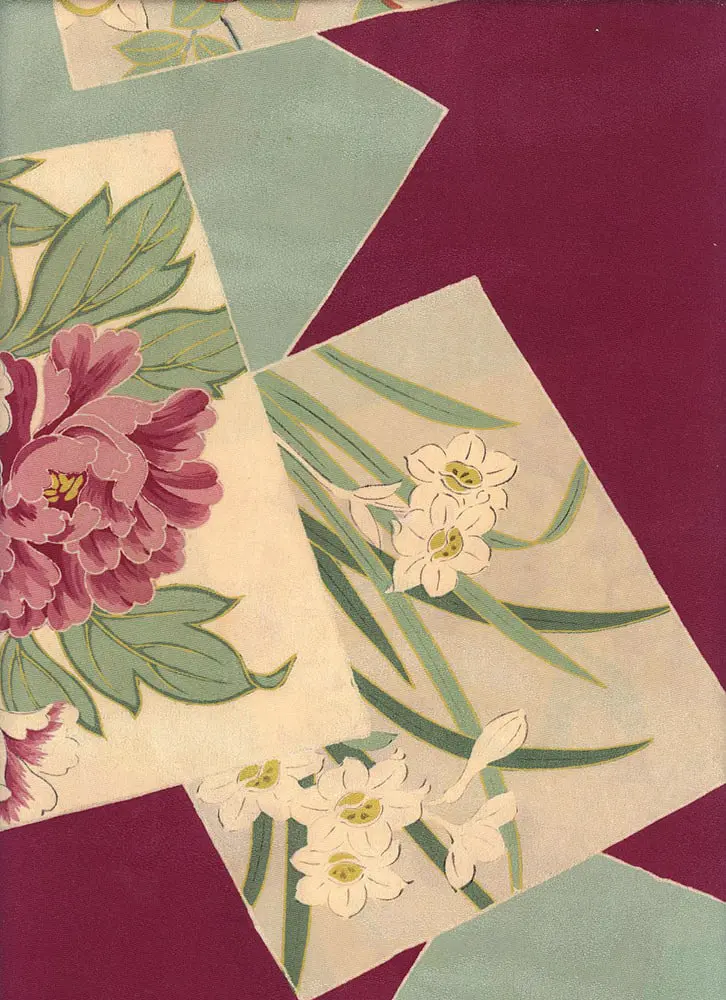
This elegant antique textile originates from the transitional period between the Taisho and early Showa eras (1920–1940), capturing the sophisticated narrative style of pre-war formal wear. Measuring 14 inches by 56 inches (36 cm x 142 cm), the panel is a complete section of historic silk preserved in very good condition. The substrate is a rich, wine-purple silk that provides a regal and deeply saturated foundation for the decorative imagery. While the piece shows some authentic patina in the white areas and a few small vintage spots, these characteristics underscore its century-long history without compromising its structural integrity.
The visual narrative is composed of a rhythmic, vertical arrangement of scattered cards, or karuta, which serve as frames for a variety of auspicious botanical symbols. Featured within these rectangular and square motifs are ume (plum blossoms) symbolizing longevity, narcissus representing the New Year and good fortune, and tachibana (citrus) signifying healing and eternal youth. The cards are rendered in a palette of soft cream and pale seafoam green, creating a multi-layered, floating effect against the dark wine field. This "poem card" aesthetic was a highly favored scholarly motif, blending literary allusions with a refined, painterly approach to seasonal transitions.

Payment Options: We primarily accept PayPal for all transactions. Credit and debit cards are not accepted. If you prefer to pay by personal check instead of PayPal, please note this preference in the "Additional comments" field when placing your order.Ordering Process
To receive your PayPal invoice, simply fill out the form.
Shipping Details: We ship all orders to the address associated with your PayPal payment. Please ensure your PayPal shipping address is current and accurate.A phone number is required during checkout, as our shipping carrier may need to contact you regarding delivery questions.Shipping RatesUnited States and Canada: $20International destinations (air mail): $40
