Copyright © 2026 Yorke Antique Textiles
.avif)

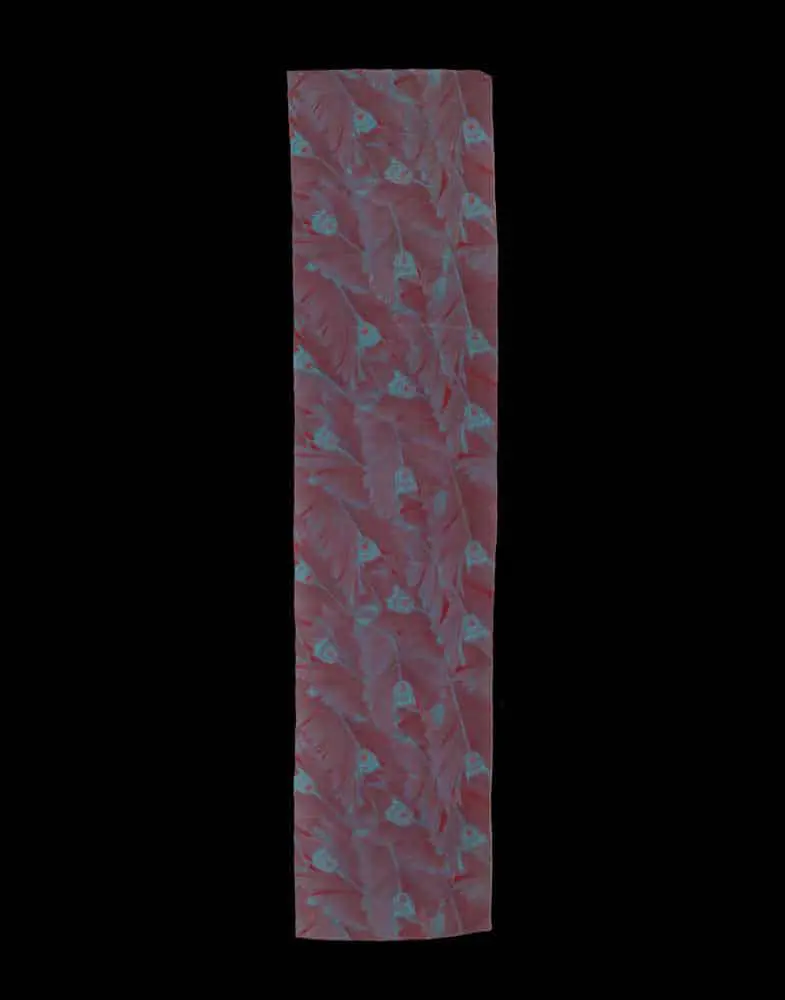

This striking antique textile originates from the early Showa period (1930–1940) and serves as a scholarly example of the daring, high-contrast color palettes that defined pre-war Japanese fashion. Measuring 14.5 inches by 61 inches (37 cm x 155 cm), the panel is preserved in excellent condition. The substrate is a medium-to-heavyweight silk with a slightly crisp feel and a subtle texture reminiscent of crepe, providing a durable and structurally rich foundation for its bold imagery.
The visual narrative is an all-over, rhythmic arrangement of kujaku (peacock) feathers. These feathers are rendered in a vibrant, saturated turquoise that creates an energetic, almost electric contrast against the brilliant red field. The stylized "eyes" of the feathers repeat across the surface, blending a traditional symbol of protection and beauty with the graphic, avant-garde sensibilities of the early 20th century. This combination of a primary red ground with cool-toned turquoise reflects the era's mastery of expressive, non-traditional color theory used to revitalize classical avian motifs.

Payment Options: We primarily accept PayPal for all transactions. Credit and debit cards are not accepted. If you prefer to pay by personal check instead of PayPal, please note this preference in the "Additional comments" field when placing your order.Ordering Process
To receive your PayPal invoice, simply fill out the form.
Shipping Details: We ship all orders to the address associated with your PayPal payment. Please ensure your PayPal shipping address is current and accurate.A phone number is required during checkout, as our shipping carrier may need to contact you regarding delivery questions.Shipping RatesUnited States and Canada: $20International destinations (air mail): $40
