Copyright © 2026 Yorke Antique Textiles
.avif)

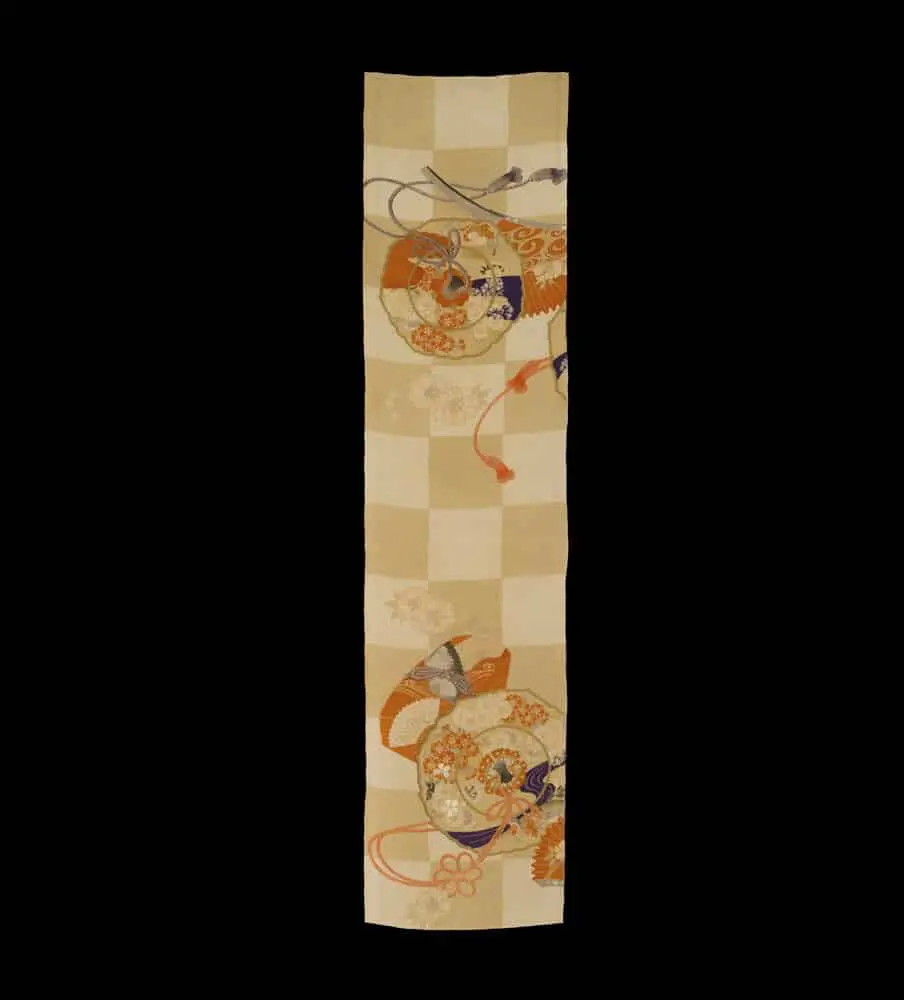
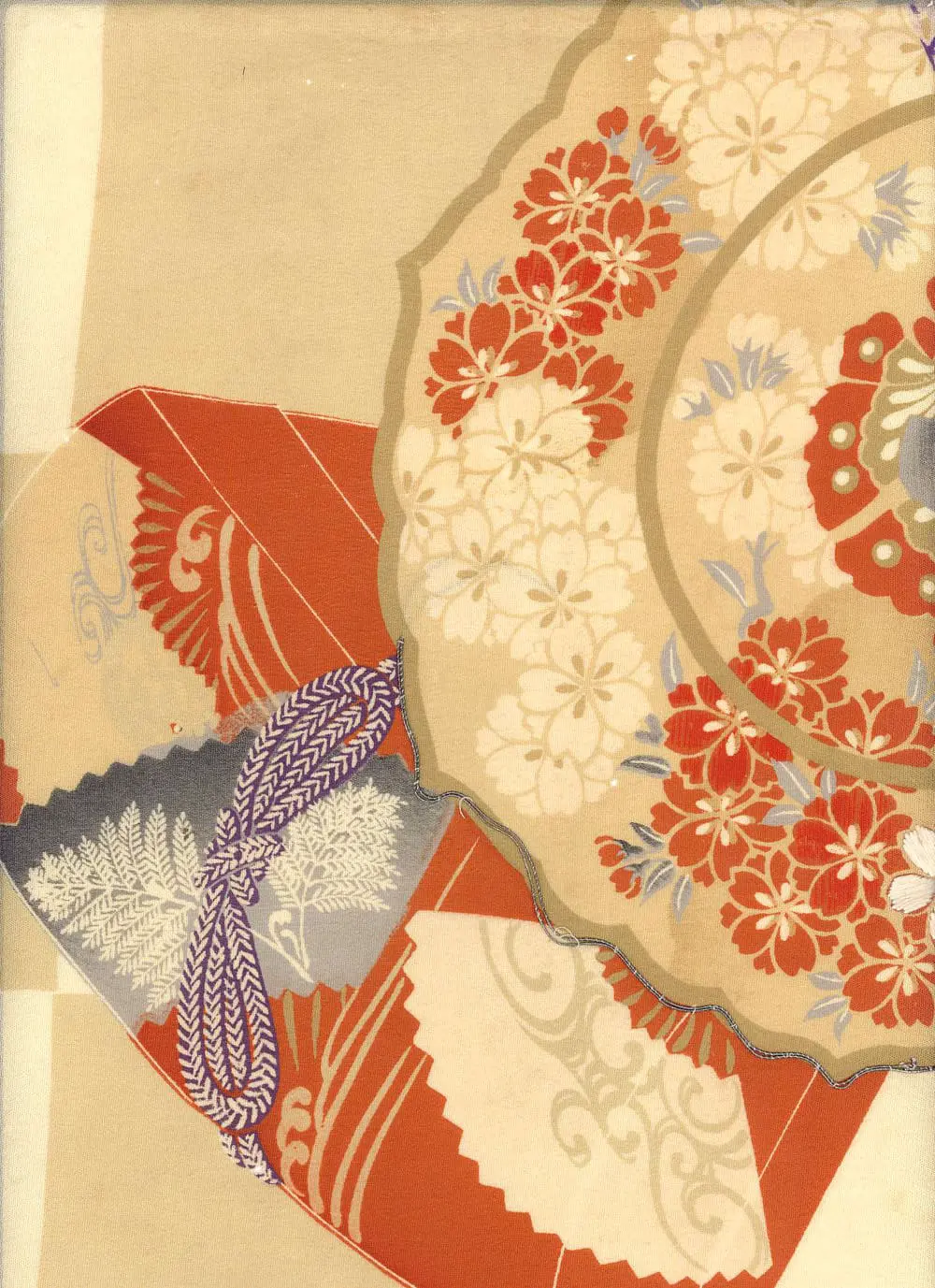
This classical textile originates from the late Meiji period (1890–1912) and is a scholarly example of the refined elegance that characterized high-status garments at the turn of the century. Measuring 14 inches by 58 inches (36 cm x 147 cm), the panel is crafted from high-quality silk and remains in very good condition, though it displays a storied patina through a few minor holes and the partial loss of its original metal couching. The design is set against a subtle ichimatsu (checkerboard) ground of alternating cream and champagne gold blocks.
The visual narrative centers on the hanaguruma (flower carriage), a motif derived from the ox-drawn carriages of the Heian-period nobility, overflowing with seasonal blossoms. These carriages are meticulously rendered with hand-embroidery in vibrant orange, deep purple, and white, featuring intricate floral patterns on the wheels and carriage bodies. To further elevate the design, metal-thread couching accents were used to define the structural lines of the wheels and the trailing tassels, a technique where shimmering threads are laid on the surface and secured with silk. This combination of aristocratic themes and labor-intensive hand-embellishment reflects the Meiji era's dedication to preserving the "Old Japan" aesthetic during a period of rapid modernization.

Payment Options: We primarily accept PayPal for all transactions. Credit and debit cards are not accepted. If you prefer to pay by personal check instead of PayPal, please note this preference in the "Additional comments" field when placing your order.Ordering Process
To receive your PayPal invoice, simply fill out the form.
Shipping Details: We ship all orders to the address associated with your PayPal payment. Please ensure your PayPal shipping address is current and accurate.A phone number is required during checkout, as our shipping carrier may need to contact you regarding delivery questions.Shipping RatesUnited States and Canada: $20International destinations (air mail): $40
