Copyright © 2026 Yorke Antique Textiles
.avif)

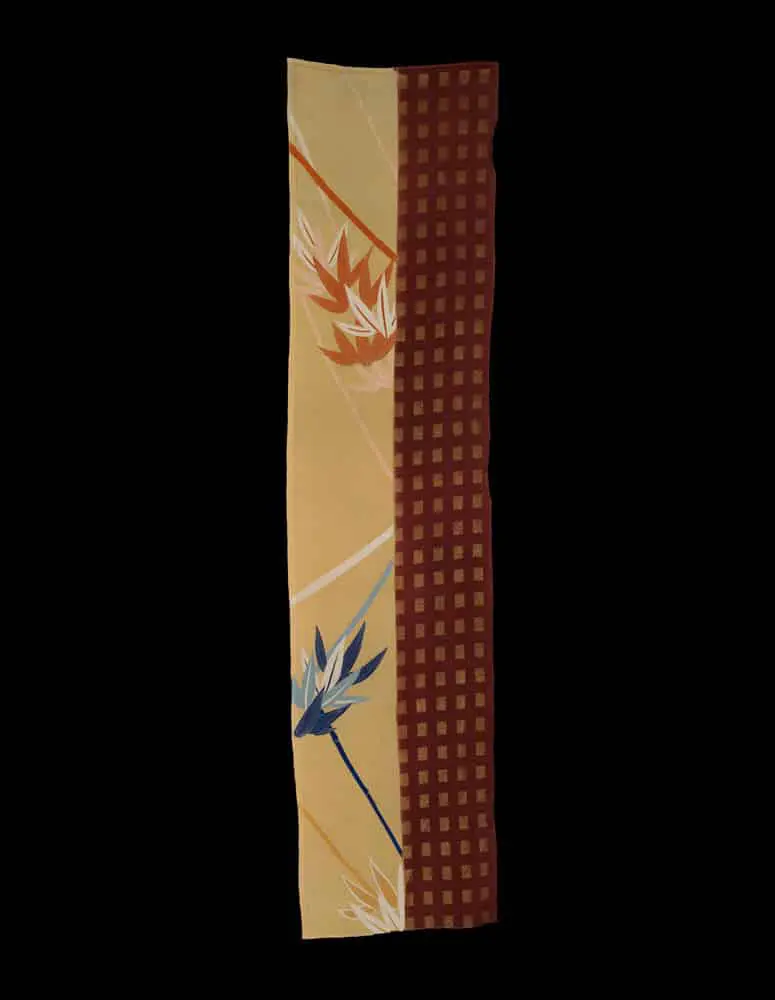
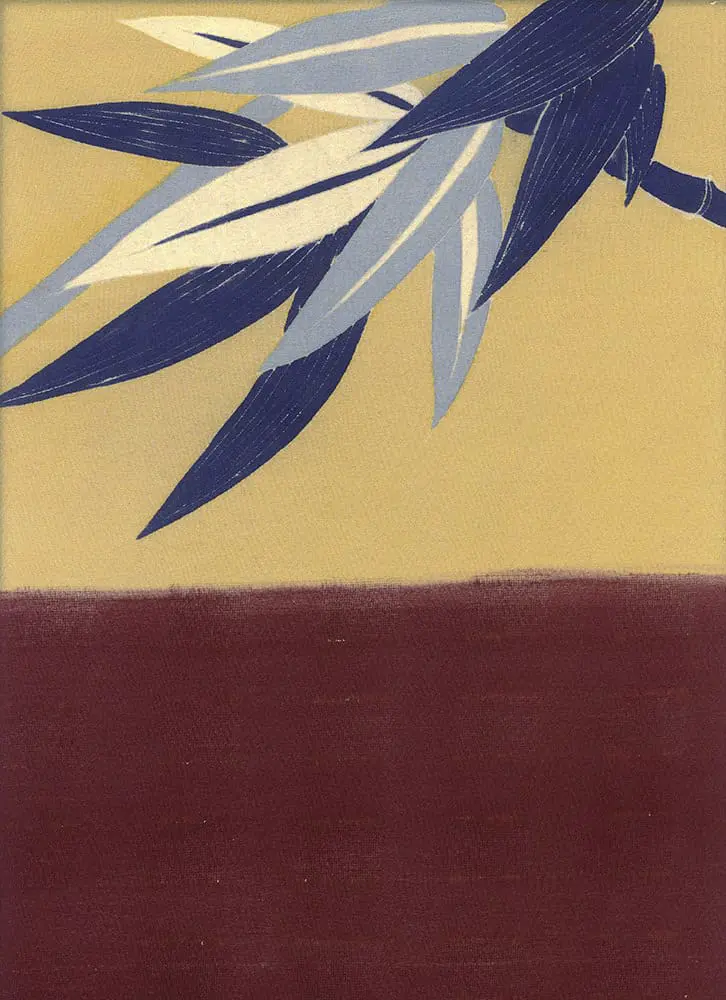
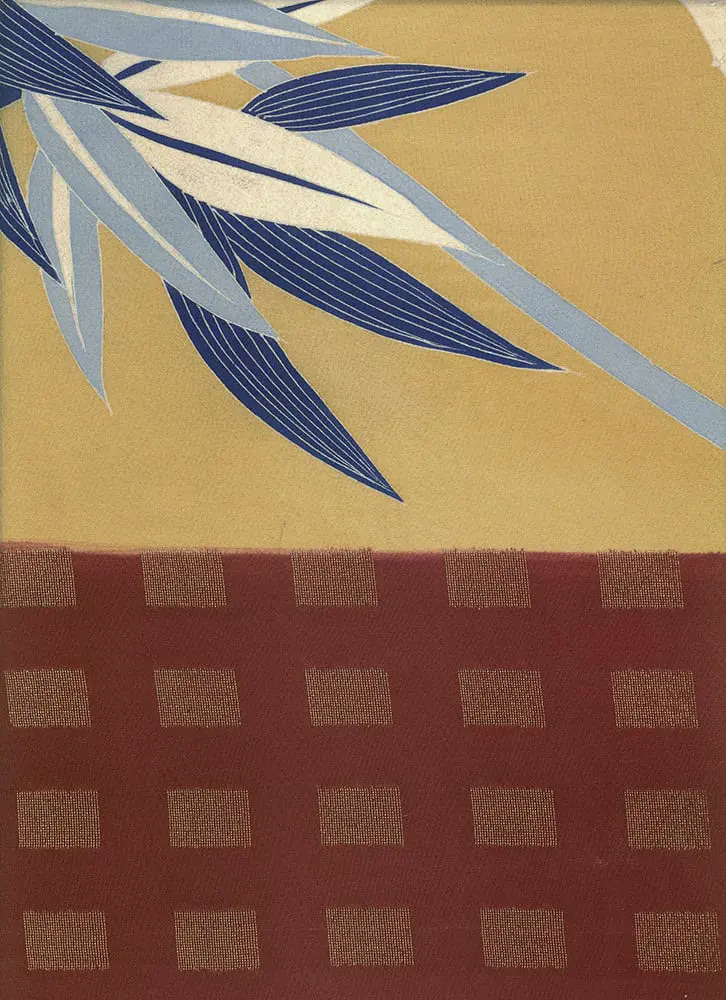
This remarkable textile originates from Japan’s Taisho period (1912–1926) and is a scholarly example of the opulent, cross-disciplinary craftsmanship that defined the era's high-status formal wear. Measuring 14.25 inches by 63 inches (36 cm x 160 cm), the panel is crafted from fine silk and displays a storied patina, with pricing reflecting notable stains along the edging. The composition is divided vertically into two distinct fields: a warm, mustard-gold silk ground and a deep sienna-brown section featuring a dense grid of woven squares.
The visual narrative showcases a sophisticated fusion of yuzen dyeing, couching, and hand-embroidery. The primary motifs are stylized kiku (chrysanthemum) and bamboo leaves, rendered in a striking palette of burnt orange, slate blue, and cream. Notably, the small squares in the darker field were meticulously crafted using gold-colored threads that are visible only on the front side, a labor-intensive technique used to create a shimmering, metallic texture without adding excessive bulk to the fabric. This combination of bold geometric division and delicate botanical artistry reflects the Taisho era's unique aesthetic, which often blended traditional motifs with more modern, structured layouts.

Payment Options: We primarily accept PayPal for all transactions. Credit and debit cards are not accepted. If you prefer to pay by personal check instead of PayPal, please note this preference in the "Additional comments" field when placing your order.Ordering Process
To receive your PayPal invoice, simply fill out the form.
Shipping Details: We ship all orders to the address associated with your PayPal payment. Please ensure your PayPal shipping address is current and accurate.A phone number is required during checkout, as our shipping carrier may need to contact you regarding delivery questions.Shipping RatesUnited States and Canada: $20International destinations (air mail): $40
