Copyright © 2026 Yorke Antique Textiles
.avif)

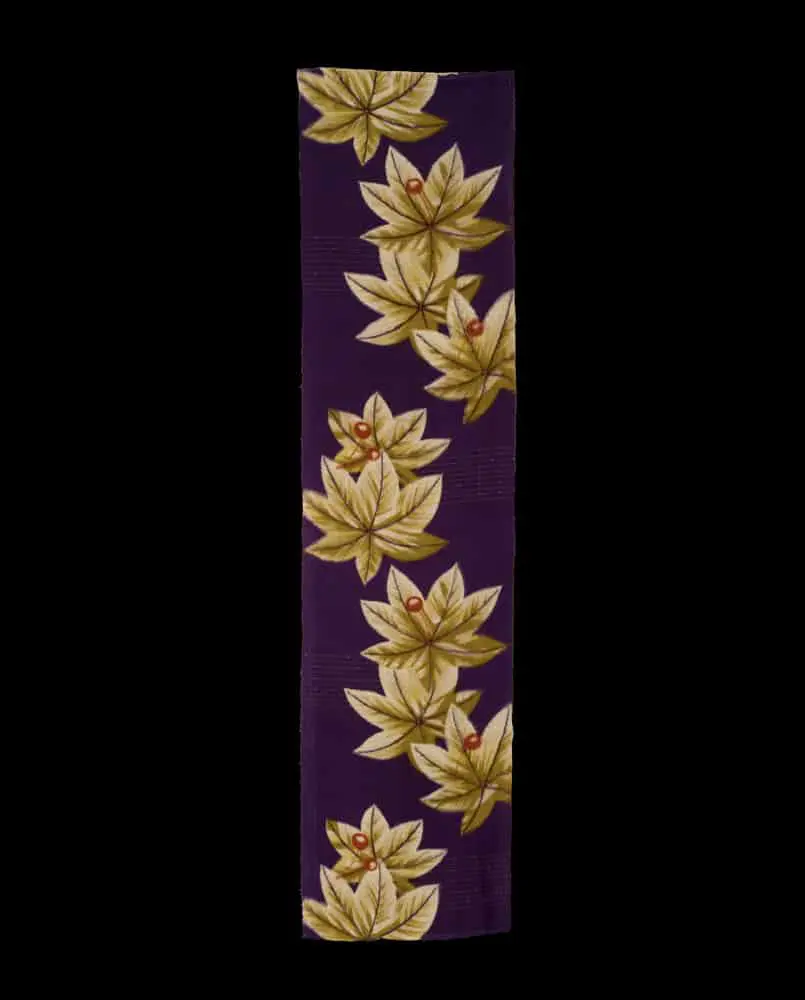
This remarkable textile originates from Japan’s Taisho period (1912–1926) and is a scholarly example of the bold, romantic aesthetic that defined urban fashion during this brief but culturally explosive era. Measuring 14.5 inches by 64 inches (37 cm x 163 cm), the panel is crafted from high-quality meisen silk and remains in excellent condition. The composition is set against a deep, saturated plum-purple ground, featuring a series of horizontal textured bands woven into the substrate that provide a subtle architectural rhythm to the silk.
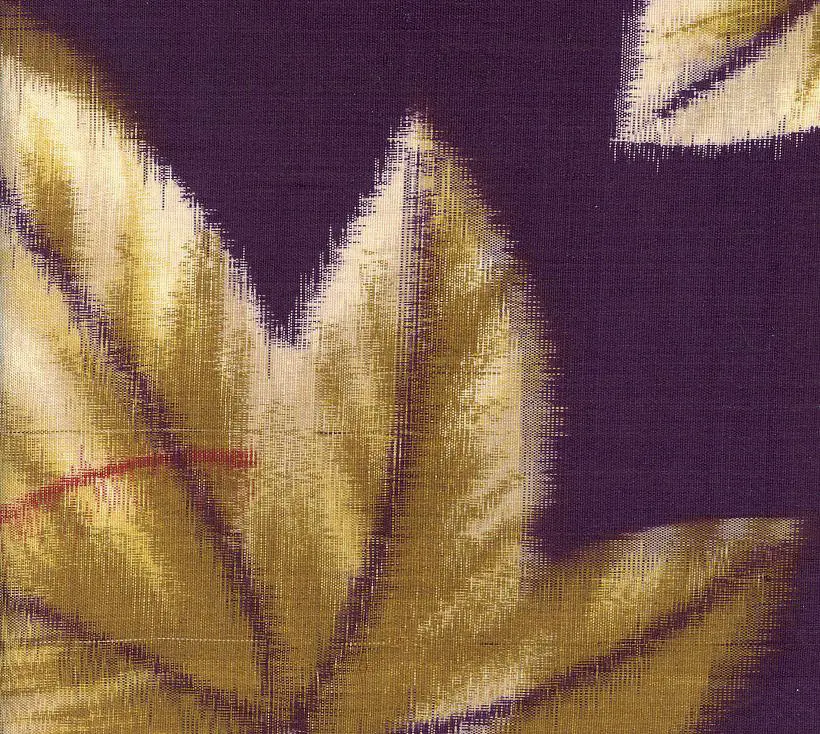
The visual narrative centers on a vertical trail of oversized momiji (maple) leaves, a classical symbol of the beauty of autumn and the transience of life. These leaves are rendered in a sophisticated palette of olive green, sage, and pale cream, with each leaf punctuated by a singular, vibrant red berry or seed pod at its center. The motifs are executed using the kasuri (ikat) technique, where the threads are resist-dyed prior to weaving to produce the signature "blurred" edges characteristic of Taisho-era innovation. This specific design represents the era's move away from the delicate, realistic floral patterns of the Meiji period in favor of larger, more graphic interpretations of nature that echoed European Art Nouveau and Arts and Crafts movements.

Payment Options: We primarily accept PayPal for all transactions. Credit and debit cards are not accepted. If you prefer to pay by personal check instead of PayPal, please note this preference in the "Additional comments" field when placing your order.Ordering Process
To receive your PayPal invoice, simply fill out the form.
Shipping Details: We ship all orders to the address associated with your PayPal payment. Please ensure your PayPal shipping address is current and accurate.A phone number is required during checkout, as our shipping carrier may need to contact you regarding delivery questions.Shipping RatesUnited States and Canada: $20International destinations (air mail): $40
