Copyright © 2026 Yorke Antique Textiles
.avif)

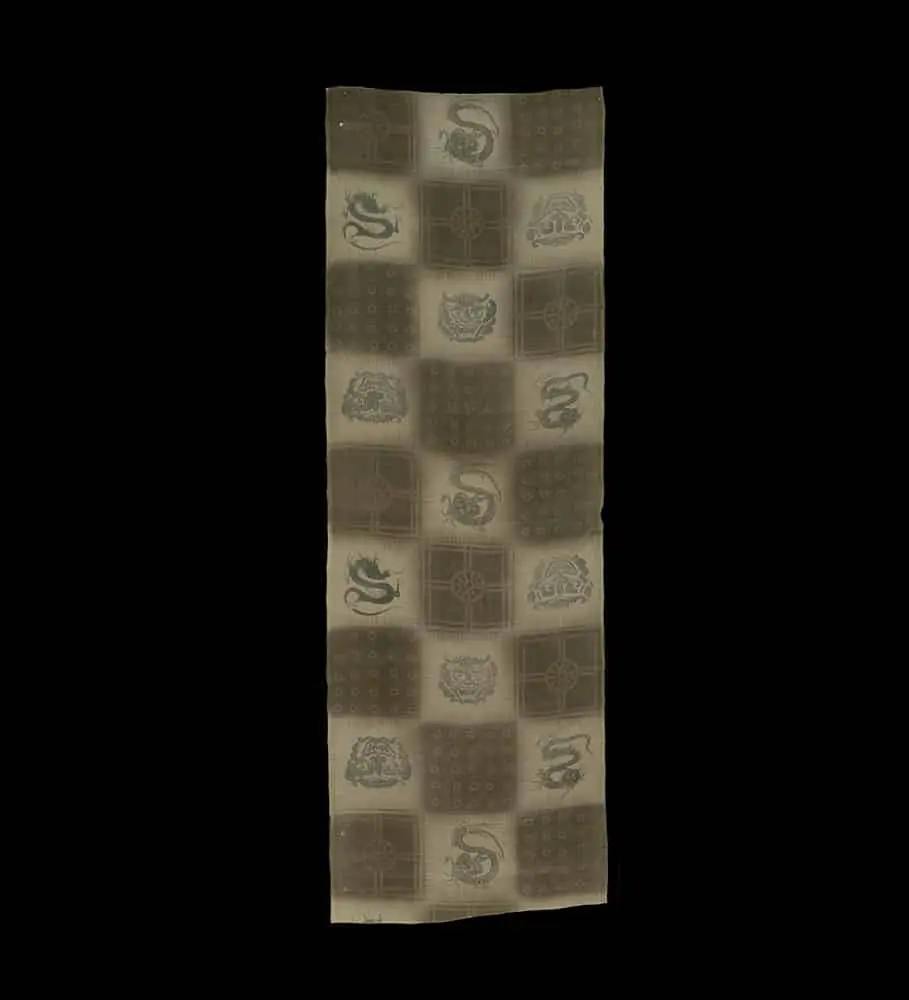

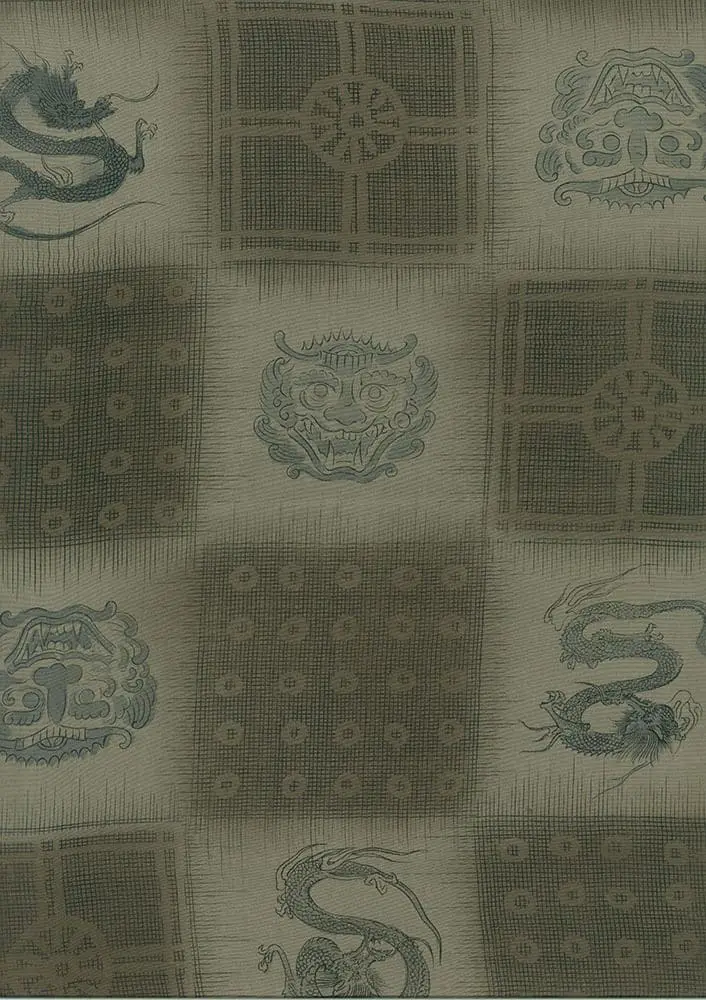
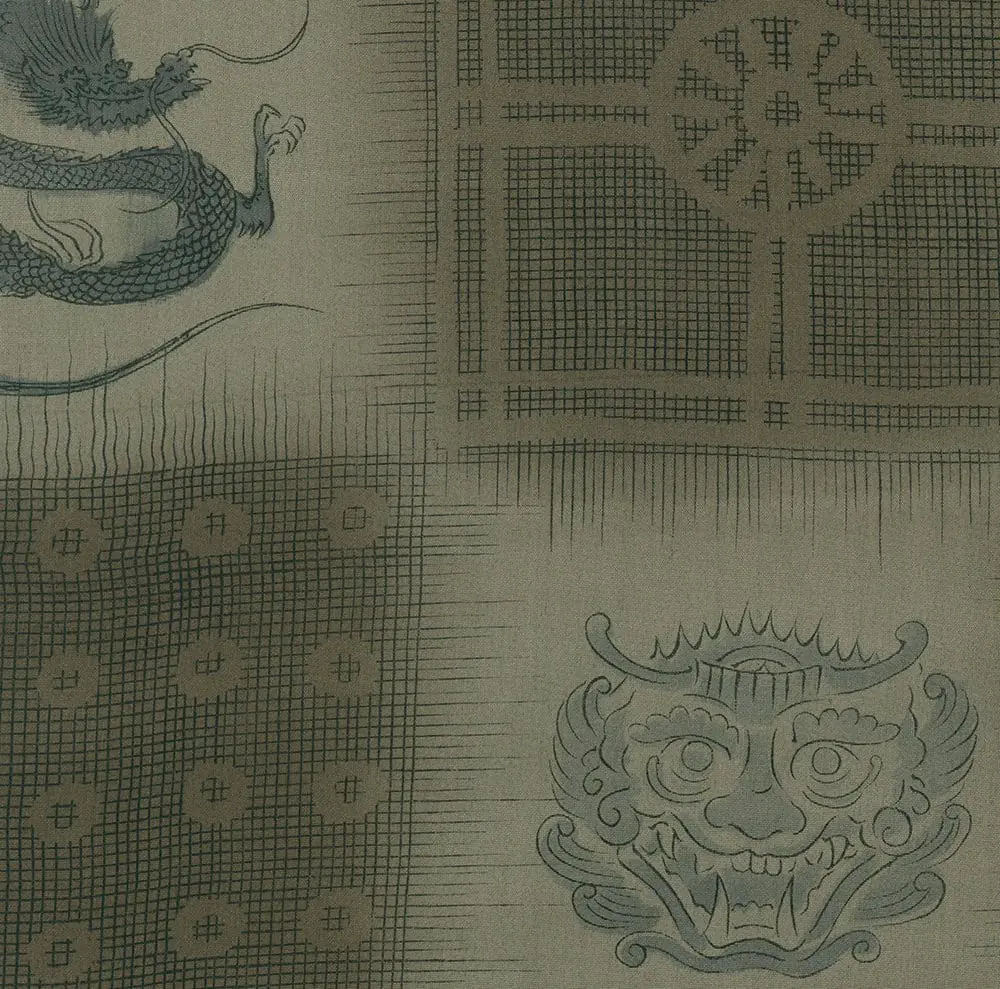
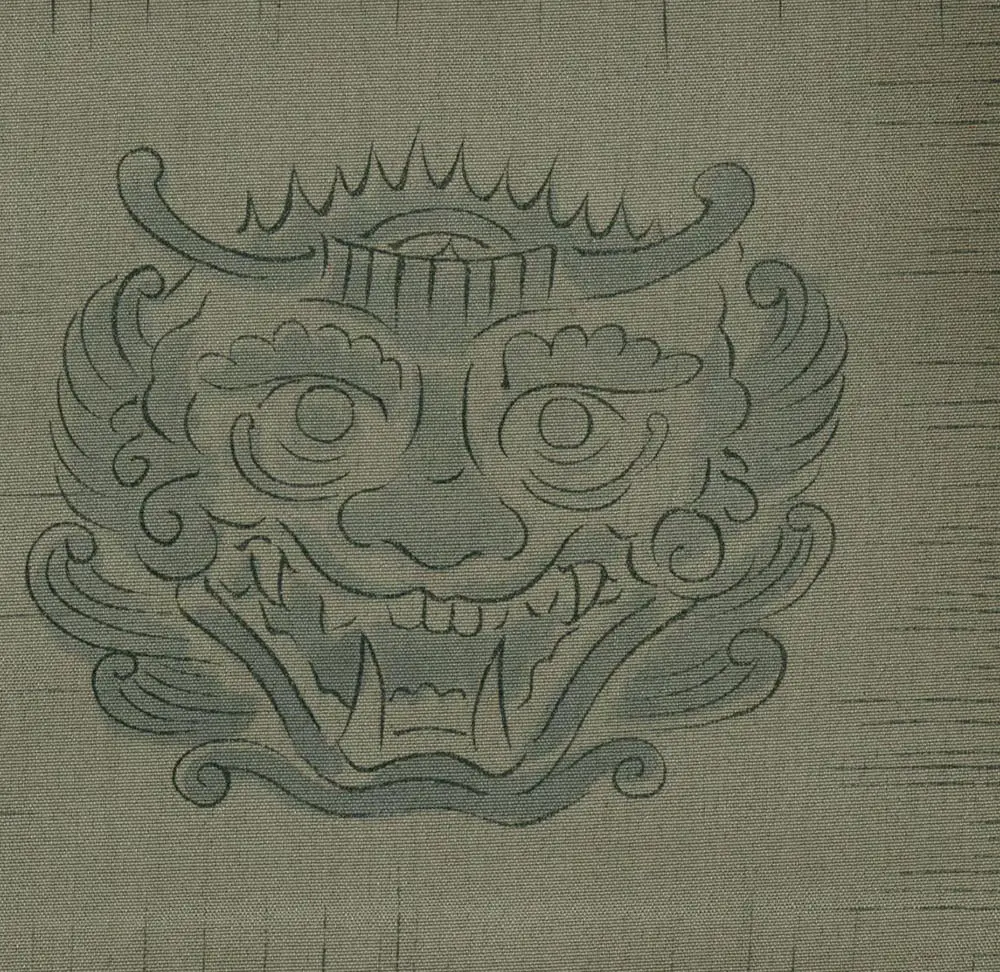

This exceptional textile originates from the late Edo to early Taisho period (1850–1925) and represents a scholarly example of the intricate dyeing techniques used for high-status masculine garments, such as haori linings. Measuring 14.5 inches by 43 inches (37 cm x 109 cm), the panel is crafted from a very fine and soft silk that predates many contemporary gallery examples in its complexity. The composition is organized into a rhythmic checkerboard of geometric blocks set against a rich coffee-brown ground.
The visual narrative features three distinct repeating motifs: two variations of celestial dragons and a fanged monster mask, likely representing an oni or hannya. These figures are rendered in a sophisticated palette of slate blue and grey, while the linear grid borders appear in a dark sienna brown. This combination of mythical protective symbols and a structured geometric layout reflects the late 19th-century trend of incorporating "hidden" masculine power motifs within the interior of formal attire. While the textile remains in good condition, there are visible holes along the edges consistent with its age and previous use.

Payment Options: We primarily accept PayPal for all transactions. Credit and debit cards are not accepted. If you prefer to pay by personal check instead of PayPal, please note this preference in the "Additional comments" field when placing your order.Ordering Process
To receive your PayPal invoice, simply fill out the form.
Shipping Details: We ship all orders to the address associated with your PayPal payment. Please ensure your PayPal shipping address is current and accurate.A phone number is required during checkout, as our shipping carrier may need to contact you regarding delivery questions.Shipping RatesUnited States and Canada: $20International destinations (air mail): $40
