Copyright © 2026 Yorke Antique Textiles
.avif)

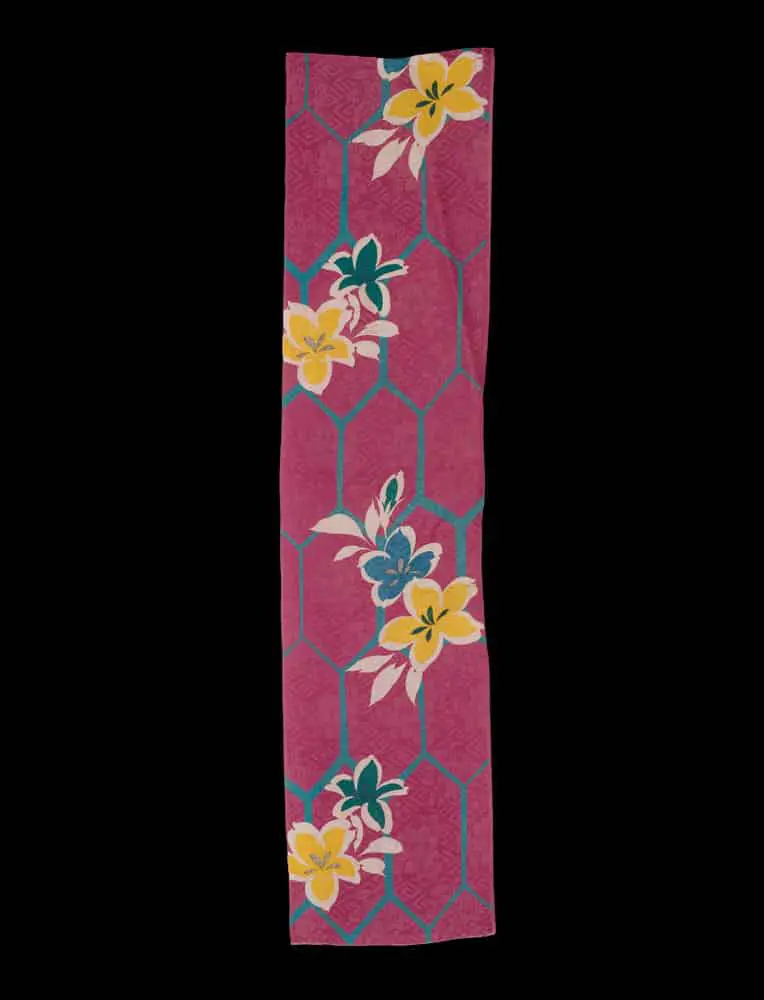
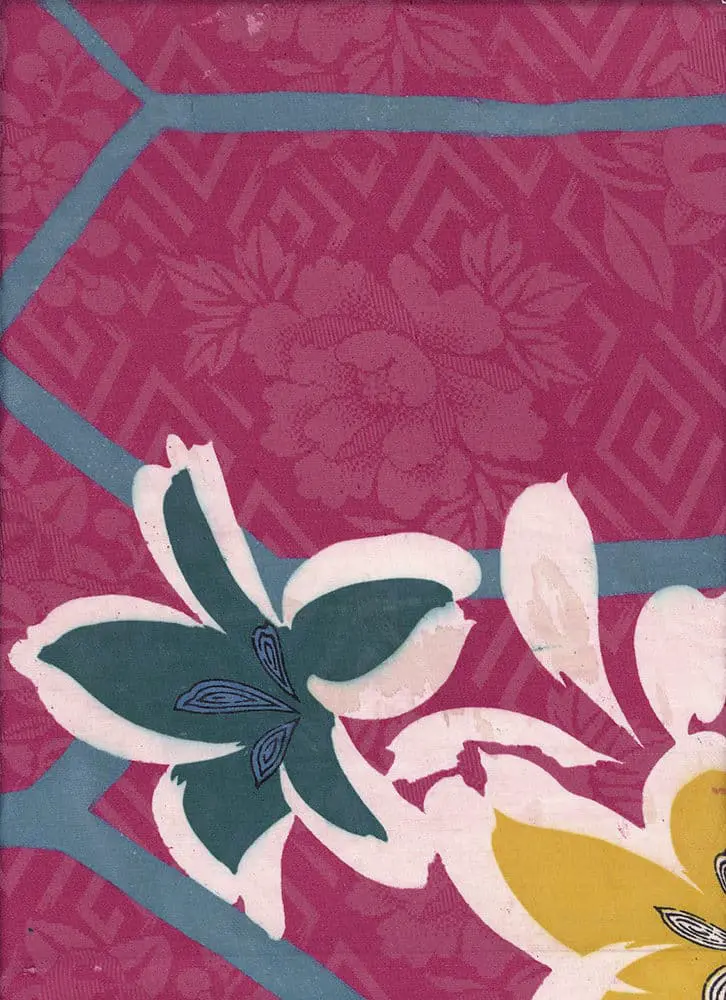
This exquisite textile originates from Japan’s Taisho period (1920–1926) and is a scholarly example of the lyrical and highly decorative aesthetic that flourished during this brief, cosmopolitan era. Measuring 14.75 inches by 62 inches (37 cm x 157 cm), the panel is crafted from high-quality rinzu (silk damask), providing a fine, soft texture and a wonderful drape quality. While the textile remains in very good condition, its age is reflected in some patina and minor color migration stains, which have been considered in its scholarly valuation.
The visual narrative is set against a deep, lustrous indigo-blue ground. It features a vertical, rhythmic arrangement of large-scale hanaguruma (flower carriage) motifs, a classical theme representing elegance and the aristocratic culture of the Heian court. Each circular carriage is intricately detailed with a central floral mandala in shades of rust-orange and gold, surrounded by a profusion of white and pale-yellow blossoms, including chrysanthemums and plum flowers. Delicate trailing vines and leaves extend from the carriages, creating a sense of graceful movement upward along the length of the panel. The contrast between the saturated blue background and the vibrant, multicolored bouquets reflects the Taisho preference for bold yet romantically interpreted traditional imagery.

Payment Options: We primarily accept PayPal for all transactions. Credit and debit cards are not accepted. If you prefer to pay by personal check instead of PayPal, please note this preference in the "Additional comments" field when placing your order.Ordering Process
To receive your PayPal invoice, simply fill out the form.
Shipping Details: We ship all orders to the address associated with your PayPal payment. Please ensure your PayPal shipping address is current and accurate.A phone number is required during checkout, as our shipping carrier may need to contact you regarding delivery questions.Shipping RatesUnited States and Canada: $20International destinations (air mail): $40
