Copyright © 2026 Yorke Antique Textiles
.avif)

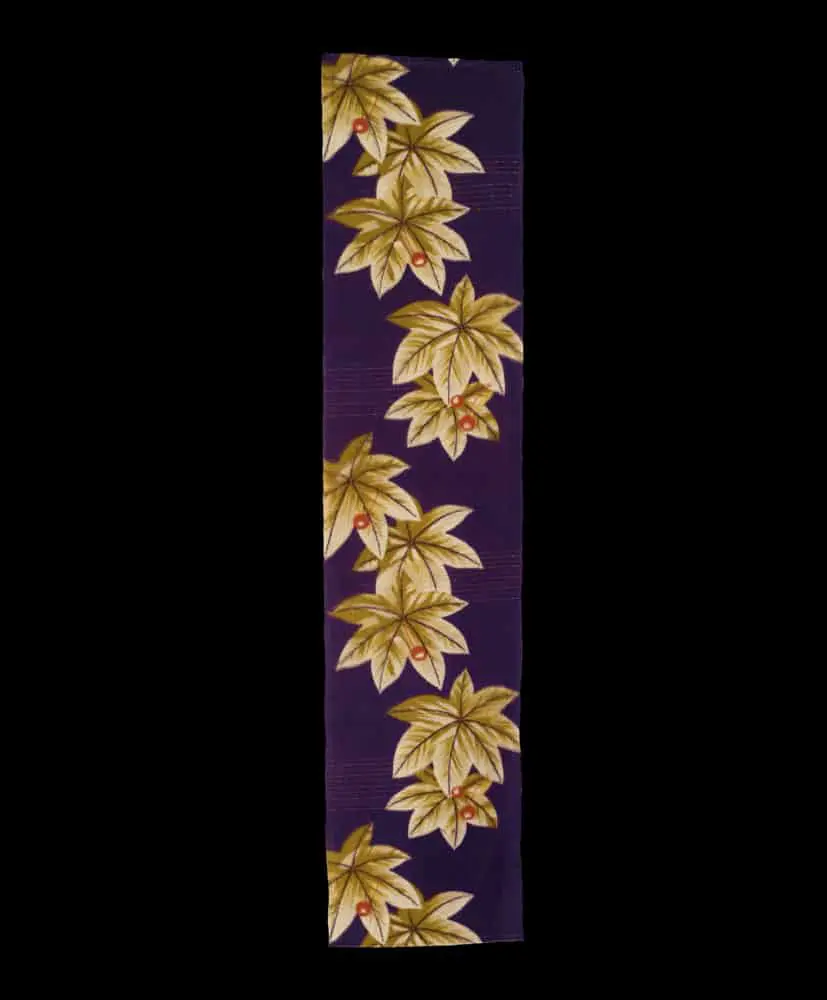
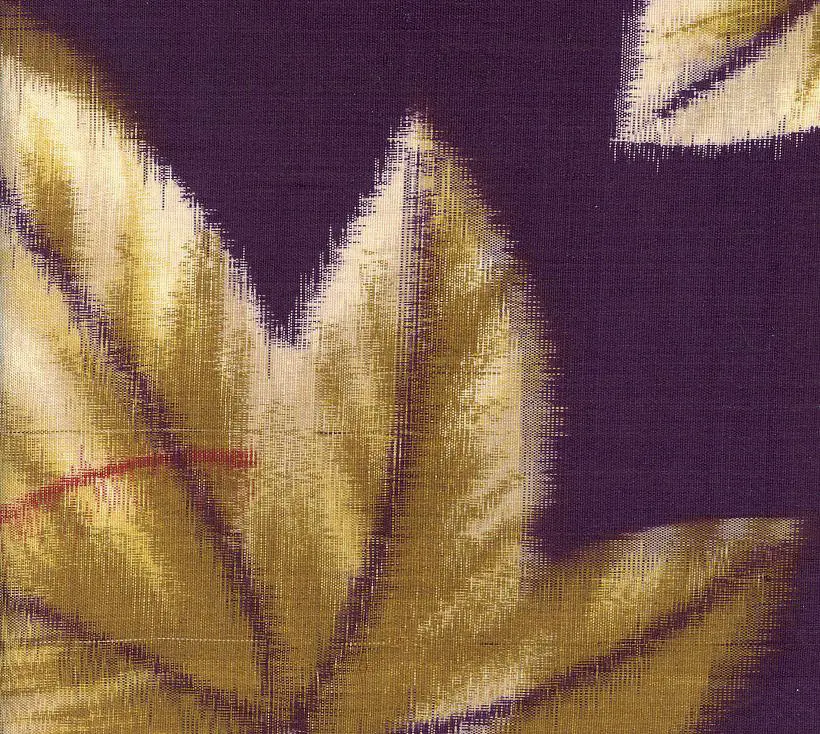
This striking textile originates from Japan’s late Taisho period (1920–1926) and is a scholarly example of the bold, graphic innovation that defined meisen silk production during the height of its popularity. Measuring 14.5 inches by 59 inches (37 cm x 150 cm), the panel is crafted from high-quality silk that boasts a gently crisp texture while maintaining a graceful drape due to its lighter weight. The composition is set against a vibrant teal-blue ground, densely populated with small, rhythmic dashes that create a sense of textured depth.
The visual narrative features a vertical arrangement of large, heart-shaped ivy leaves, known as tsuta, which symbolize fidelity and endurance. These leaves are rendered in a sophisticated palette of pale yellow, cream, and deep coral-red, with trailing white vines that swirl between the clusters. The pattern is executed using the kasuri (ikat) technique, where threads are resist-dyed before weaving to produce the signature "blurred" edges characteristic of pre-war textile art. This specific combination of high-contrast botanical motifs and an energetic, textured background reflects the era's unique fusion of traditional Japanese symbolism with the emerging influences of Western Art Deco and Art Nouveau.

Payment Options: We primarily accept PayPal for all transactions. Credit and debit cards are not accepted. If you prefer to pay by personal check instead of PayPal, please note this preference in the "Additional comments" field when placing your order.Ordering Process
To receive your PayPal invoice, simply fill out the form.
Shipping Details: We ship all orders to the address associated with your PayPal payment. Please ensure your PayPal shipping address is current and accurate.A phone number is required during checkout, as our shipping carrier may need to contact you regarding delivery questions.Shipping RatesUnited States and Canada: $20International destinations (air mail): $40
