Copyright © 2026 Yorke Antique Textiles
.avif)


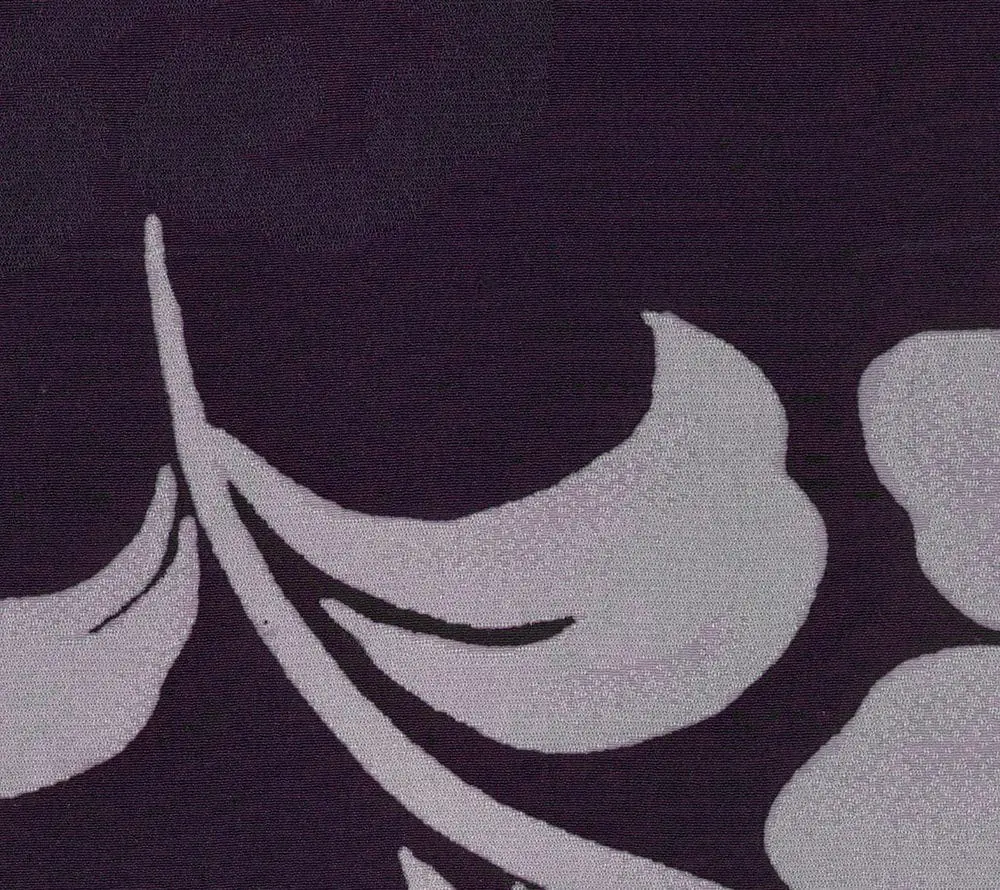
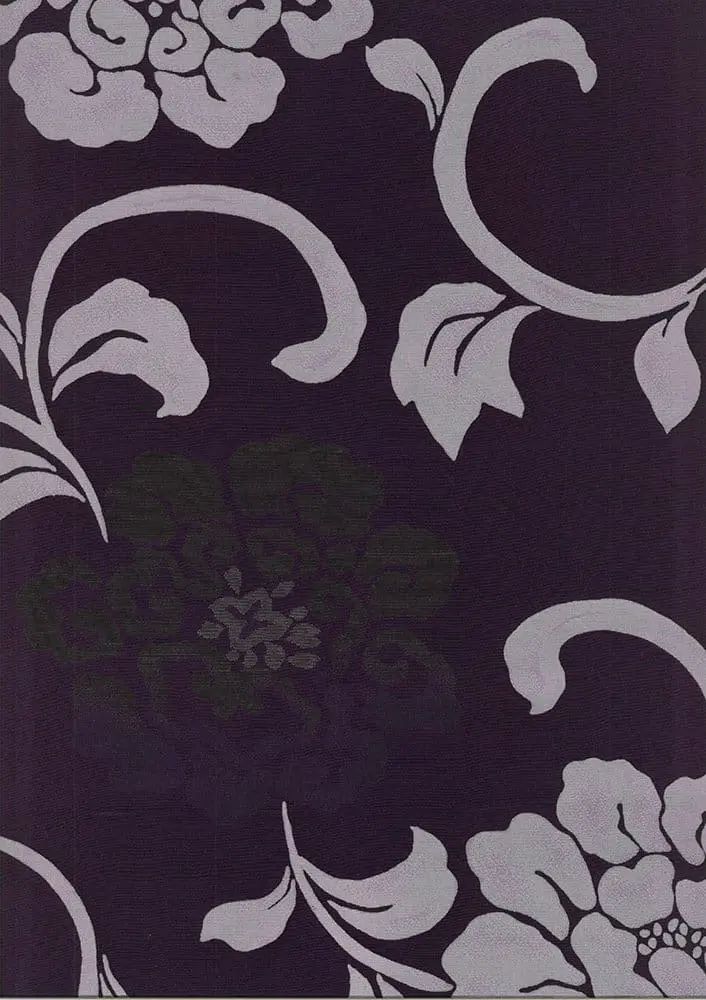
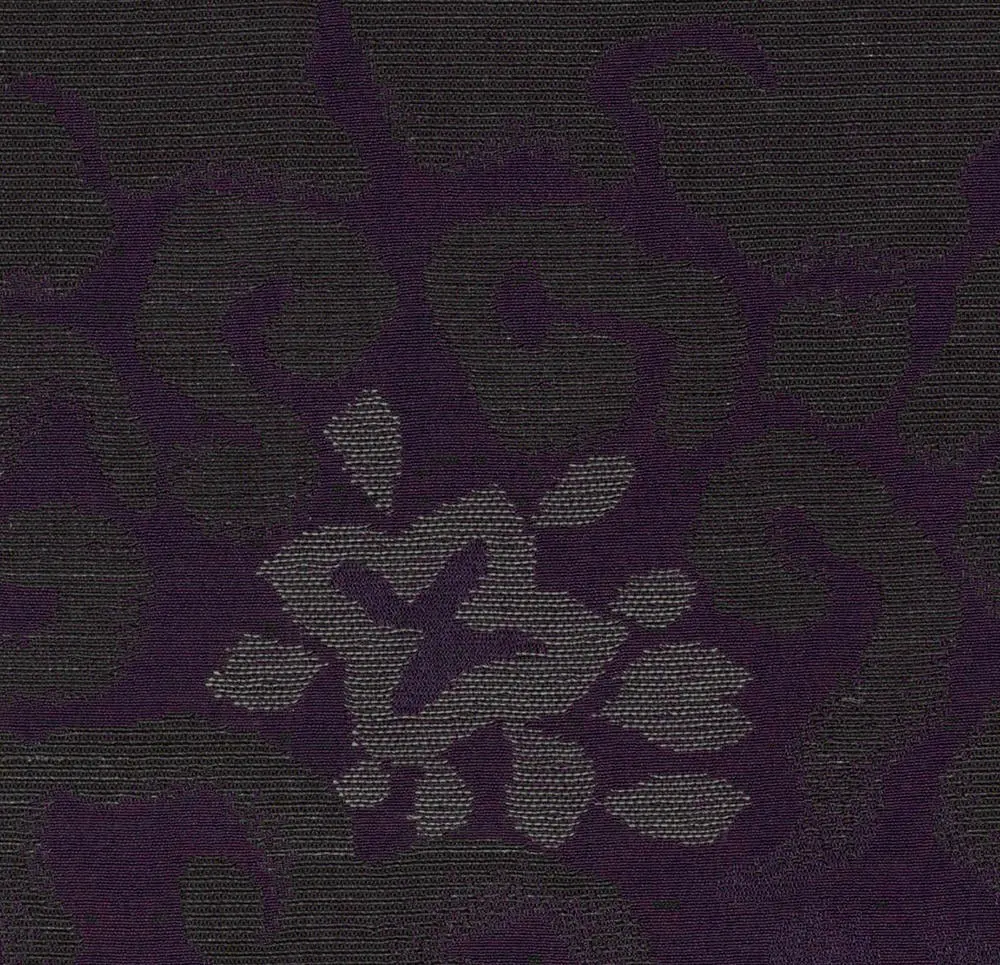
This sophisticated textile originates from Japan’s Taisho period (1912–1926) and is a scholarly example of the refined, textural experimentation that defined early 20th-century luxury weaving. Measuring 14 inches by 55 inches (36 cm x 140 cm), the piece is a complete panel from a disassembled garment, preserved in excellent condition. The substrate is a deep purple silk that possesses a remarkably soft, almost satin-like handle, particularly in the areas featuring lighter pigment.
The visual narrative centers on a rhythmic, vertical arrangement of abstracted botan (peony) motifs. These large-scale blossoms are rendered in a dual-technical approach: some appear as ethereal light lavender forms with elegant, scrolling tendrils, while others are woven as omeshi peonies. These woven elements utilize various shades of purple and red-violet, creating a subtle, tonal depth that plays with the surface light. This combination of dyed and woven botanical imagery reflects the Taisho era's "Roman" style, which blended traditional floral symbolism with a more modern, painterly abstraction and a focus on high-quality, tactile finishes.

Payment Options: We primarily accept PayPal for all transactions. Credit and debit cards are not accepted. If you prefer to pay by personal check instead of PayPal, please note this preference in the "Additional comments" field when placing your order.Ordering Process
To receive your PayPal invoice, simply fill out the form.
Shipping Details: We ship all orders to the address associated with your PayPal payment. Please ensure your PayPal shipping address is current and accurate.A phone number is required during checkout, as our shipping carrier may need to contact you regarding delivery questions.Shipping RatesUnited States and Canada: $20International destinations (air mail): $40
