Copyright © 2026 Yorke Antique Textiles
.avif)

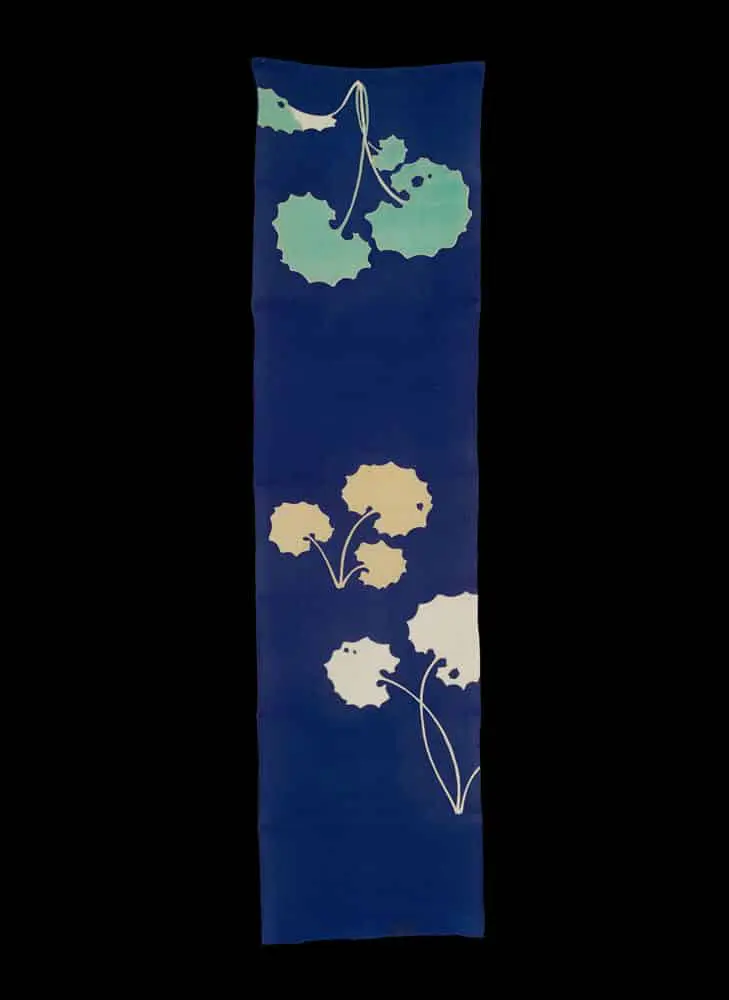
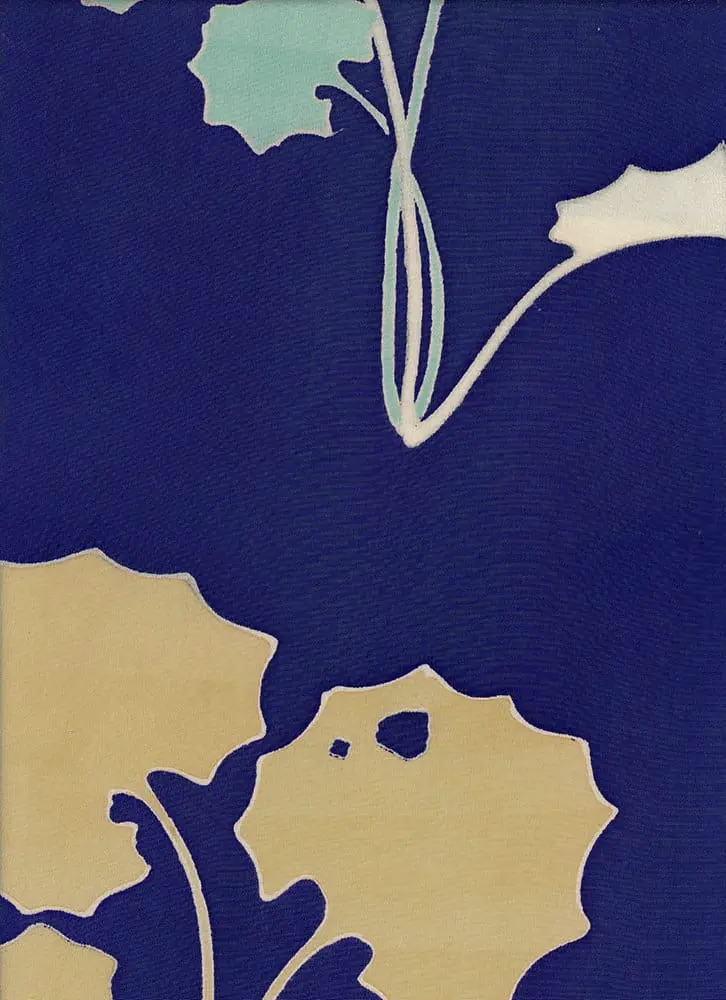
This striking textile originates from Japan’s Taisho period (1912–1926) and is a scholarly example of the era's transition toward bold, larger-scale natural motifs. Measuring 13.75 inches by 56 inches (35 cm x 142 cm), the panel is crafted from a medium-weight crepe silk that boasts a wonderful texture and a fabulous drape. The fabric remains in very good condition, preserving the structural integrity of the crepe weave characteristic of high-quality Taisho-era garments, despite a few barely noticeable patina spots.
The visual narrative is set against a vibrant medium blue ground, featuring a series of bold mulberry leaves. These organic forms are rendered in a refreshing palette of white, creamy yellow, and seafoam green. While traces of original gold outlining remain, much of this embellishment has faded over time, leaving behind a cleaner, more graphic silhouette that emphasizes the rhythmic placement of the leaves. The mulberry leaf is a significant cultural symbol in Japan, representing the vital silk industry, and its expansive, stylized treatment here reflects the romantic and expressive aesthetic of the Taisho years.

Payment Options: We primarily accept PayPal for all transactions. Credit and debit cards are not accepted. If you prefer to pay by personal check instead of PayPal, please note this preference in the "Additional comments" field when placing your order.Ordering Process
To receive your PayPal invoice, simply fill out the form.
Shipping Details: We ship all orders to the address associated with your PayPal payment. Please ensure your PayPal shipping address is current and accurate.A phone number is required during checkout, as our shipping carrier may need to contact you regarding delivery questions.Shipping RatesUnited States and Canada: $20International destinations (air mail): $40
