Copyright © 2026 Yorke Antique Textiles
.avif)

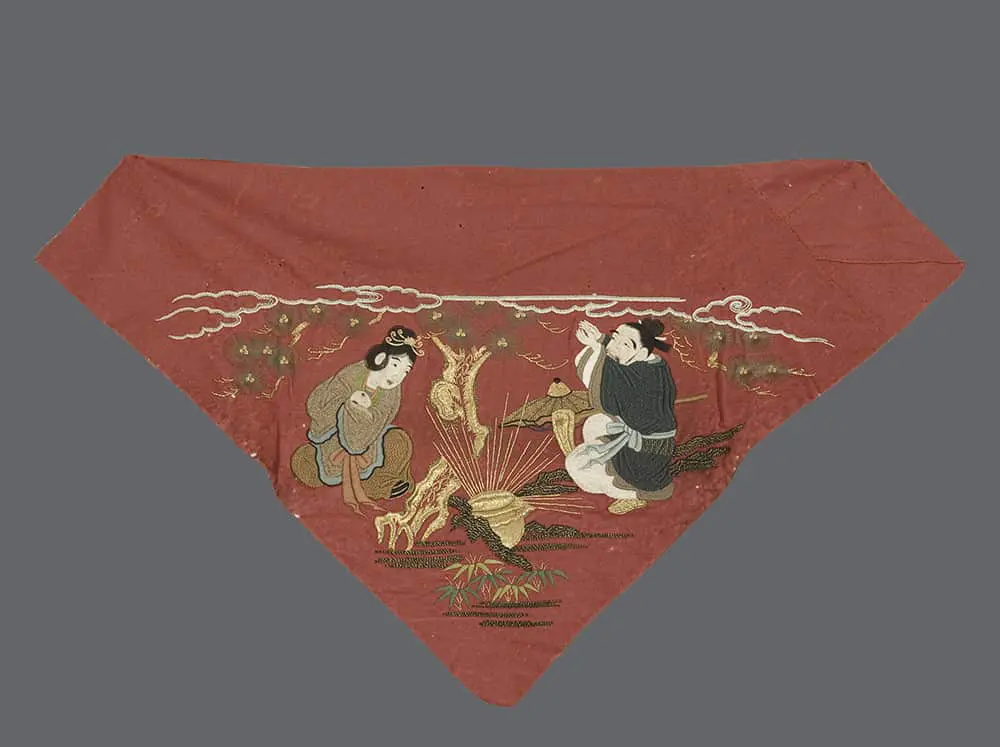
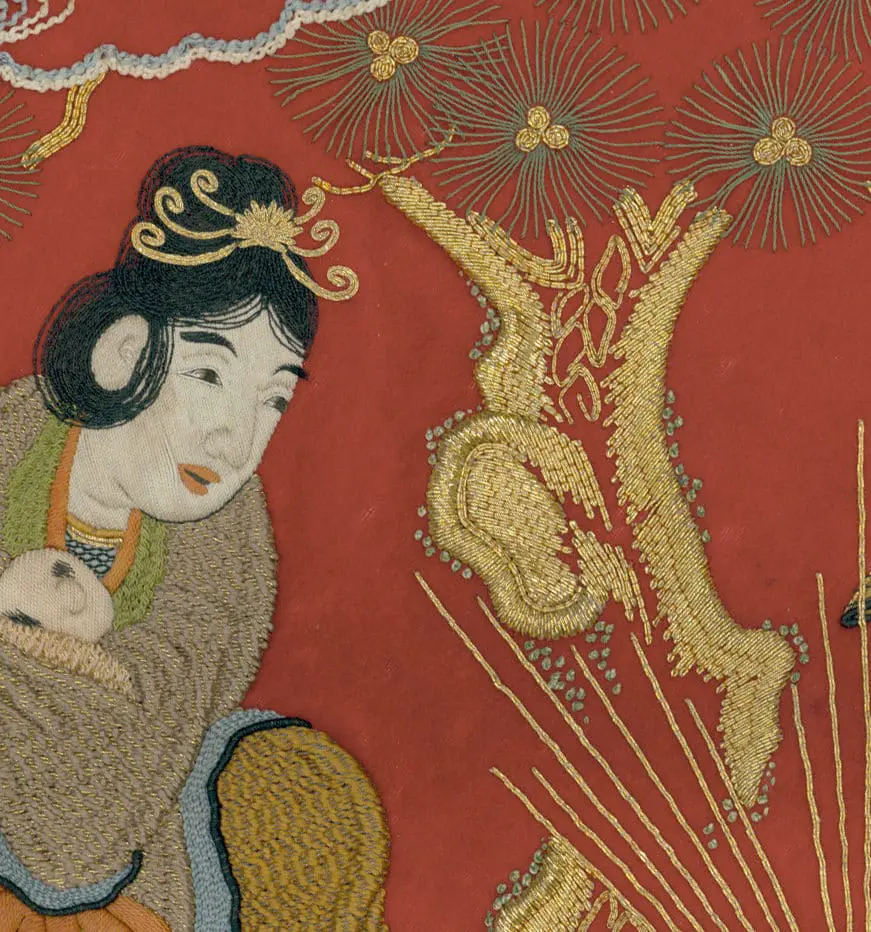
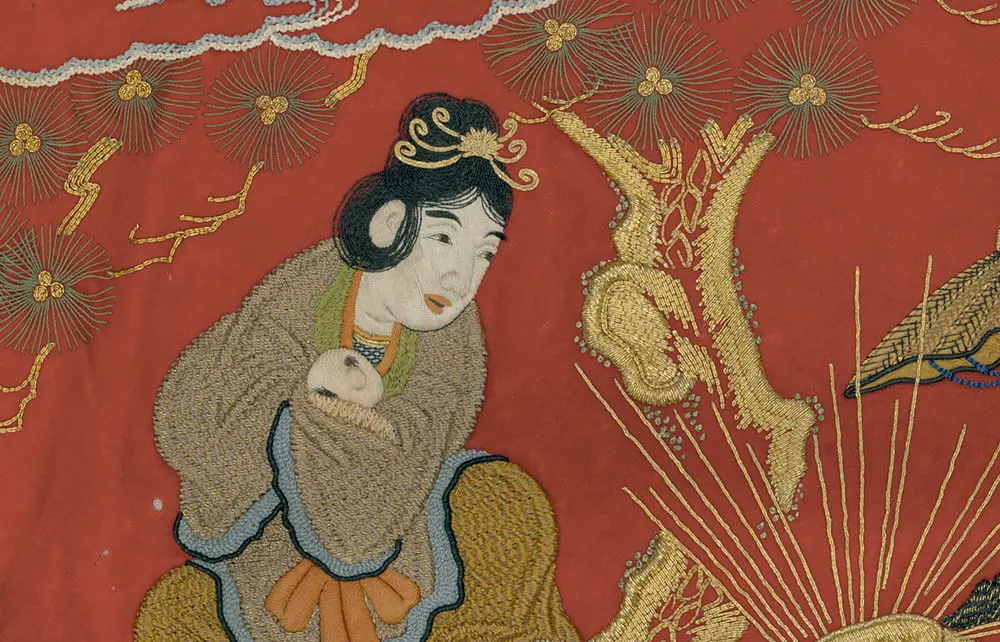
This significant uchishiki (Buddhist altar cloth), dating to the Edo period (1800–1850), is a visual narrative of a pivotal moment in Buddhist history. Measuring 35 inches by 25 inches (89 cm x 64 cm), the textile is crafted with metallic, cord, and silk embroidery on a distinctive red bast-fiber background.
The central imagery likely depicts the story of Sujata, a village woman who offered a bowl of milk rice to the Buddha just before his enlightenment under the Bodhi tree. This act of devotion led the Buddha to realize the "Middle Way"—the importance of sustaining the body to achieve spiritual clarity, rather than practicing extreme austerity. The embroidered scene includes figures in traditional robes flanking a golden vessel that radiates light, set amidst gnarled pines and auspicious clouds. While the red background has about half a dozen tiny holes and the cotton lining shows some grubbiness, the intricate embroidery remains well-preserved and retains its spiritual resonance.
This artwork is featured on pages 70-73 of Ceremonial Textiles of Japan, 18th to 20th Centuries. This book, published by Yorke Antique Textiles, can be previewed or purchased on our website here.

Payment Options: We primarily accept PayPal for all transactions. Credit and debit cards are not accepted. If you prefer to pay by personal check instead of PayPal, please note this preference in the "Additional comments" field when placing your order.Ordering Process
To receive your PayPal invoice, simply fill out the form.
Shipping Details: We ship all orders to the address associated with your PayPal payment. Please ensure your PayPal shipping address is current and accurate.A phone number is required during checkout, as our shipping carrier may need to contact you regarding delivery questions.Shipping RatesUnited States and Canada: $20International destinations (air mail): $40
