Copyright © 2026 Yorke Antique Textiles
.avif)

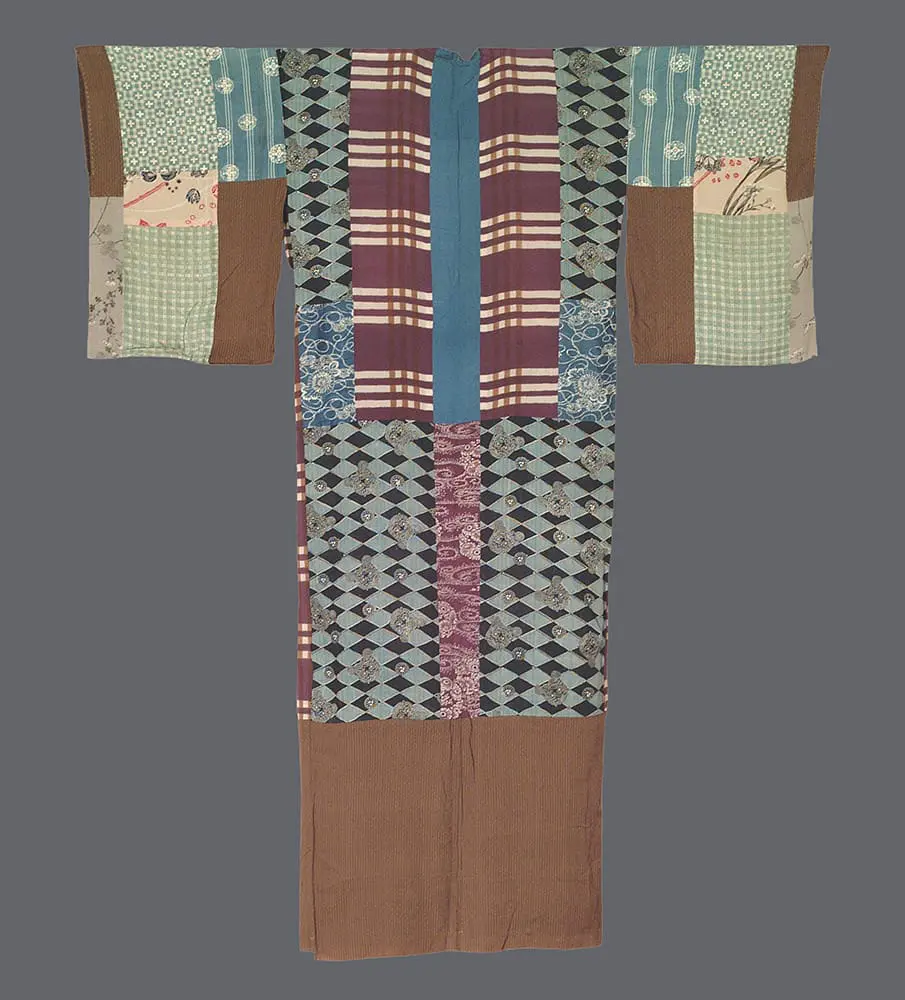

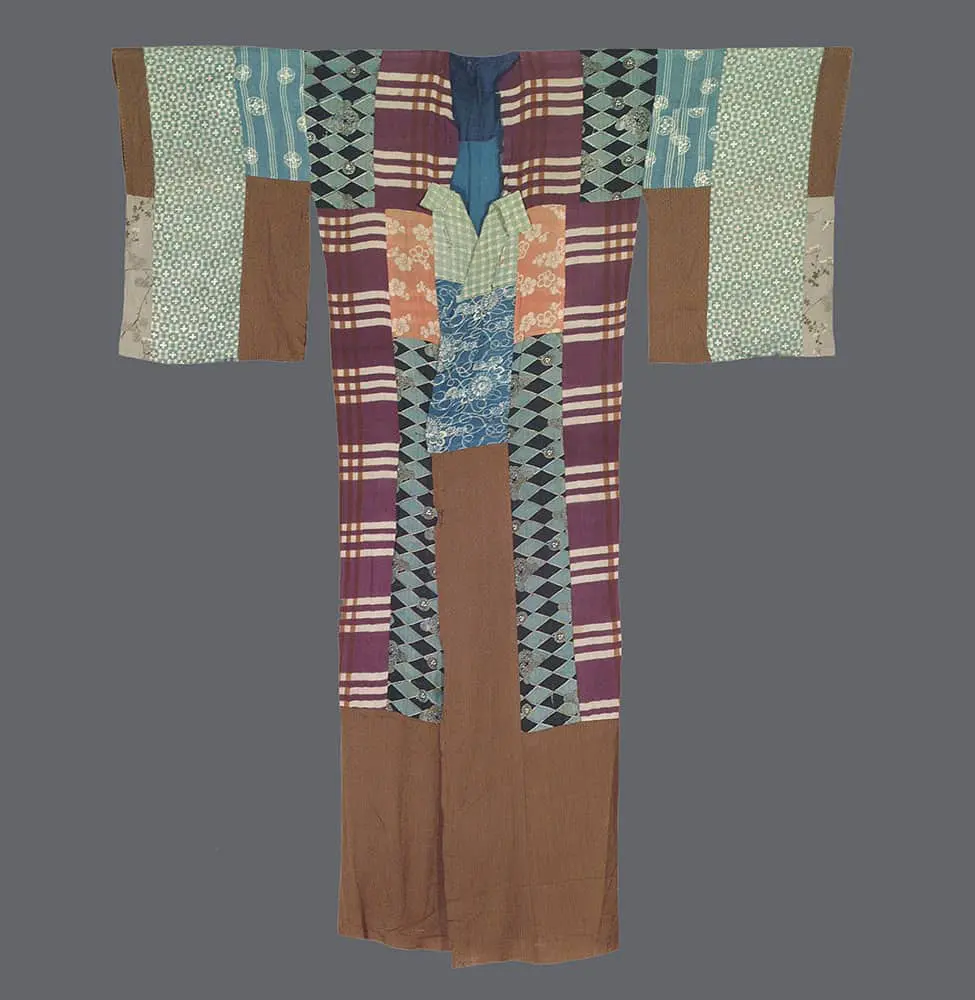
This silk dounuki from the late Edo to early Meiji periods is a compelling example of historical textile assembly, showcasing a bold, bicolor aesthetic. The garment is constructed from two distinct types of silk: the upper bodice and sleeves are a vibrant crimson, while the lower hem and sleeve extensions are a contrasting deep purple. This dounuki style traditionally involved piecing together different fabrics to create a modern, high-contrast look that bridges classical tailoring with early 19th-century graphic sensibilities.
In Japanese textile symbolism, the red upper section represents vitality and protection, while the purple lower section evokes nobility and spiritual depth. The crimson silk features a subtle ichimatsu (checkerboard) damask weave, a motif signifying prosperity and the uninterrupted continuity of a lineage. Though the garment currently requires restoration—including stains and necessary tailoring to the neck area—the inherent quality of the silk remains evident. The lustrous nature of the damask allows the hidden geometric patterns to catch the light, shifting the appearance of the red field as the wearer moves. This piece serves as a significant historical artifact, representing the transition between the late feudal era and the early modernization of Japan.
It measures 50 inches (127 cm) from sleeve-end to sleeve-end and stands 58 inches (147 cm) tall.

Payment Options: We primarily accept PayPal for all transactions. Credit and debit cards are not accepted. If you prefer to pay by personal check instead of PayPal, please note this preference in the "Additional comments" field when placing your order.Ordering Process
To receive your PayPal invoice, simply fill out the form.
Shipping Details: We ship all orders to the address associated with your PayPal payment. Please ensure your PayPal shipping address is current and accurate.A phone number is required during checkout, as our shipping carrier may need to contact you regarding delivery questions.Shipping RatesUnited States and Canada: $20International destinations (air mail): $40
